Get Full Government Meeting Transcripts, Videos, & Alerts Forever!
Get email alerts on the Zoning Master Plan Community topic
No spam. Unsubscribe anytime.
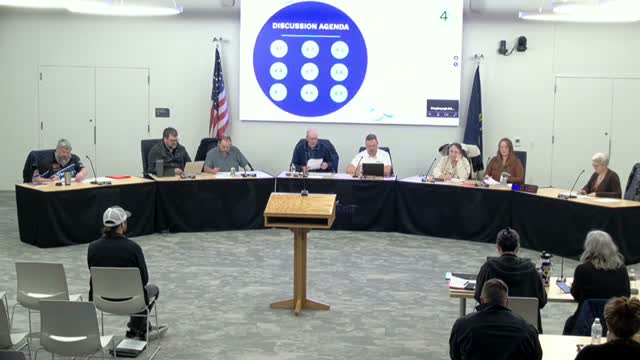
Belgrade council approves first reading of "Master Plan Community" zoning to expand smaller, mixed housing options
Summary
After an extended presentation and Q&A, the council approved first reading of Ordinance 2025-512 to add a "Master Plan Community" zoning district that would allow smaller lots and a mix of housing types; council added an amendment to make religious assembly a permitted use and set a Jan. 5, 2026 public hearing.
Belgrade’s City Council voted to approve the first reading of Ordinance 2025-512 on a proposal to add a new Master Plan Community (MP) zoning district to the city code, giving staff and developers another tool to build smaller-lot detached houses, alley-loaded cottages, townhomes and other "missing middle" housing types.
The ordinance, requested by the applicant for the Jack Rabbit Crossings project (also branded as the Foundry), would add standards that allow minimum lots as small as about 1,500 square feet for detached product and 1,000 square feet for attached lots, narrower frontages and clarified setback rules tied to garage configuration. The council approved the motion on first reading with an amendment to make religious assembly a permitted use rather than conditional and scheduled a public hearing for Jan. 5, 2026.
Todd Waller, the developer’s representative, said the zoning is intended to close an affordability gap in Belgrade. "This zoning code is truly designed around trying to make housing attainable and meet that missing middle," he said, adding the team used national market research to shape product types and price targets.
Chris Fernandez, a land-planning consultant on the project, told the council the MP district is meant to create consistent standards for diverse housing types and reduce reliance on ad-hoc PUD approvals. "This is the direction that small growing towns are looking for," he said.
Council members pressed on technical details during more than an hour of questioning. Staff and the applicant described alley-loaded configurations, options for rear-loaded garages, and parking rules that reflect recent state changes: "The state has already preempted and... is mandating" lower parking minimums beginning Oct. 1, 2026, staff said. Council members raised concerns about snow removal, utility easements versus setbacks, potential sign-code impacts, and where in the city the MP district might later be applied.
Senior planner Brad Stein explained that adoption of the MP district would add an option to the zoning code rather than automatically rezone any property: councils would still decide whether to apply the MP designation on a case-by-case basis.
The council’s first-reading approval (with the religious-assembly amendment) moves the ordinance to a noticed public hearing and second reading at the date the council set. The second reading will be the next opportunity for formal public input and a final vote.