
House approves changes to Climate Commitment Account distribution after floor debate
Get AI-powered insights, summaries, and transcripts
Subscribe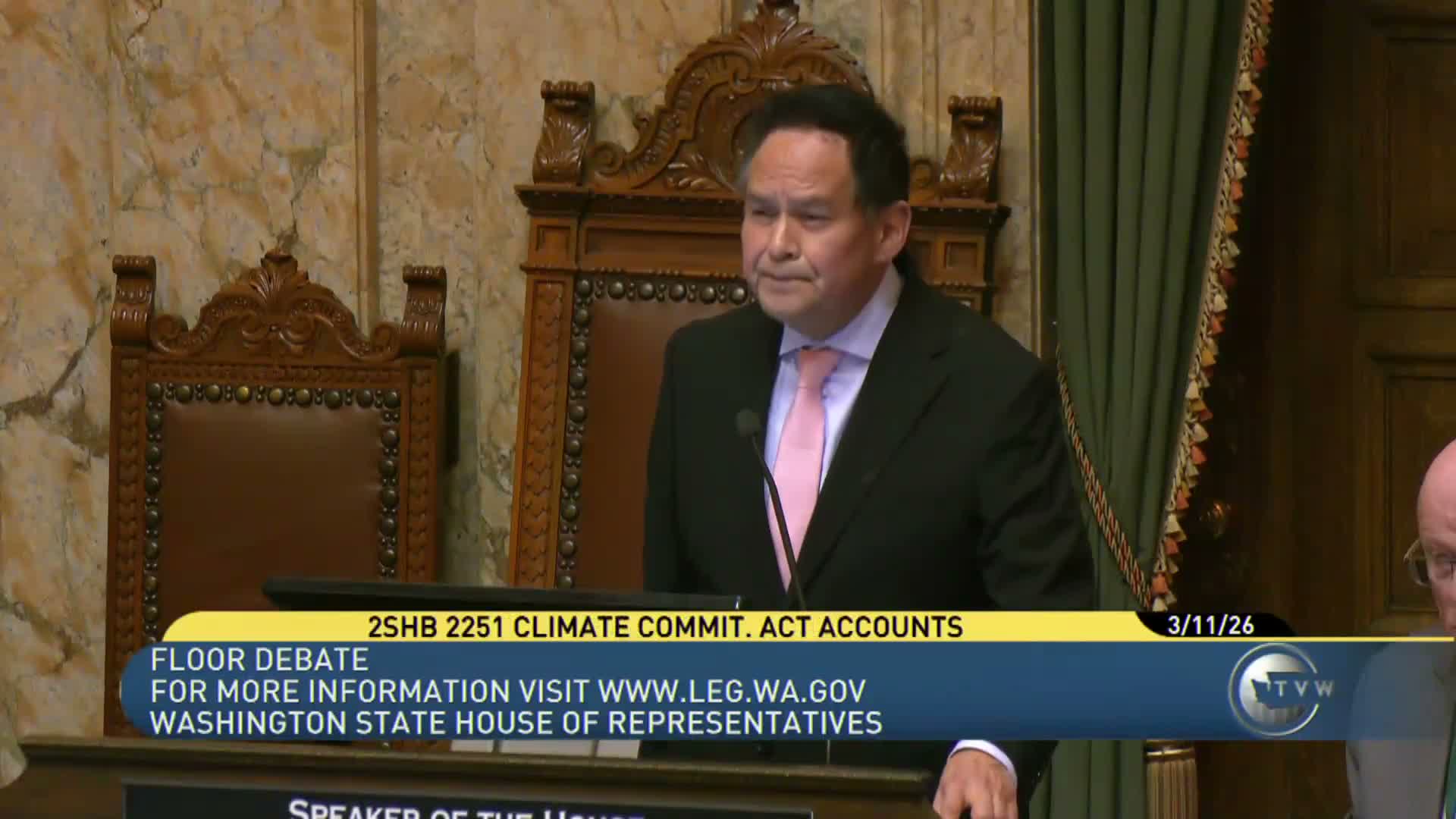
Summary
The House passed Engrossed Second Substitute House Bill 22-51, which rearranges how Climate Commitment Account auction revenue is distributed, after members debated reductions to air-quality and health-disparities accounts and allocations to a new CCA operating account. The bill passed 54-40 with 4 excused.
The state House voted to pass Engrossed Second Substitute House Bill 22-51, a measure that reorganizes how revenue from the Climate Commitment Act (CCA) auctions is allocated, after lawmakers debated changes made by the Senate and their potential impacts on health and transportation funding. The bill passed on final passage by a roll-call vote of 54 yeas, 40 nays and 4 excused.
Representative Fitzgibbon urged the chamber to concur with Senate amendments while acknowledging concerns, saying the changes ‘‘set us up for a clearer budget process with CCA revenue in the future’’ even as she noted the elimination of the air quality and health disparities improvement account and what she described as possibly ‘‘too low distribution to the new CCA operating account.’’ Representative Couture spoke against the amended measure, saying the Senate language ‘‘does a little bit better for the transportation side’’ but that she would vote no because she believed the revisions left unresolved distribution questions and did not deliver tax relief.
Representative Walsh also urged members to oppose the bill on principle, arguing the best remedy would be to repeal the Climate Commitment Act itself and calling the Senate changes insufficient.
Supporters described the bill as a step toward clearer allocation rules that will help the legislature and agencies plan future budgets for operating, transportation and capital needs tied to CCA revenues. Opponents warned the Senate amendments pared back dedicated accounts for air quality and health-disparity investments and called for continued work in future budgets to ensure priorities are met.
The passage concludes the House’s concurrence with the Senate amendments; the transcripts do not specify an effective date or implementation schedule. Next steps are routine transmission to enrolled-bill processing and whatever executive or administrative steps follow enactment.