
Senate committee hears that delayed state payments strain Alaska nonprofits and rural transit providers
Get AI-powered insights, summaries, and transcripts
Subscribe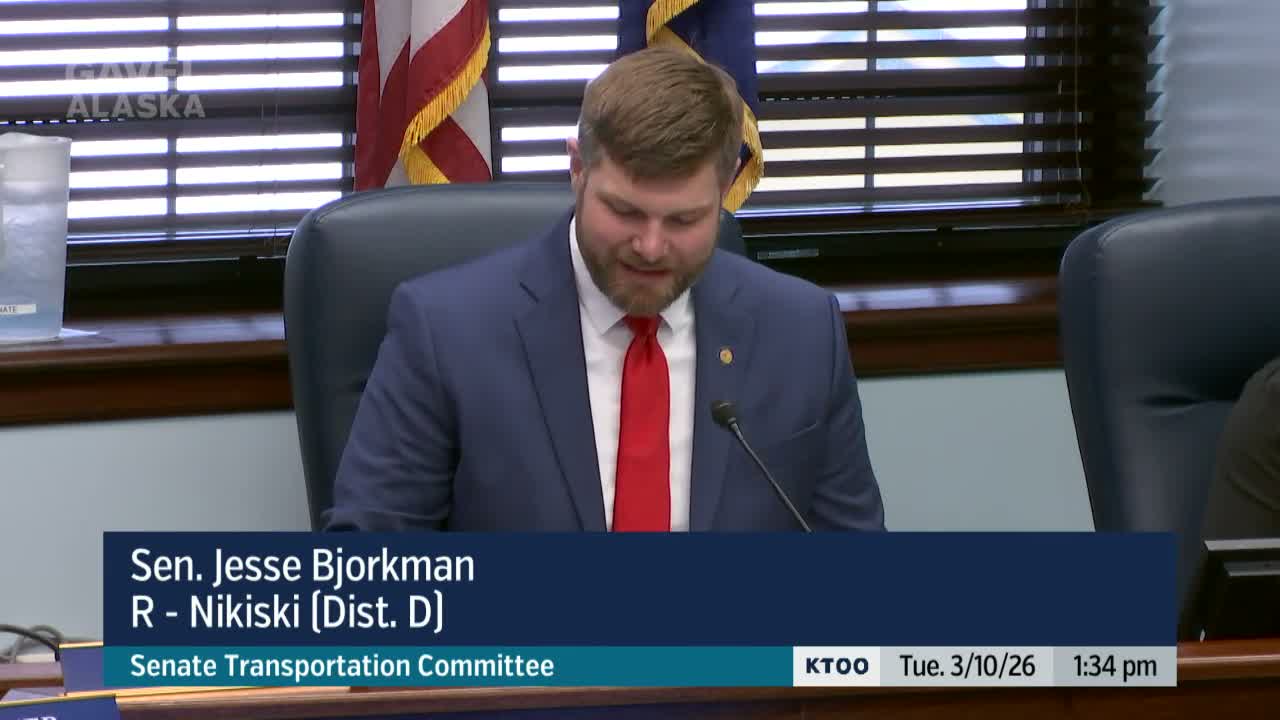
Summary
Witnesses told the Senate Transportation Committee that state reimbursements to nonprofits, municipalities and tribal organizations are often delayed months and can top six-figure sums, hindering services and risking federal funds; presenters urged passage of SB 129 and administrative fixes in DOT.
Juneau — Testimony to the Senate Transportation Committee on March 10 described widespread delays in state payments to nonprofits, municipal governments and Alaska Native organizations, and the operational strain those delays impose on transit and human-services providers.
Lori Wolfe, president and CEO of the Foraker Group, told the panel that delayed reimbursements and contract payments “have been three months, six months, nine months or even a year late,” and that individual late payments reported in the group’s survey ranged from about $25,000 to more than $1,000,000. Wolfe said the delays force organizations to use reserves, take lines of credit or reduce services and staff, and urged lawmakers to pass Senate Bill 129 to create enforceable prompt-payment rules for nonprofits, municipalities and tribes.
“Prompt payment is exactly the rule the state must follow,” Wolfe said, adding that current law requires prompt payment and interest for private contractors (AS 36.90.200) but that the rules do not provide parity for organizations working under grant and reimbursement arrangements.
Committee members pressed presenters on the scope of the problem and the underlying data. Mike Walsh, vice president for public policy at the Foraker Group, said the group’s snapshot survey received 46 responses and that 11% of respondents reported delays with the Department of Transportation and Public Facilities (DOT). He and Wolfe cautioned the survey is a point-in-time sample conducted through Foraker’s email network and not a comprehensive tally of all department grantees.
Senators also heard from agency staff. Rebecca Garrett, Frontier Roads program manager at DOT, described program-level practices for awards and reimbursements, saying that where applications and billing summaries are submitted correctly the department generally has 30 days to pay and that her programs have procedures — kickoff meetings, MOAs and coordinated monthly submissions — aimed at avoiding backlogs.
Judy Chapman, deputy director of planning at DOT, told the committee federal eligibility reviews, staffing vacancies in the state transit office and turnover at the Federal Transit Administration can lengthen processing time. Chapman said some delays reflect the state’s duty to ensure federal funds are spent on allowable expenses and that the department is exploring options such as forward funding with risk-mitigation measures like performance bonds.
“Sometimes it takes a couple times going back and forth to the subrecipient to ensure expenditures are submitted correctly in a way that we can reimburse,” Chapman said. She agreed to provide written follow-up with specifics about timing and the back-and-forth that can delay payments.
Nils Andreassen, executive director of the Alaska Municipal League, described the problem from the perspective of local governments and transit operators. He said the Alaska Transit Office has at times taken months to execute subaward agreements and that in one example a fiscal-year operating agreement was not executed until eight months into the fiscal year, preventing providers from submitting reimbursement claims.
“As the pass-through entity in Alaska, DOT is responsible for executing agreements, processing reimbursements and overseeing compliance,” Andreassen said. “When those functions are delayed, federal funds can sit unused or be lapsed or returned.” He recommended statutory parity (consistent with HB 133), automatic penalties or interest when payments are late, and quarterly agency reporting so the legislature can track days-to-pay and the causes of delay.
Pat Branson, a board member of the Foraker Group and retired CEO of Kodiak senior services, gave anonymized examples from transit providers who could not submit invoices because grant agreements or billing summaries had not been loaded into DOT’s BlackCat system. Branson said the result was unpredictable processing: “It usually takes 30 days for invoices to be reviewed, followed by an additional 15 to 30 days before payment is issued,” producing 60–75-day waits in practice and, in several cases she cited, invoices that were unpaid for months.
No formal vote or committee action occurred at the hearing. Chair Senator Bjorkman closed the docket and invited committee members to submit follow-up questions in writing; DOT agreed to provide written timing details for specific grants.
Why it matters: Committee testimony linked delayed payments to risks for essential services — payroll disruptions, paused programs, strained vendor relationships — and to the potential loss of federal funding if state pass-through processes continue to lag. Witnesses urged a mix of statutory parity (SB 129/HB 133) and administrative changes within DOT to stabilize federal pass-through functions and create predictable timelines for agreement execution and reimbursements.
The committee adjourned at 2:29 p.m. and said it will continue the conversation at a follow-up meeting focused on winter road maintenance and a student presentation.