
Sponsor says telehealth parity would expand rural access; committee probes out‑of‑state providers
Get AI-powered insights, summaries, and transcripts
Subscribe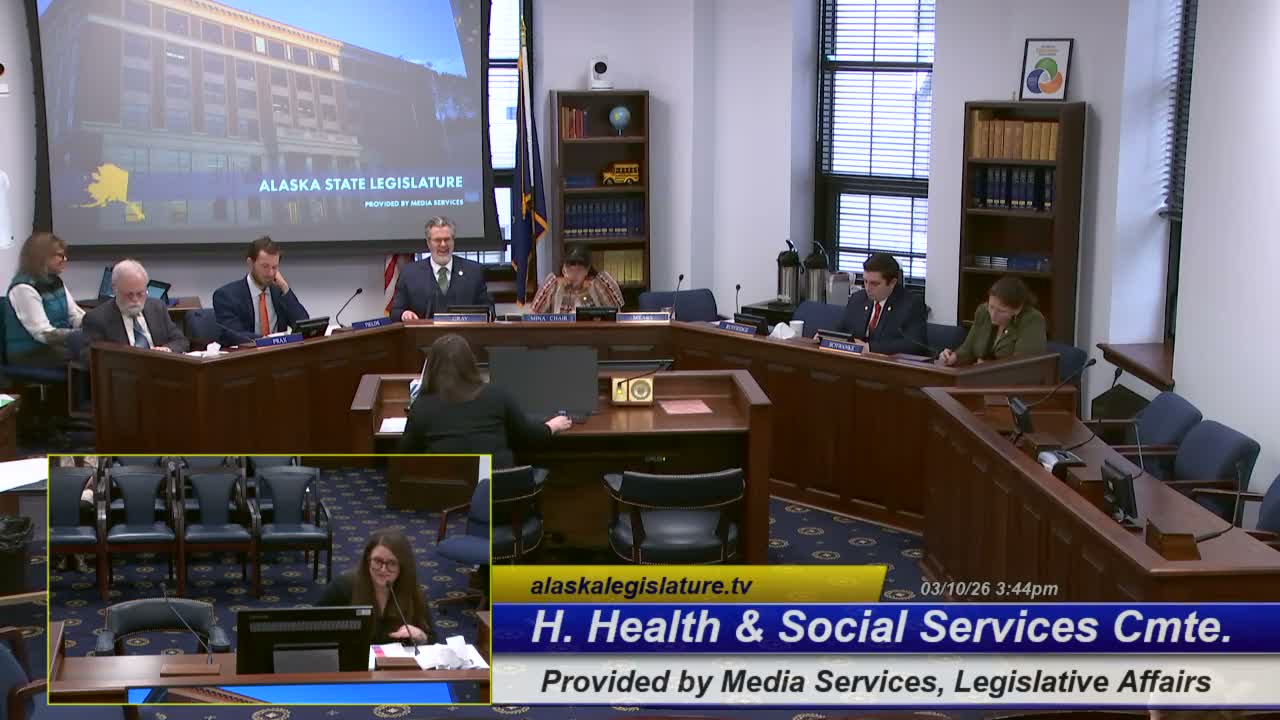
Summary
Senate Bill 83 would require insurers to reimburse telehealth at the same rate as in‑person care. Staff summarized registry data (2,207 telemedicine businesses; ~80% with Alaska addresses) and the committee questioned workforce, licensing, and in‑network/out‑of‑network implications.
Senate Bill 83 was presented by Serena Hackamiller, staff to Senator Klayman, as legislation to establish pay parity between telehealth and in‑person services for private insurers. Hackamiller said parity is already present in Medicaid statutes and that the bill would align private insurance with that standard and with practice in more than two dozen states.
Hackamiller reported there are 2,207 registered telemedicine businesses in the state registry, with roughly 80% registered in Alaska and 20% in other states; California and Florida were among the larger out‑of‑state registrant sources identified in committee discussion. Committee members pressed staff about who the out‑of‑state providers are (behavioral health centers and stand‑alone providers were noted) and whether those providers supplant Alaska clinicians or are part of multistate networks.
Representative Fields, Representative Gray and other members raised concerns about potential unintended consequences, including the risk that pay parity could incentivize multisite health systems to supply Alaska services from other states, and asked if states such as Nebraska, Texas or Nevada offered models that limit parity to providers who maintain an in‑state physical presence. Senator Klayman, who joined the hearing remotely, said Alaska’s limited insurance market and workforce context differs from larger states and described national testimony favoring clarity on telehealth pay as a tool to stabilize access.
Hackamiller said no insurance companies had submitted formal opposition letters and two insurers reported already paying at parity. Committee discussion focused on the need for additional data — for example, how many telehealth clinicians are licensed in Alaska versus out of state, how registry entries map to licensed providers, and how parity would interact with provider contracts and geographic rate differentials. The chair set SB 83 aside for a future hearing and set an amendment deadline.