
DNR presents FY2027 operating budget; department says it generates $22 per general‑fund dollar
Get AI-powered insights, summaries, and transcripts
Subscribe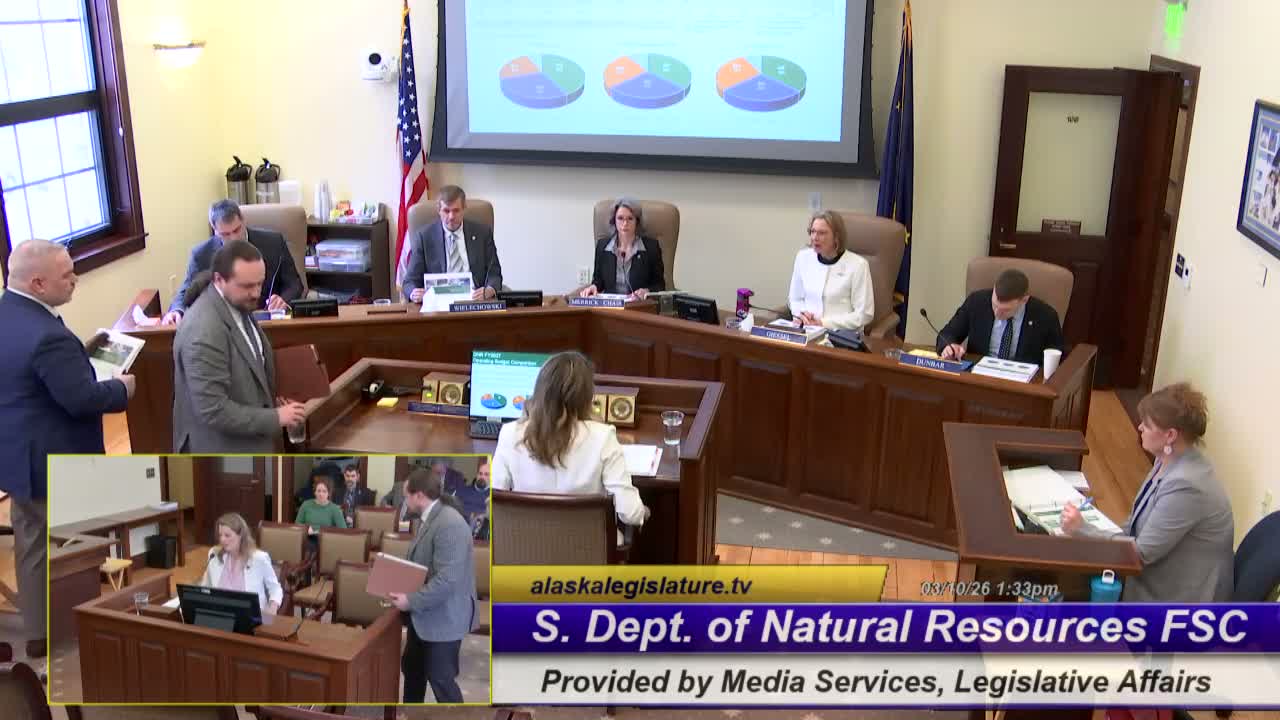
Summary
Department of Natural Resources officials told the Senate Finance subcommittee the FY2027 governor's operating proposal rises about 2.7% from FY2026, driven largely by a $4.3 million federal funds increase, transfers from capital to operating, expanded interagency authority for all‑hazard response and an IT classification implementation affecting 29 positions.
Chair Senator Merrick convened the Department of Natural Resources Finance Subcommittee at 1:31 p.m. on March 10 to examine the governor's FY2027 operating budget proposal. Commissioner designee John Crother and Administrative Services Director Shanna Miller led the presentation and answered committee questions.
Miller said the governor's FY2027 operating budget increases roughly 2.7% from the FY2026 management plan. The largest single change shown on slide materials was about a $4.3 million increase in federal funds, which Miller said represents roughly a 24% change in that category. She told the committee that three primary drivers explain most changes: long‑standing programs and federal authorities moving from capital to operating, increased authority to receive interagency receipts for all‑hazard response work, and implementation of a statewide information technology classification study that affects 29 positions.
Miller also told senators that the budget proposal decreases the total position count by about 30 from FY2026 to FY2027 and that the department has 18 different funding sources. She said designated general fund program receipts (park fees, right‑of‑way leases, material and timber sales, vehicle rental tax, recording fees and other program receipts) are central revenue sources. "On a 10‑year revenue average for every general fund dollar appropriated to DNR, DNR generates $22 in revenue," Miller said.
Miller walked the panel through several line items, including transfers of administrative positions from the Department of Administration back to DNR that she described as having no additional funding impact, and an increment of $595,000 tied to implementing IT classification adjustments across 29 positions. She also described structural budget moves such as reflecting the U.S. Geological Survey Earth MRI grant in the operating budget and removing concluded Exxon Valdez Oil Spill Trustee Council projects from DNR authority.
Why it matters: the operating budget framing affects staffing, emergency response capacity and how DNR reports and uses federal grants and receipts. Committee members pressed DNR leadership about staffing impacts and which revenues will fund newly described positions. The subcommittee did not take a vote; the hearing was informational and concluded with presenters offering follow‑up materials.
The presentation continued to division‑level briefings and Q&A that focused on forestry, wildfire response, geological surveys and oil and gas priorities; those topics were discussed separately in committee testimony.