Sponsor says bill would codify physician assistants, ease rural access
Loading...
Summary
Senate Bill 89 would put physician assistants (PAs) into Alaska statute and remove a two‑physician collaborative signature bottleneck for PAs working in licensed facilities, aiming to reduce administrative costs and expand access in rural areas.
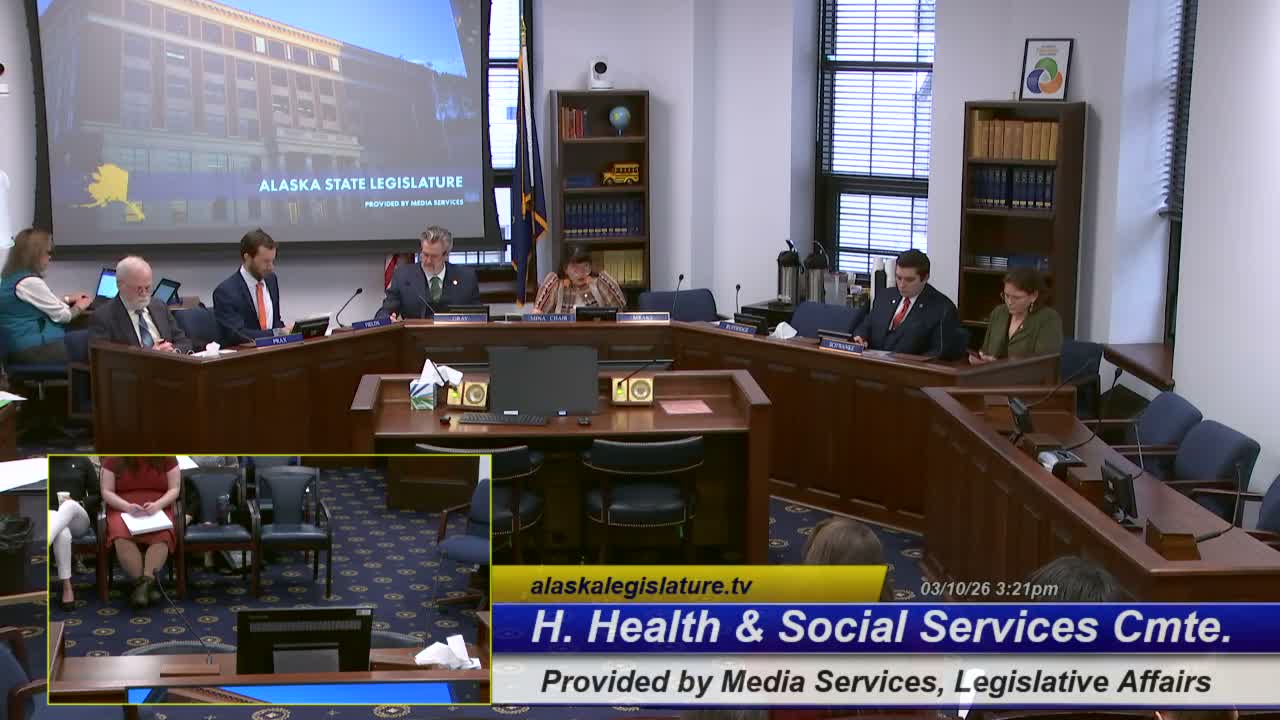
Senator Lukey Tobin introduced Senate Bill 89, saying the legislation would codify physician assistants in Alaska law and allow experienced PAs to practice at the full scope of their licensure in physician‑directed, state‑licensed, tribal, federally qualified or military facilities without a separate collaborating physician signature requirement.
The bill’s sectional analysis, given by Mackenzie Pope, explains it repeals and reenacts the PA authorizing statutes, defines PA qualifications, extends licensure recognition to practitioners licensed in other U.S. states and Canadian provinces, includes PAs in temporary‑licensure provisions, and removes a supervision requirement for licensed PAs who have completed postgraduate clinical requirements.
Megan Hall, past president of the Alaska Academy of Physician Assistants, testified in strong support, saying the existing requirement that every PA have signatures from two Alaska‑licensed physicians has produced a bottleneck that forces rural clinics to recruit collaborators out of state and adds significant cost (testimony cited a figure committee testimony described as “upwards of $50,000” in some cases). Hall said the current bill preserves patient‑safety oversight through the State Medical Board while eliminating unnecessary administrative burdens that slow hiring and deployment of PAs in underserved communities.
Committee members asked technical and scope questions: whether PAs could open independent practices (she said no—opening an independent clinic still requires a collaborative agreement or a physician medical director), how supervision would be handled in covered facilities (Hall pointed to facility protocols such as chart review and case review) and the unusual situation of PA supervision by podiatrists (Hall said it is rare but permissible under the State Medical Board, though billing via Medicare/Medicaid may complicate supervision claims).
The chair set SB 89 aside for a future hearing and set an amendment deadline; no committee vote on final passage occurred during this session.
The committee plans to revisit SB 89 at a later date; next procedural steps were not decided at this hearing.