Get Full Government Meeting Transcripts, Videos, & Alerts Forever!
Get email alerts on the County Audit topic
No spam. Unsubscribe anytime.
Auditors give New Castle County a clean FY2025 opinion, flag timing issue on some grant receivables
Summary
CliftonLarsonAllen reported an unmodified (clean) opinion on New Castle County's FY2025 financial statements, noting one written finding tied to the timing of grant receivables that arrived outside a 60‑day availability window; the single audit remains pending.
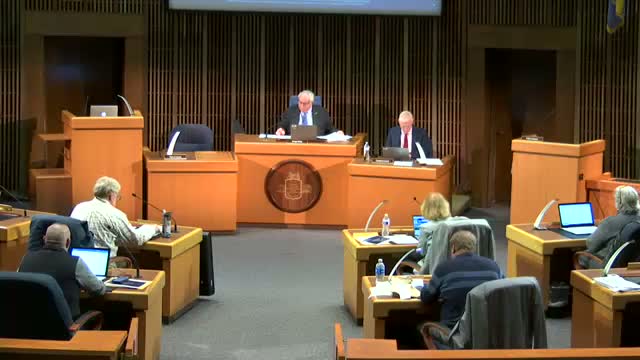
CliftonLarsonAllen presented New Castle County's fiscal year 2025 annual comprehensive financial report to the county finance committee on Feb. 10, reporting an unmodified — or "clean" — opinion on the financial statements while identifying one timing‑related audit finding.
"We issued an unmodified or cleaned opinion," said Remy Olmesor, a principal with CliftonLarsonAllen, summarizing the firm's work. Olmesor said the engagement covered the county's financial statements, the schedule of federal awards (single audit) and HUD REACT procedures; the single audit remained incomplete and will be presented to council when finished.
The auditors described one written comment tied to the "period of availability": certain grant receivables arrived outside the 60‑day window used for revenue recognition, requiring an adjustment to defer amounts rather than include them in fund balance. "The adjustment was related to timing of receivables," Olmesor said, adding that management had identified the correct amounts and the issue was one of timing, not validity of the receivable.
Olmesor also walked the committee through two recently effective accounting standards. Under GASB 101 (changes to compensated‑absence recognition), the threshold for recording liabilities dropped to a "more likely than not" (51%) test, increasing transparency about leave‑bank exposure. Olmesor noted the county had historically recorded large compensated‑absence balances and that an additional bucket of leave time — roughly $34,000,000, as shown in the county's schedules — remains unrecorded as a liability under current practices.
On GASB 102 (risk disclosures), auditors said governments must disclose concentrations and constraints when triggers occur; the county had identified risks but had no disclosure triggers at this time.
Financial highlights discussed in the presentation included an increase in transfer taxes and about $4,000,000 of higher investment earnings, a recorded $42,000,000 in SLURP (pandemic‑related) expenditures, and a $40,000,000 issuance tied to the West Wing project (WAFIA loan) that increased liabilities on the balance sheet. Pension and OPEB liabilities declined in FY2025 largely because market returns improved trust assets.
During Q&A, council members asked whether the transfer‑tax increase was market‑driven or from a few large sales; Olmesor said it appeared to be normal market activity and recommended staff review detail if members needed confirmation. On the West Wing debt, Olmesor said he saw no indicators the county would fail to recover costs and noted amounts outstanding as of year‑end were collected shortly thereafter.
The committee asked about audit cost and scope. Bob Wasserbach, New Castle County auditor, said the combined fee for the financial statement audit, pension work and single audit ran about $100,000; Olmesor said the auditors test roughly $27,000,000 of the county's about $65,000,000 in federal awards for single‑audit purposes.
Olmesor closed by noting management will provide a written response to the finding and that auditors will issue the single audit when testing is complete. The presentation left the county with a clean opinion on the FY2025 statements but with one documented timing issue for management to address.