Get Full Government Meeting Transcripts, Videos, & Alerts Forever!
Get email alerts on the Fetal Remains Disposition topic
No spam. Unsubscribe anytime.
Panel advances amendment to HB 2184 on disposition of fetal remains; members split over ‘unborn child’ language
Summary
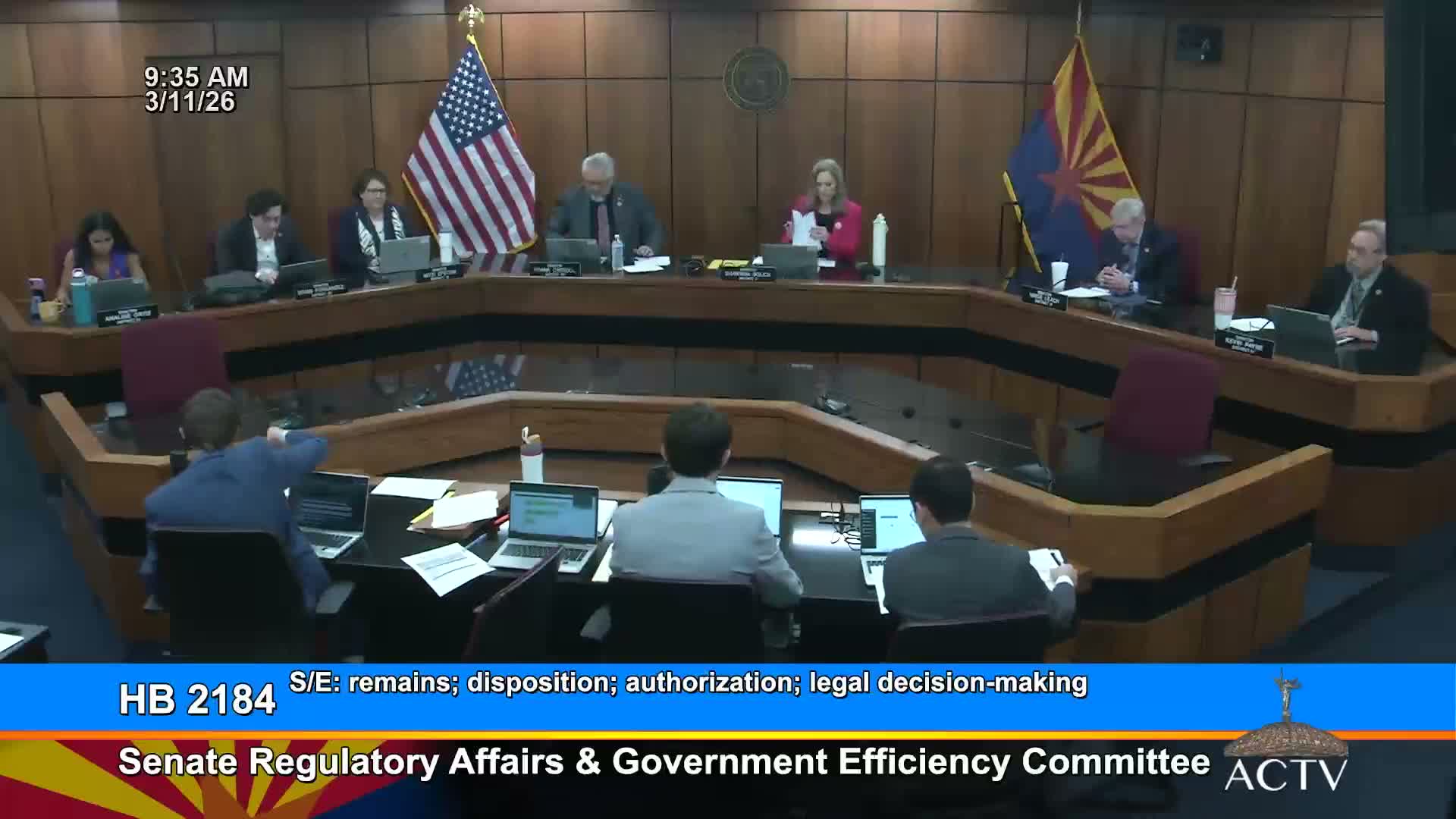
The Senate Committee on Regulatory Affairs voted 4-3 to give House Bill 2184 a due‑pass recommendation with an eight‑page strike‑everything amendment that extends filing timelines and creates disposition-permit rules for fetal remains; debate focused on whether to use 'unborn child' or the medical term 'fetal remains.'
The Senate Committee on Regulatory Affairs on March 5, 2026, voted 4-3 to recommend House Bill 2184 as amended, after adopting an eight‑page strike‑everything amendment that modifies timelines and disposition rules for fetal remains following miscarriage or fetal death.
A presenter identified in the hearing as Nick described the amendment dated March 5, 2026. Among the changes, the amendment extends the timeline funeral establishments have to submit a death certificate from seven calendar days to 14 business days; it requires funeral establishments to obtain a disposition transit permit when an unborn child is expelled or extracted at a hospital or abortion clinic if the gestation is less than 20 weeks, or if gestation is unknown and the remains weigh less than 350 grams. The amendment also states a county medical examiner's investigation is not required when the woman authorizes transfer of the remains to a funeral establishment, clarifies parental responsibility for disposition of a descendant who is a minor, and outlines form requirements and exemptions for abortion clinics.
Several members of the public testified. Jody Liggett, chairwoman of Reproductive Freedom for All, said her organization "supports the needs of grieving families" but had a narrow objection to the bill's terminology: "We would prefer 'fetal remains,' the medically accurate term, be used rather than 'an unborn child,'" she said. Patricia Moore, who testified in support, recounted a miscarriage at 12 weeks and said current practice treated remains as "medical waste." "This bill allows for the registration of fetal death certificate and affirms parental rights over the remains of an unborn child following miscarriage or fetal death," Moore said, urging lawmakers to give families the option to recognize and honor the life they lost. Marcus Tork, who also testified in support, described multiple family miscarriages including losses at 15–17 weeks and said the bill would reduce bureaucratic obstacles that parents face when seeking disposition of remains.
During roll call, Senator Epstein said he supported the bill's goals but objected to the current wording and therefore voted no, saying committee staff should work with the sponsor on language changes before the floor. Senator Carroll said he opposed altering the bill's language and voted yes, noting he would "fight it every inch of the way" if an attempt were made to change the bill to different wording. The final recorded vote was 4 ayes and 3 nays; the committee issued a "due pass as amended" recommendation.
The committee adjourned with no further business.