
Committee backs opting Arizona into federal tax-credit scholarships, 5–3
Get AI-powered insights, summaries, and transcripts
Subscribe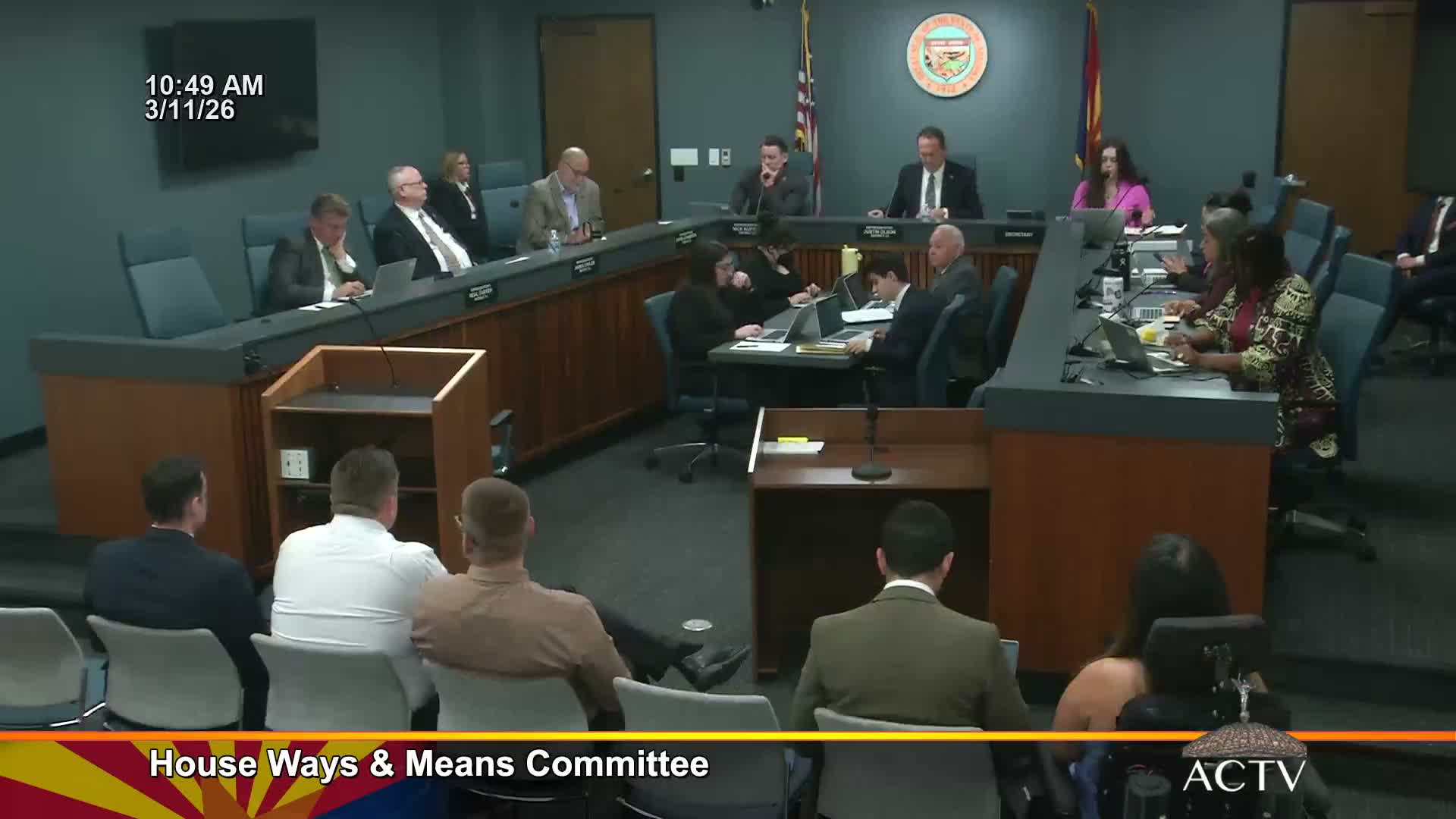
Summary
The House Ways and Means Committee returned Senate Bill 11-42 with a due-pass recommendation after hearing supporters who said it brings private donations and scholarships to Arizona students and opponents who warned of insufficient federal rules and risks to public school funding.
The House Ways and Means Committee returned Senate Bill 11-42 with a due-pass recommendation, advancing a proposal that would opt Arizona into a federal tax credit program allowing donors to receive federal tax credits for contributions to scholarship-granting organizations serving K–12 students. Committee members voted to return the bill with committee recommendation after testimony and debate; the chair announced the committee’s recommendation as 5 ayes, 3 noes and 1 absent.
Staff explained the bill would enable Arizona taxpayers who donate to qualified scholarship-granting organizations (SGOs) to claim a federal tax credit and that the program would take effect on Jan. 1, 2027, subject to federal rules. Proponents said the program would increase funding available for tutoring, special-needs services and other education expenses without direct state cost.
Sally Henry, board president of the STO Association, told the committee the program is income-based and that qualified SGOs must award at least 90% of contributions to scholarships. "This new law provides an opportunity to deliver significant additional benefits to these students for supplemental education expenses at no cost to the state," she said.
Opponents, including Gerald de Miranda of the Arizona Center for Economic Progress, argued the federal program’s rules were not finalized and could limit the state’s ability to add guardrails. Miranda said the measure risks further diverting resources away from public schools because the cost of running schools does not disappear even if scholarships pay for some student services.
Members questioned whether the program would keep donated funds in Arizona if the state does not opt in; witnesses confirmed that donors could still claim the federal credit without Arizona opting in but the dollars would likely flow to participating SGOs in other states. Witnesses also confirmed the bill itself would not directly cost the state, though members expressed varying views on whether the program would divert resources from the public system.
The committee’s recommendation does not itself enact the policy; it moves the bill forward in the legislative process. If sent to the governor and enacted, the state would implement federal program rules and any applicable state oversight provisions.