
Committee sends measure to require two-thirds vote for state fee increases to the ballot
Get AI-powered insights, summaries, and transcripts
Subscribe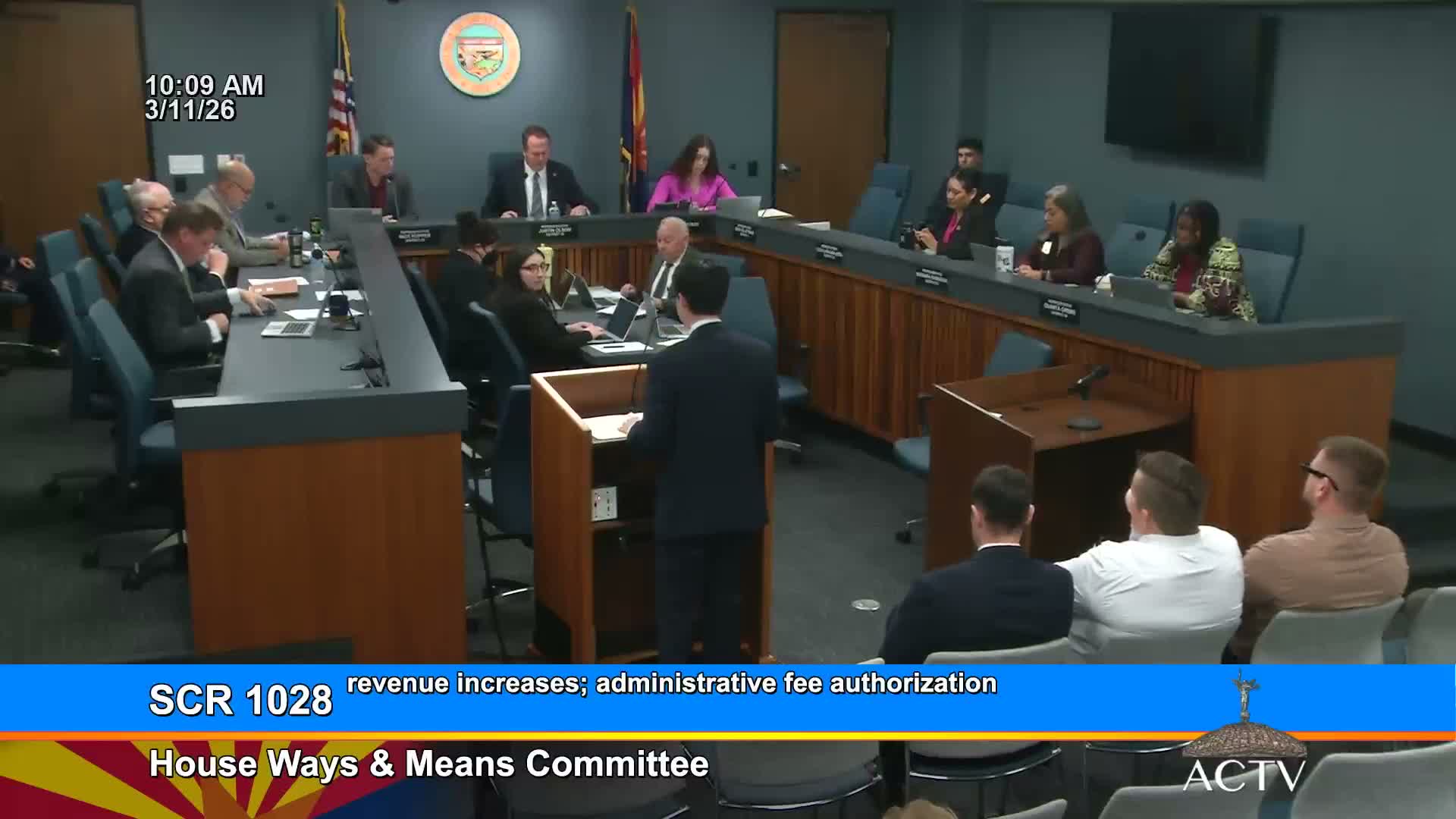
Summary
The House Ways and Means Committee voted to return Senate Concurrent Resolution 10-28 with a due-pass recommendation. The referral would ask voters whether most future state fee increases must be approved by a two-thirds legislative vote; the panel voted 5–3 with one absent after public testimony for and against.
The House Ways and Means Committee voted to return Senate Concurrent Resolution 10-28 with a due-pass recommendation, advancing a referral that would ask voters whether most state fee increases must be approved by a two-thirds legislative vote. Chairman Olsen announced the committee’s recommendation after public testimony and debate; the chair reported the final tally as 5 ayes, 3 noes and 1 absent.
Sponsor Senator Mesnard told the committee the measure is aimed at closing what he called a constitutional “loophole” that has allowed unelected agency officials to set fees without legislative approval. “We as policymakers are gonna be involved if we are creating or increasing fees on our citizens,” Mesnard said, arguing that fee-setting is a core accountability role for elected officials.
Supporters of the referral said it would restore legislative oversight and protect low-income Arizonans from regressive flat fees. Mesnard and other proponents suggested publishing a list of the specific state-level fees affected to improve voter transparency.
Opponents, including public witnesses and policy groups, urged the committee to vote no. Chris Gonzales said the resolution would expand the two-thirds requirement to administrative fees and make it harder for agencies to adjust charges needed for inflation, staffing and program demands. “Requiring a two-third legislative vote every time these adjustments are needed would add unnecessary bureaucracy and make government less responsive,” he testified.
Joseph Palomino, director at the Arizona Center for Economic Progress, warned the change could hamper agencies that rely on fee revenue for regulatory oversight, citing examples such as egg-inspection and environmental water fees. “If those fees are not able to be increased by the director, that cost would be passed on to the taxpayers,” Palomino said.
Blake Lister, another opponent, said the measure could block future fees aimed at holding large corporations accountable for resource use, such as data-center water or energy surcharges. “This referral will limit the state's ability to make the rich and corporations pay their fair share,” Lister said.
Committee members split along differing views of the role of fees and ballot referrals. Some members said fees have been used by policymakers to fill funding gaps and that additional constraints could slow essential agency work; others said legislative oversight is the proper safeguard against unaccountable fee increases.
The committee’s return of SCR 10-28 does not change law; it sends the referral forward with a recommendation that it be placed on the ballot for voters to decide. The matter will proceed through the legislative process and, if referred, would require voter approval before taking effect.