
Community groups urge committee to reject HCR 2016, warning it would reduce voting access and raise costs
Get AI-powered insights, summaries, and transcripts
Subscribe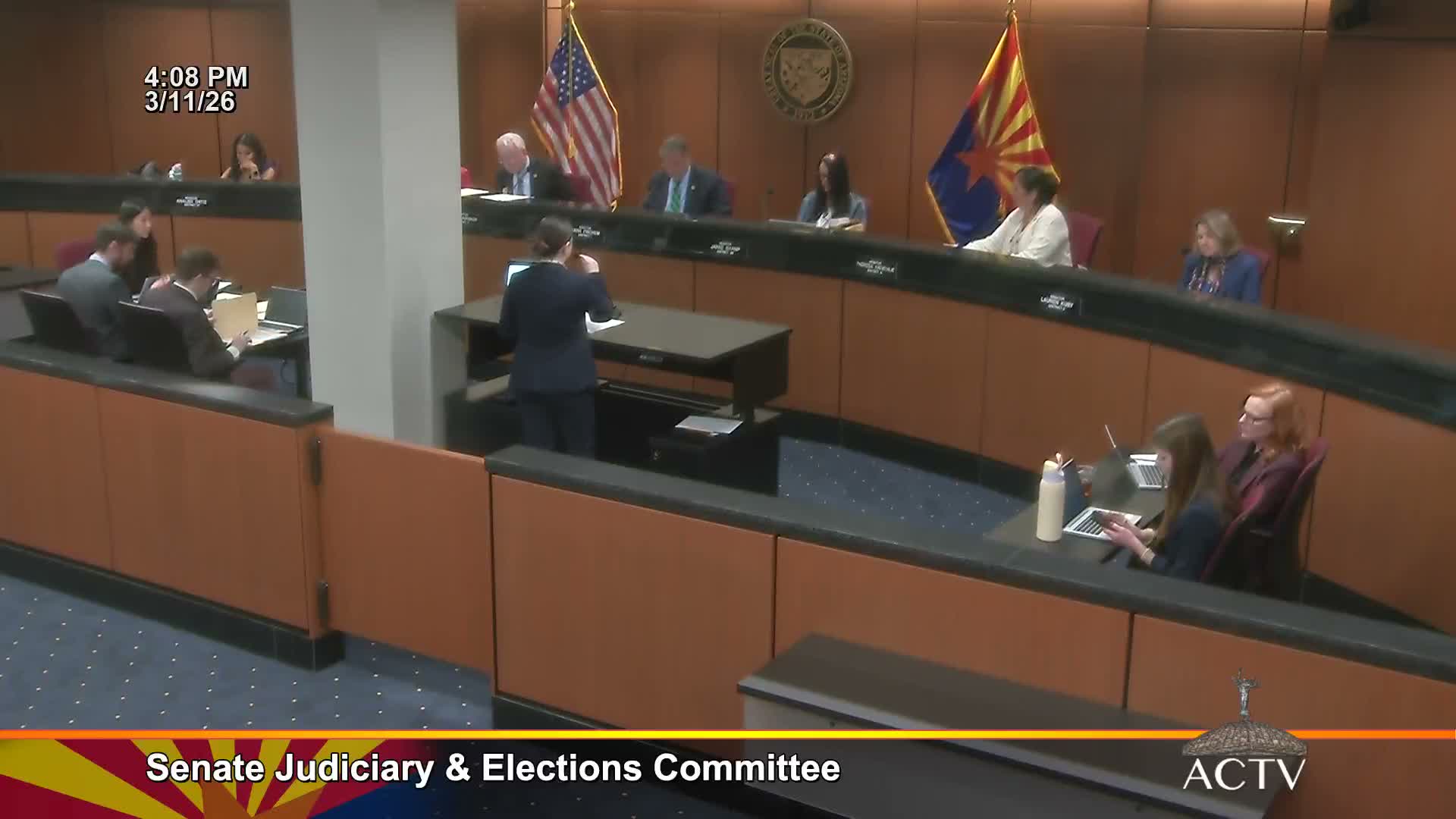
Summary
HCR 2016, which would refer to voters a proposal to eliminate county vote centers and cap precinct size at 2,500 registered voters, was held without prejudice after extensive public testimony from voters, tribal leaders, county officials and voting‑rights organizations who said the proposal would reduce access and impose high costs.
The Senate Judiciary and Elections Committee on March 4 heard hours of testimony on HCR 2016, a resolution that would, if approved by voters, prevent county boards from establishing vote centers, prohibit on‑site early voting locations, and require that an election precinct not exceed 2,500 registered voters when precincts are designated.
Speakers representing voting‑access groups, county officials, tribal leaders and residents urged the committee to reject the referral to the ballot or substantially revise the measure. Vania Castillo, a Maricopa County resident, said the resolution "seeks to eliminate opportunity and freedom" and warned that forcing voters to a single assigned location could lead to lost votes when people go to the wrong site.
Caitlin Gutierrez of the ACLU of Arizona warned the committee the measure would roll back flexible voting options that counties have used for more than a decade. She told members vote centers reduce wait times, lower provisional ballots and accommodate population mobility; the ACLU’s written testimony said removing vote centers could force counties to add thousands of locations and increase equipment costs.
Jen Morrison of the Association of Counties said the association opposes the referral and urged a delayed effective date if it must go to the ballot, citing implementation timing and the need for fiscal appropriations across multiple fiscal years. Morrison suggested a July 1, 2028 effective date or higher precinct thresholds for large counties, and recommended contingency language to allow vote centers when jurisdictions cannot staff or site the required precincts.
Dr. Paul Geit Jr., a chapter president from the Navajo Nation, described transportation, addressing and road‑condition barriers that make precinct‑only models especially problematic on tribal lands and in rural areas; he and other tribal witnesses said vote centers and on‑site early voting are essential to ensure access and avoid disenfranchisement.
Jacob Emnick of the County Supervisors Association said 12 of 15 counties already use vote centers and that eliminating them could produce confusion, more provisional ballots and significant operational costs. Natalia Sells of All Voting Is Local Action and other advocates cited fiscal analyses that estimate millions in upfront costs to add thousands of precincts and warned the proposal would delay results and overwhelm poll workers.
After hearing testimony and questions, the chair announced the committee would hold HCR 2016 without prejudice to allow stakeholders — the sponsor, county elections officials, tribal representatives and advocacy groups — time to consult and attempt to reach common ground.
No final committee vote was taken at the hearing; the hold allows the sponsor time to consider amendments addressing implementation timing, fiscal support and access exceptions for rural or tribal jurisdictions.