
Committee holds distracted‑driving bill after members raise questions about streaming and embedded vehicle displays
Get AI-powered insights, summaries, and transcripts
Subscribe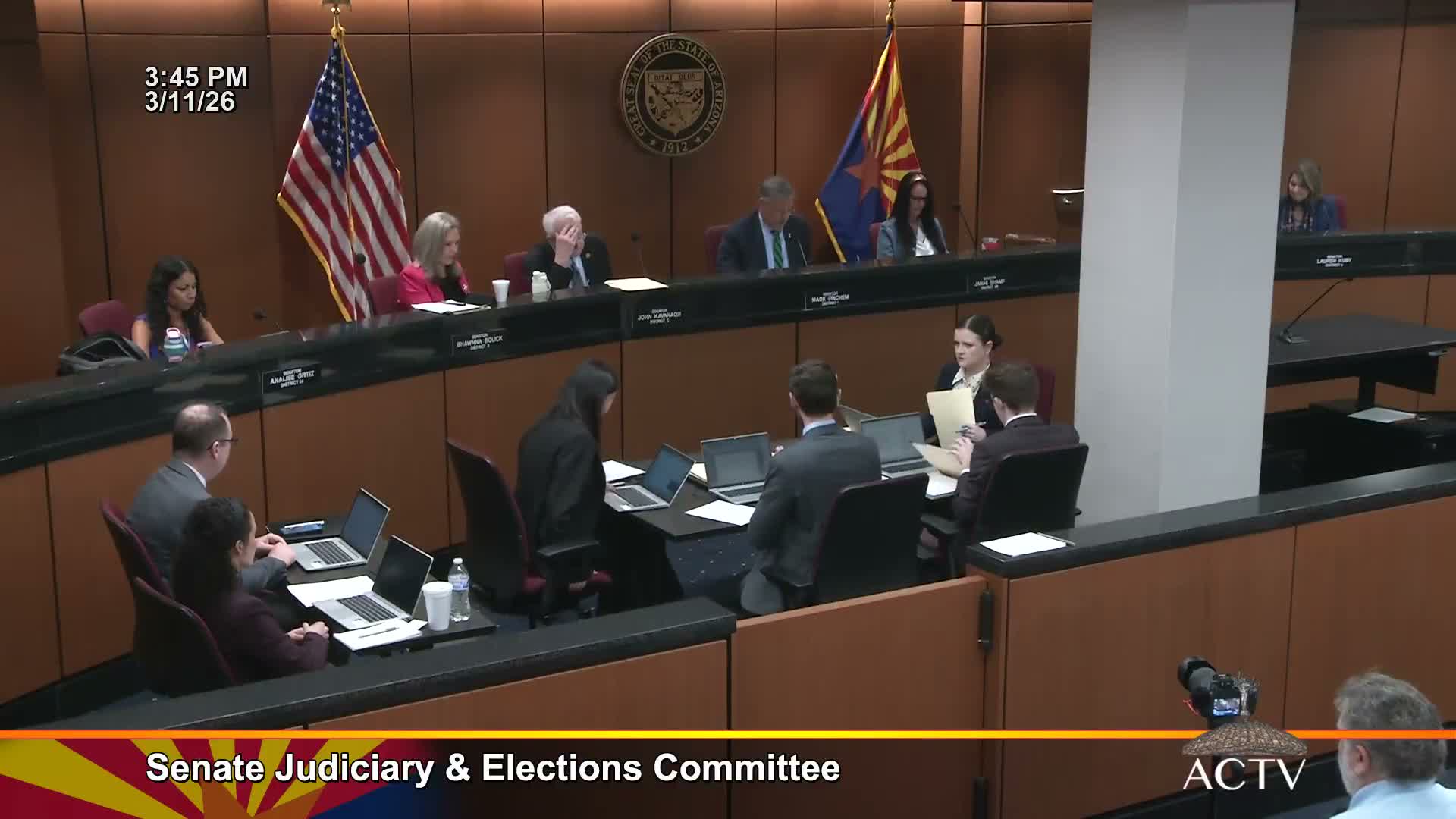
Summary
Senators paused House Bill 2109, which would increase penalties for repeat hands‑free violations and expand a prohibition on viewing video while driving, directing sponsors to convene stakeholders to clarify how the bill treats embedded vehicle interfaces and recordings.
The Senate Judiciary and Elections Committee on March 4 held House Bill 2109 without prejudice after extended questioning about how its video‑viewing prohibition would interact with modern in‑vehicle systems.
House Bill 2109 would increase the flat penalty for a second or subsequent violation of Arizona's hands‑free statute to $400 and impose an additional $150 if the violation results in a motorcycle crash. The bill also expands the scope of prohibited conduct to viewing or streaming video on a portable wireless communication device even when the device is not physically held.
Staff read two amendments: one removes a prohibition on peace officers issuing citations for portions of the statute; a second, offered in Senator Ortiz's name, removes language criminalizing conduct that merely records video-based data so that interior dashcams and safety recordings are not swept into the prohibition.
Senator Ortiz (the amendment sponsor) told the committee the recording removal was intended to protect drivers — for example, rideshare drivers who use interior cameras for safety. "There are many rideshare drivers ... who have cameras that film the inside of their car for safety reasons," Ortiz said, arguing the original language could criminalize those safety recordings.
Michael, who said he represents a motorcycle advocacy group, supported tougher penalties but warned the recording/streaming language was vague and could be challenged in court. "That whole section needs to go," he said, arguing courts could interpret the provision as overly broad.
Don Isaacson of State Farm supported the video‑watching prohibition as an update aligned with national insurance‑legislative standards, citing research that drivers watching video are many times more likely to crash. At the same time, senators questioned whether embedded vehicle interfaces (CarPlay, built‑in navigation, rear‑view cameras) would be exempt and how enforcement would work in practice.
Committee members asked whether rear‑view cameras, navigation displays and streaming music or video via vehicle systems would fall under the bill; staff said subsection b exempts devices embedded in a motor vehicle, but several members urged refinement and a stakeholders meeting to avoid criminalizing common and safety‑related uses.
After the discussion, the chair said the committee would hold the bill without prejudice so sponsors could consult further with stakeholders; the measure may return with clarified language.