Get Full Government Meeting Transcripts, Videos, & Alerts Forever!
Get email alerts on the Meeting Management Outreach topic
No spam. Unsubscribe anytime.
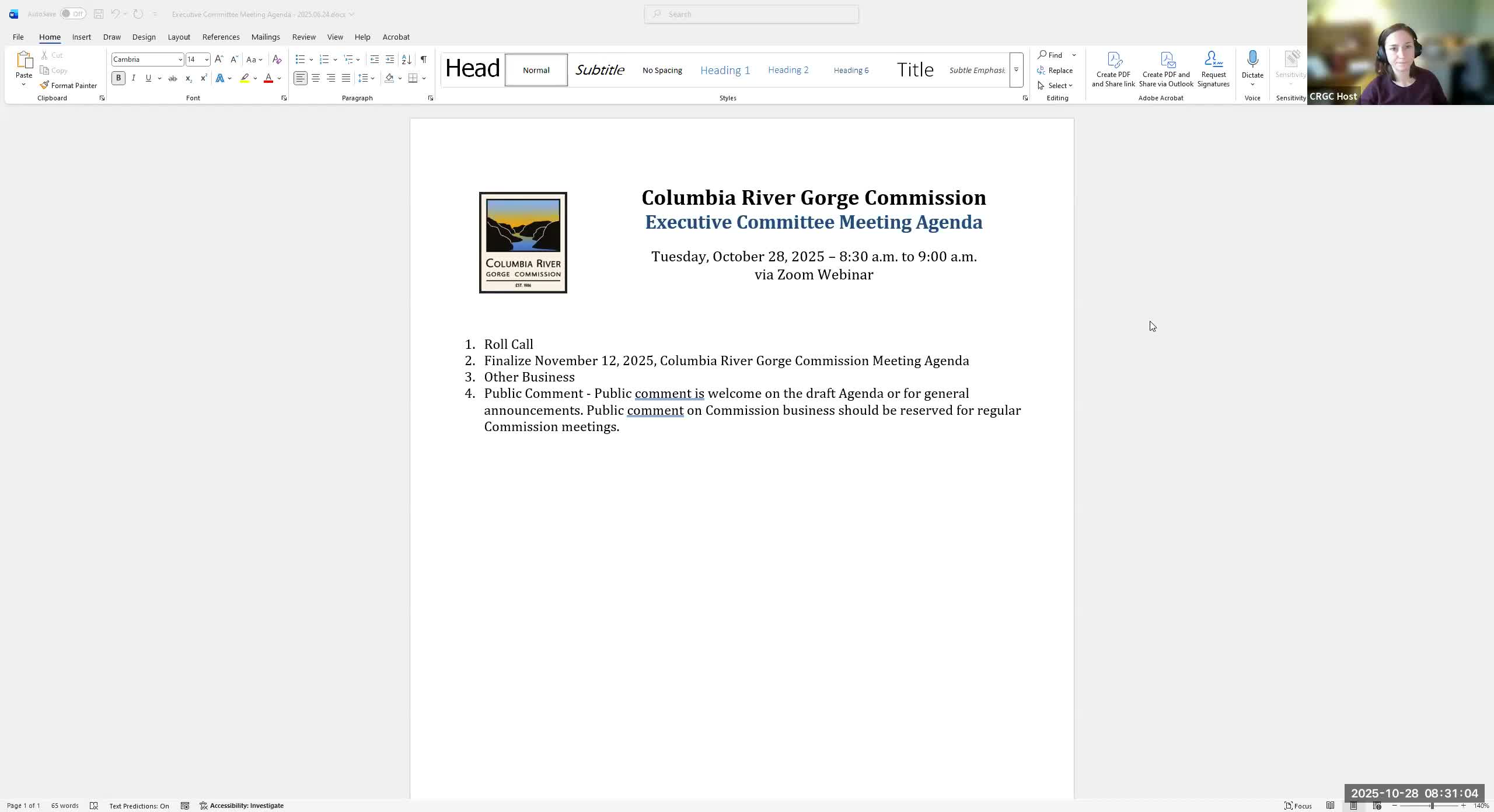
Columbia River Gorge Commission executive committee extends public comment, schedules tribal testimony and boosts outreach
Summary
At its Oct. 28 executive committee meeting the Columbia River Gorge Commission extended non-agenda public-comment time to 10 minutes, set a 10:00 a.m. time certain for treaty-tribe testimony at an upcoming management-plan hearing, and discussed stepped-up outreach including radio and news outlets.
The Columbia River Gorge Commission’s executive committee on Oct. 28 agreed to lengthen non-agenda public comment to 10 minutes and set aside a 10:00 a.m. time certain for treaty-tribe testimony at its upcoming management-plan hearing, while staff outlined outreach plans aimed at increasing public participation.
The changes were presented as logistical steps to ensure robust public input for the management-plan amendment hearing. Kelly, a commission staff member who led roll call and logistics, said staff had sent two separate letters to tribal councils and tribal staff and emailed “our mailing list of about 500 people.” Kelly also said staff planned direct outreach to county commissions to raise awareness of the hearing.
“A lot of these media outlets, including radio, have online presence,” a commissioner said, urging the commission to rely on local outlets to circulate hearing notices while the commission’s own social media approval remains pending. Commissioner Valerie Fowler added that local radio often covers Gorge Commission meetings and suggested amplifying notice there in addition to print and online postings.
Fowler also flagged that five minutes per non-agenda speaker is often too short and the committee agreed to extend the time. “That was gonna be my request,” Fowler said; staff replied, “We’ll extend that to 10 minutes.”
Staff described the plan for tribal participation as a 10:00 a.m. time certain during the hearing, with 40 minutes reserved so that if four tribes join they would have up to about 10 minutes each. Kelly said the committee expects the hearing discussion to take a couple of hours and hoped to reach a direction by about 11:50 a.m.; a noon agenda item will revisit the work plan agreed the previous July.
Jeff, a staff member who oversees elections logistics, said he would resend a memo describing how past elections have been handled and that candidates would have a voluntary opportunity to explain why they want to serve and what they would hope to accomplish. A commissioner raised concerns about avoiding any appearance of unfairness in elections; leadership agreed to offer candidates the chance to speak but stressed participation would remain optional.
Commissioner Donna Mickley, calling in late, asked to add Forest Service staff member Casey Gatz to the agenda and suggested removing an outdated reference to furloughs if staff are available. No members of the public were queued for comment during the executive committee meeting; one listening attendee was identified as Commissioner Nichols.
With no further business, the executive committee adjourned the Oct. 28 meeting. Staff also noted a minor technical issue about whether the meeting webcam/transcript settings were saving automatically and said they would verify recording settings going forward.