
House passes in‑gross education bill after heated debate over TK, ALE and LEA cuts
Get AI-powered insights, summaries, and transcripts
Subscribe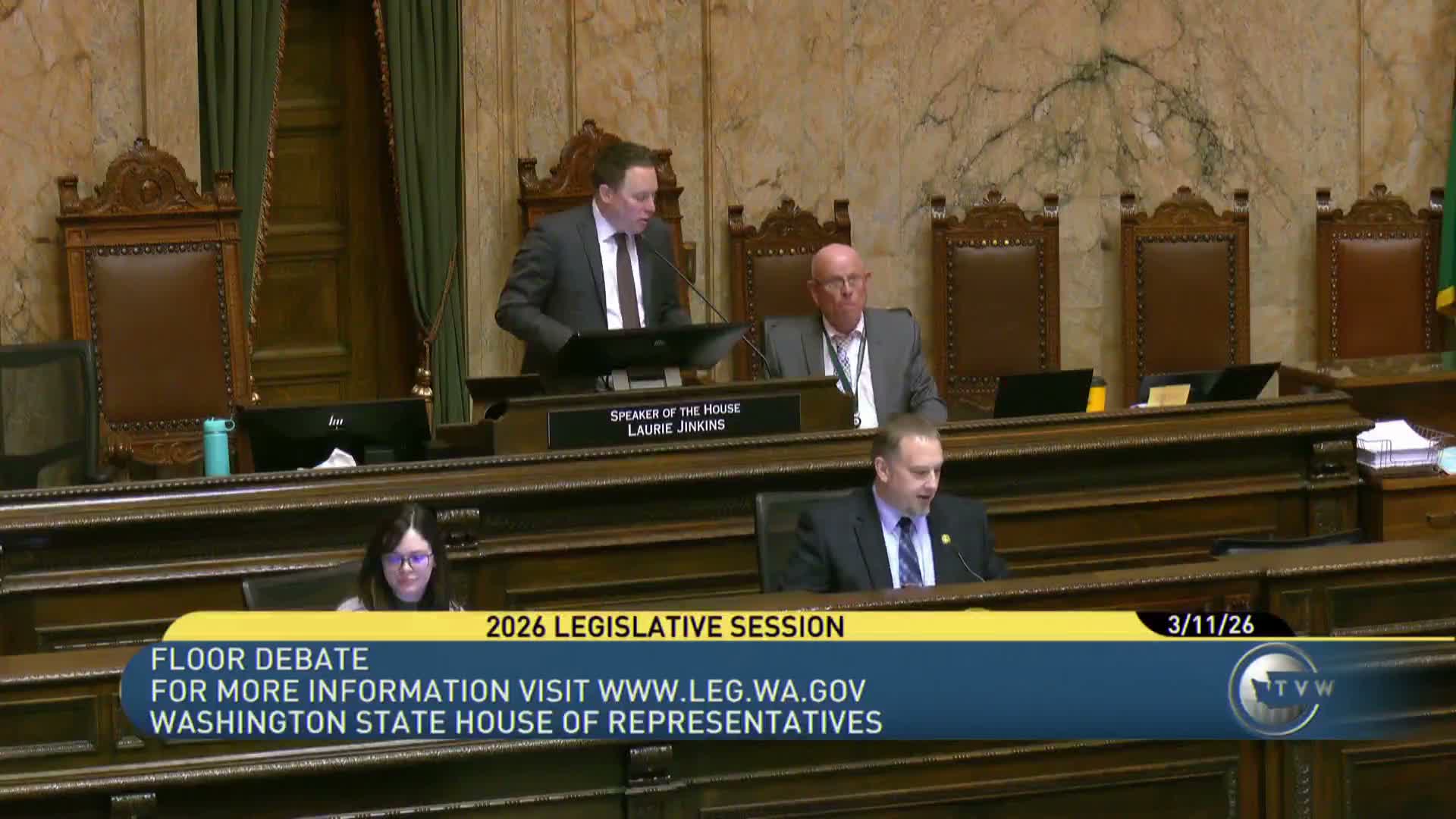
Summary
The House advanced Engrossed Substitute Senate Bill 62‑60 after hours of amendments and exchanges focused on transitional kindergarten eligibility, alternative learning experience funding and local effort assistance; multiple amendments failed or were adopted before final passage.
After a lengthy floor session on March 11, the Washington House approved Engrossed Substitute Senate Bill 62‑60 as amended by the House, a broad education‑related package that drew extended debate on funding priorities for transitional kindergarten (TTK), alternative learning experience programs (ALE) and local effort assistance (LEA).
Representative Rood (16th District) offered amendment 26‑37 to preserve existing TTK program rules and avoid disrupting districts that had operationalized programs; the amendment failed on a roll call (45 yays, 52 nays, 1 excused). Representative Kallen subsequently moved amendment 26‑54 — a different adjustment addressing TTK eligibility and priority access for specified student groups — and the House adopted that amendment (47 yays, 41 nays, 1 excused).
A broader fight focused on ALE and LEA funding formulas. Representative Couture moved amendment 26‑33 to remove limits on ALE enrollments counting toward LEA formulas, arguing the change would restore critical funding to property‑poor and rural districts that rely on ALE to stay solvent. Opponents said the amendment would undercut difficult budget choices and risk returning to the fiscal problems the McCleary litigation sought to remedy; that amendment failed (39 yays, 15 nays, 1 excused).
Members also debated proposals to cap superintendent salaries, limit percentage increases in collective bargaining agreements and protect education service district balances. Representative Couture characterized the debate as driven by concern for districts in "binding conditions," while Representative Gregersen and others emphasized local control and warned of unintended consequences. Multiple amendments on salaries and collective bargaining were debated but not adopted in the form proposed on the floor.
Final floor action: after amendment votes and floor debate the clerk reported 50 yays, 47 nays and 1 excused on final passage; Engrossed Substitute Senate Bill 62‑60 as amended by the House was declared passed.
Why it matters: the measure and its adopted amendments change funding and program eligibility that will affect early learning slots, levy equalization calculations and other K–12 resources across Washington’s districts. Several members warned that cuts could trigger litigation or long‑term funding inequity.
Next steps: implementation details will fall to agencies and school districts. Several members on the floor urged continued oversight; the transcript includes requests for clarifying reports and future committee follow‑ups.
Representative quotes: "We just spent 24 hours talking about an income tax that raises $4,000,000,000, and we're gonna cut $27,000,000 from TK," Representative Couture said during the debate.
Vote at a glance: Engrossed Substitute Senate Bill 62‑60 as amended by the House — final passage: 50 yays, 47 nays, 1 excused.