Get Full Government Meeting Transcripts, Videos, & Alerts Forever!
Get email alerts on the Municipal Budget And Bond topic
No spam. Unsubscribe anytime.
Hope Mills retreat advances plan for November bond to pay for parks and streets as leaders warn of tighter reserves
Summary
At a March budget retreat, Hope Mills council and staff agreed to pursue a November bond referendum to fund parks, a recreation complex and street repairs after finance staff described a drop in reserves and ongoing revenue pressures. Council also directed staff on park-site priorities and next steps for public outreach.
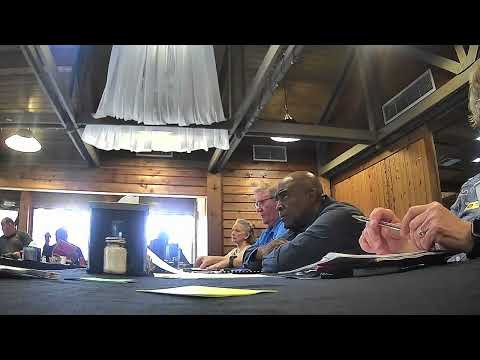
At a March budget retreat, Hope Mills council members and department heads directed staff to prepare a November bond referendum to fund a package of parks, recreation and street projects after a detailed finance briefing showed the town’s reserves and monthly revenues remain under pressure.
Mayor Jessica Flowers opened the day by framing the retreat as an alignment session between the council’s adopted strategic plan and the upcoming budget process. "Council trust the expertise of our staff," Flowers said as staff and elected officials discussed how strategy, budgeting and delivery should connect.
Finance director Drew Holland told the group that the town’s reserve position has tightened: the administration used about $1,700,000 from reserves last year and reserves ran from roughly $8 million down to about $6 million, he said. Holland also flagged a significant drop in monthly sales-tax receipts tied to county allocation changes, describing a roughly 36% decline in monthly sales-tax inflows and recommending caution on capital outlays. "We spent about 1,700,000 of those reserves," Holland said in the presentation.
Those constraints shaped discussion of how to fund priorities the council identified earlier this year: staff and council listed top priorities as staffing, parks and recreation projects (a recreation center, sports complex and Lake Park redevelopment), public-safety needs (vehicles and a police substation) and targeted infrastructure/street work.
On parks the council debated two competing approaches for a regional sports complex — continuing with a previously pursued Hodges property acquisition or returning athletic fields to the municipal golf-course site. After discussion about land-banking, infrastructure costs and neighborhood impacts, the board recorded direction not to move the previously approved ballfields back to the golf course and to continue work on the Hodges/alternative approaches and related funding scenarios.
Staff then presented bond financing options and tax-impact scenarios. Using the town’s current base calculations, staff illustrated an example where a 4-cent tax increase would support about $15 million in general-obligation bonds; staff emphasized the presentation numbers were estimates to frame the decision and that the board would next finalize projects, perform debt-capacity analysis and plan public education. The manager and finance staff explained two main paths: a general-obligation bond that requires a voter referendum (typically placed on the November ballot) and a limited-obligation bond that can be issued more quickly but does not give voters a direct approval vote.
After deliberations and questions about phasing, grant matches and taxpayer impacts, council members expressed support for placing a bond proposal on the November ballot and asked staff to proceed with the project list, final cost estimates, debt-capacity work and an outreach plan for voters. The transcript records that the board’s direction to proceed was taken as unanimous for the purposes of the retreat.
Council also examined the Community Investment Plan and a specific $2.3 million Lake Park redevelopment proposal that staff said could be substantially reduced if the town secures two federal land-and-water conservation matches and other grants. Staff recommended pursuing grant matches alongside bond planning to reduce the town share.
Public-safety requests drew parallel attention: police leaders described acute space constraints (evidence storage and locker rooms) and presented three lease/purchase options for additional workspace; they also requested continued vehicle-rotation funding and asked to replace about five high-mileage vehicles in next year’s budget. Schools’ SRO contract and its renewal timing were identified as an additional budget factor to watch.
Next steps: staff will finalize the bond project list and cost estimates, continue grant-seeking and prepare materials for a March 26 delegation outreach meeting, run debt-capacity analysis and public-education work, and schedule May budget workshops (one focused on public safety and one on other departments). The council approved proceeding with the bond-preparation tasks and asked for staged issuance plans so the town can phase project spending and incorporate grant receipts where possible.
What the decision does and does not do: the retreat decision starts the work needed to put a bond on the ballot and to assemble financing and outreach packages; it is not a final commitment of specific dollar amounts for each project. Staff will return with precise cost estimates, finalized project lists and the debt analysis required to set a ballot amount and an exact tax-impact estimate.
The council also asked staff to include the modest administrative costs of prior financial-advisor work in the bond plan so those fees could be financed with bond proceeds rather than paid from the general fund.
The retreat closed with calendar items and a reminder that the budget and the bond plan will require public education and follow-up hearings before any voter referendum.