
Committee advances bill broadening Efficiency Maine demand‑response program, adds outreach priority for low‑income households
Get AI-powered insights, summaries, and transcripts
Subscribe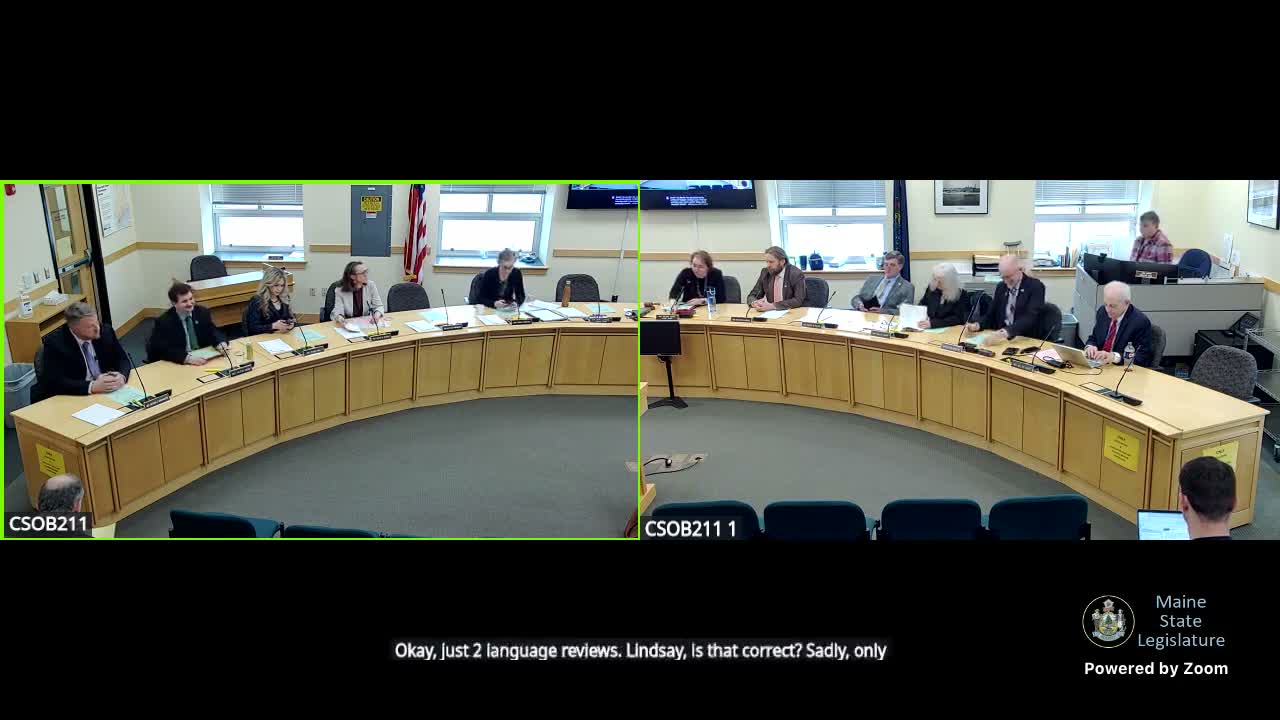
Summary
The Maine House Energy, Utilities and Technology Committee advanced LD 2140, shifting the legislation from a limited pilot to a standing residential demand‑response program run by the Efficiency Maine Trust and amended the language to prioritize outreach to low‑income customers, renters and those with the greatest potential to reduce peak demand; the committee voted 6–5 to report the measure out.
The House Energy, Utilities and Technology Committee voted to advance LD 2140, a measure that directs the Efficiency Maine Trust to establish a demand‑response program aimed at reducing household electricity costs and improving grid reliability.
The committee opened a work session after a successful motion to reconsider the earlier report on the bill. During the session, the sponsor and witnesses described changes that shift the proposal from a time‑limited pilot to an ongoing program available to residential customers statewide. Committee members pressed for clarity about who would be prioritized and how the Trust would avoid imposing unintended costs on participants.
Michael Stoddard, executive director of the Efficiency Maine Trust, told the committee the change from pilot to program is intended to make demand‑response tools available to all residential customers while giving the Trust latitude to emphasize low‑income and hard‑to‑reach households. “We already do demand‑response work for commercial and industrial customers; what’s missing is a residential offering,” Stoddard said. He added that utilities’ cooperation in providing data is critical so the Trust can assess participation without producing increased ratepayer costs.
Several committee members urged narrower targeting to ensure the program benefits households for whom bill savings are most meaningful. Representative (name as spoken in the record) asked whether the program would “prioritize outreach and participation for low‑income electricity customers,” and Stoddard said the bill’s design is intended to do both: enable wide participation while explicitly focusing outreach on lower‑income renters and customers who face the greatest affordability challenges.
Central Maine Power representative Craig Nel said the utilities expect some incremental, recoverable costs associated with outreach and the data‑sharing described in the bill, but he did not anticipate those costs would be large.
Representative Chris Kessler moved to report LD 2140 out as “ought to pass as amended,” and Senator Mark Lawrence seconded. Following a brief caucus, the committee adopted a friendly amendment clarifying that the outreach and education program must be designed to prioritize low‑income electricity customers, as well as renters and customers with the greatest potential for peak‑demand reductions. The clerk announced the roll‑call result as 6 in favor, 5 opposed, and 2 absent; the motion prevailed.
Next steps: the committee will report LD 2140 to the calendar with the adopted amendment. The record includes a minority report of 'ought not to pass' from members who opposed the measure.