
Committee hears bill to revise Greater Minnesota parks-and-trails statute and extend legacy grant deadlines
Get AI-powered insights, summaries, and transcripts
Subscribe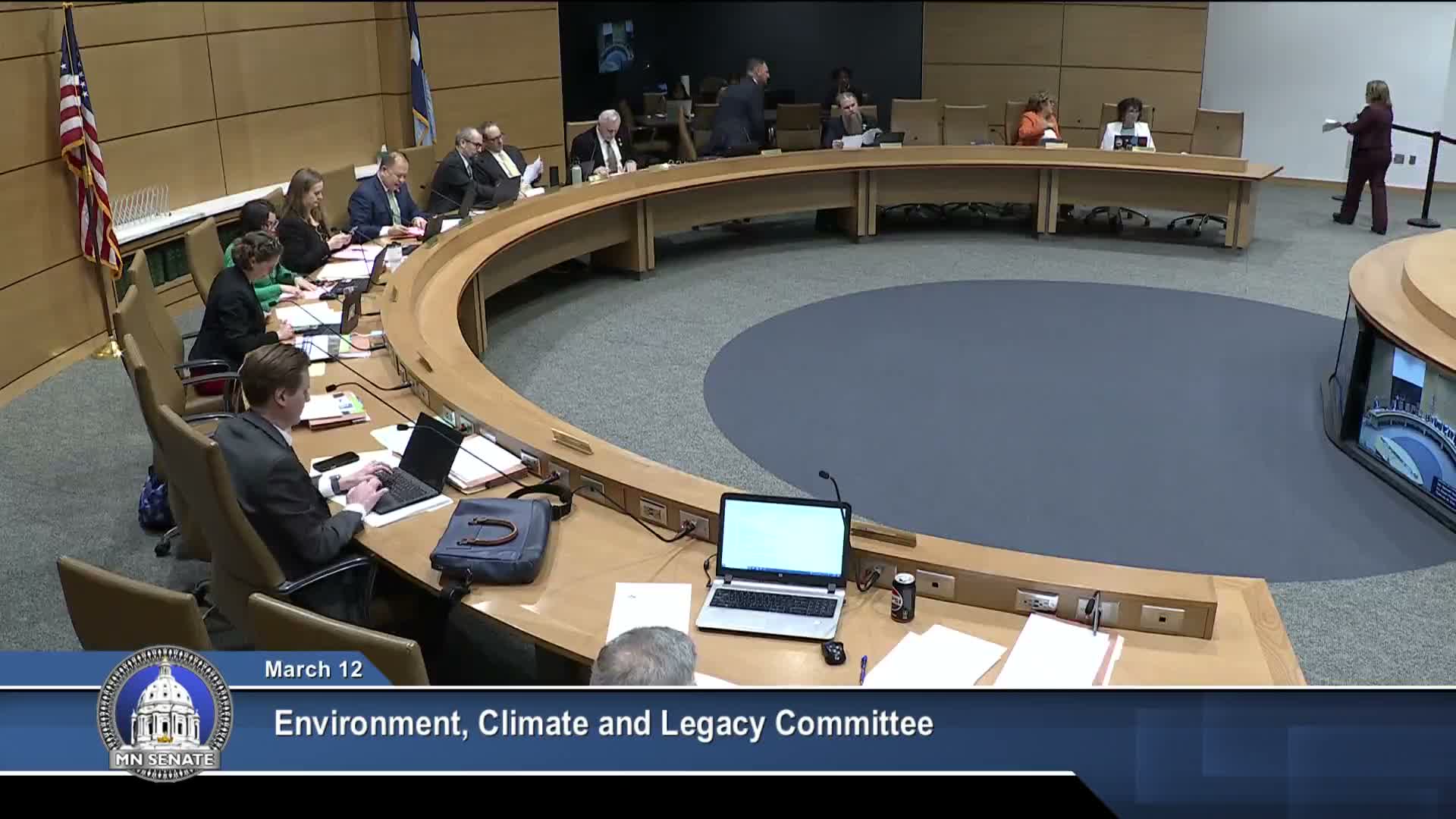
Summary
Senate File 37-99 would remove outdated statutory language for the Greater Minnesota Regional Parks and Trails Commission and extend deadlines for five legacy-funded projects; commission leaders said projects need time because of permitting delays, rebids and flood impacts, and the bill was laid over.
Sen. Hauschild told the Senate Environment Committee that Senate File 37-99 modernizes statutory language governing the Greater Minnesota Regional Parks and Trails Commission and extends the time to complete several legacy-funded projects.
Renee Matson, executive director of the Greater Minnesota Regional Parks and Trails Commission, said five grants need more time to finish work because of permitting, rebidding and flood-related delays; she emphasized that the projects are not seeking additional dollars, just more time to complete work with existing funds. "None of these facilities are asking for additional dollars. They can do it with the dollars that they have available," Matson said.
Chair Rick Anderson, a Lyon County commissioner and longtime commission member, outlined statutory updates to remove items completed in 2013, adjust public-engagement expectations for master plans and allow more flexible grant prioritization by district. The proposed changes would also change some internal commission officer election timing and update language to reflect mature operations.
Committee members asked technical questions about limits on the 1% 'coordination among partners' appropriation and public-hearing requirements; Matson and staff said the coordination funding is tied to a specific appropriation and that master plans are expected to include multiple public-engagement sessions. The bill was laid over for further consideration.