Get AI Briefings, Transcripts & Alerts on Local & National Government Meetings — Forever.
Council renews Axon body‑camera contract, adds unlimited third‑party storage and AI trial
Loading...
Summary
Midlothian approved a five‑year renewal of its Axon body‑camera contract that adds unlimited third‑party storage, auto‑tagging licensing and a one‑year trial of Axon's Draft1 AI report‑writing tool; the city said the arrangement reduces near‑term costs and allows staff to evaluate the AI tool before committing to annual fees.
The Midlothian City Council on Dec. 9 approved a five‑year renewal and modification of the city's Axon body‑camera contract that bundles several added services and includes a trial of Axon's Draft1 AI report‑writing software.
The police commander explained staff needed an auto‑tagging license to preserve integration with the department's computer‑aided dispatch system and required additional storage capacity to migrate legacy footage into evidence.com. Staff said adding 10 terabytes of storage would cover the next two years but that negotiating together with other items allowed the department to secure unlimited third‑party storage as part of a renegotiated five‑year package. "We added in the unlimited third party storage. We added the auto tagging licensing," the commander said.
The negotiated package reduced the city's immediate payments compared with separately purchasing each feature, and the agreement also includes a one‑year trial of Axon Draft1 AI software for a nominal fee to allow the department to evaluate claimed staff‑time savings. The commander said implementation of Draft1 would be subject to a 30‑day opt‑out and a future budget decision if the city chose to continue to the paid license.
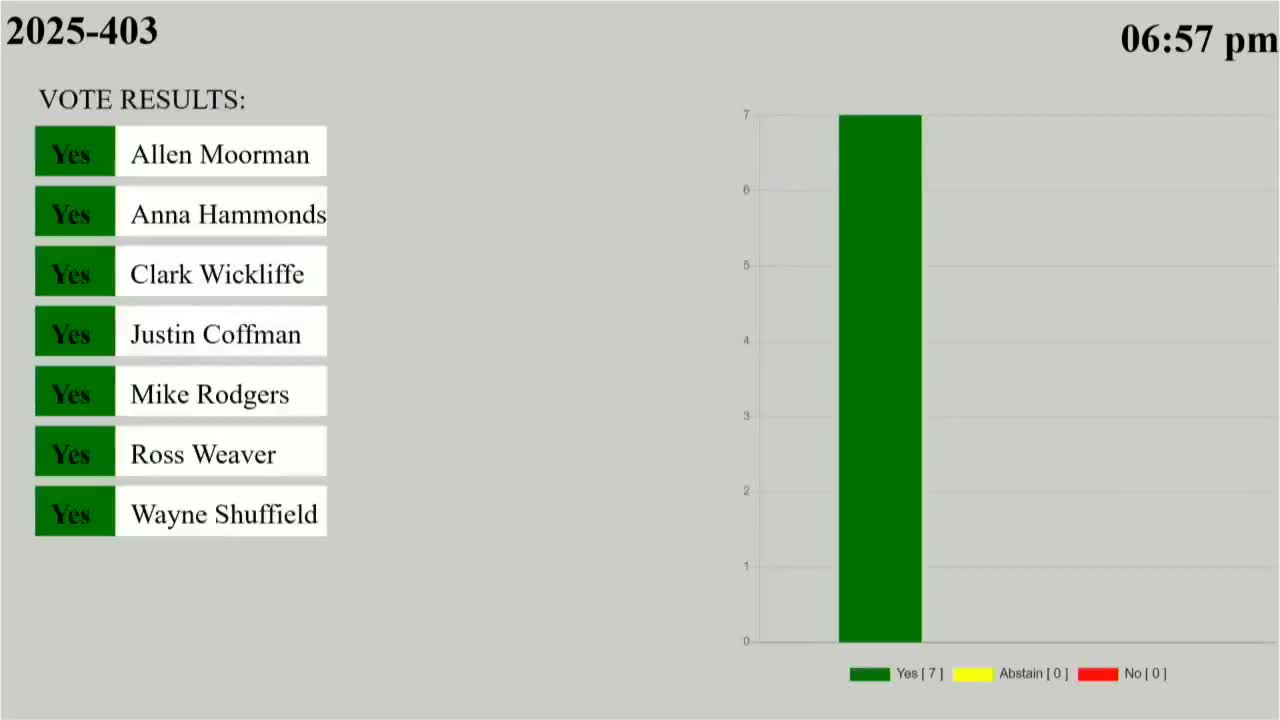
Council members asked how the AI feature works and what metrics the department would use for evaluation. The commander said Draft1 uses transcriptions of audio recordings to identify speakers and produce a draft narrative specific to law‑enforcement report types; it then prompts officers to fill gaps rather than invent missing facts. "It transcribes it word for word, and then it applies that and essentially creates... a starting point for your report," the commander said. Council approved the contract renewal unanimously (7–0).
Next steps: Police staff will arrange the migration to evidence.com, monitor storage needs and return during the budget cycle with metrics and recommendations about continued AI licensing.