
IDB chair outlines $300,000 fund, housing focus and five priorities; board elects officers
Get AI-powered insights, summaries, and transcripts
Subscribe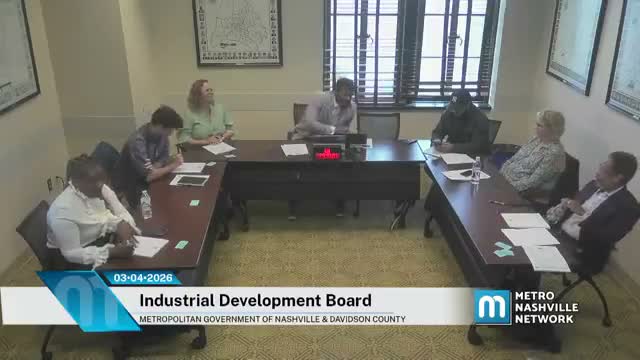
Summary
At its annual meeting the Industrial Development Board previewed a new annual report, outlined five strategic priorities (including housing and small business), proposed an IDB‑funded housing grant using roughly $300,000 in board funds, and elected officers: Nigel Hodge (chair), Josh Haston (vice chair), Yankee (secretary/treasurer) and Van Reese (assistant secretary/treasurer).
Chair Nigel Hodge used the annual meeting to present a new marketing/annual report tool, recap 2024 accomplishments and lay out five priorities for the board: telling the IDB’s story, advancing strategic projects, targeting small‑business support, maintaining a strong housing focus and exploring a land‑acquisition fund.
Hodge highlighted recent board projects such as 900 at Cleveland Park, recovery housing at Cumberland Heights, the Ernest Rip Patton Transit Center and other incentive work. He said the IDB has roughly $300,000 in its account and proposed a board‑funded housing grant to be aligned with the unified housing strategy; Hodge said the grant would be covered by revenues the board now collects from bond fees and that a single large project closing could fund a sizable portion of the grant.
The chair framed a longer‑term ambition for the board to set aside a portion of annual revenues for a land‑acquisition fund to allow the IDB to own and control property for future strategic projects. He asked members to consider what legacy they would like to leave and to provide input on the 2025 report.
Officer elections followed a short debate about whether to approve the existing slate or move position‑by‑position. The board took nominations from the floor and elected Nigel Hodge as chair, Joshua (Josh) Haston as vice chair, board member Yankee as secretary/treasurer, and Van Reese as assistant secretary/treasurer. Several members emphasized transparency, outreach and closer coordination with Metro Council and the mayor’s office on initiatives that require additional approvals.
What happens next: staff will circulate the annual report, the proposed housing‑grant framework will be scheduled for a future meeting for board consideration, and officers will continue in their roles through the next annual cycle.