Get Full Government Meeting Transcripts, Videos, & Alerts Forever!
Get email alerts on the Data Centers topic
No spam. Unsubscribe anytime.
Residents, environmental groups urge New Castle County to pass data‑center ordinance; unions call for clear design standards
Summary
At a Feb. 24 New Castle County Council meeting, more than a dozen residents and advocacy groups urged passage of Ordinance 25‑101 to add guardrails for large data centers, citing water use, decommissioning and generator pollution. Union speakers said projects can bring long construction careers but stressed the need for clear engineering limits.
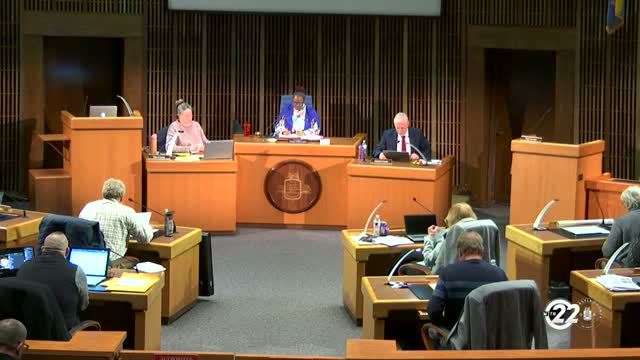
Hundreds of residents, environmental advocates and union representatives packed the public‑comment period of the New Castle County Council meeting on Feb. 24 to press council members on Ordinance 25‑101, a proposed local code to regulate large “hyperscale” data centers.
Supporters urged the council to adopt the ordinance with its protections — and to make parts retroactive for projects already proposed. “We want this 25‑101 to be passed with all of the protections that have been needed,” said Dale Swain, who told the council the ordinance is a “common‑sense” measure to require controls that other communities use. Peter Stransky of North Wilmington said the county should use the ordinance to guard its finances and require developers to provide decommissioning funds and financial assurances to protect taxpayers if projects do not deliver promised benefits.
Environmental groups highlighted water and air impacts. “Hyperscale data centers can consume an incredible amount of water for their cooling systems,” Tabitha Earls, a Wilmington resident and software engineer, told the council, citing the potential for millions of gallons per day and risks to local treatment systems. Marissa McClinton of the Sierra Club Delaware chapter said new filings indicate multiple proposed projects that together could add gigawatts of electric demand and rely on backup generators; she urged either passage of the ordinance with retroactivity or a moratorium to allow the county time to set standards.
Union and trades speakers emphasized jobs while urging clear technical limits. “On‑site, there are thousands of workers ... that kind of scale doesn’t happen by accident,” said Matthew Amendola, a union electrician, urging standards that allow projects to capture local job and apprenticeship opportunities. Chris Muntz, business manager for Local 74 Plumbers and Pipefitters, warned that overly restrictive rules could send projects and jobs to neighboring states, but said environmental protections and strong regulations can coexist with employment benefits.
Speakers on both sides called for clear engineering and siting rules: opponents of unregulated projects want binding obligations for water supply, decommissioning and backup‑power design; supporters of development want rules that are predictable and do not create unnecessary roadblocks to investment. Online speaker Rachel Krantz, who works in software development, urged use of emerging research on noise and infrasound from large facilities in siting decisions.
The council did not take a final vote on Ordinance 25‑101 at the meeting; council members repeatedly referenced that the ordinance had been tabled or delayed for discussion. Council members heard extended public comment and held a short procedural discussion about consent‑agenda practice after the public‑comment period. The ordinance remains before the council for future consideration.