Portland planning board reviews proposed 750-foot buffer for large theaters after Live Nation venue application draws debate
Loading...
Summary
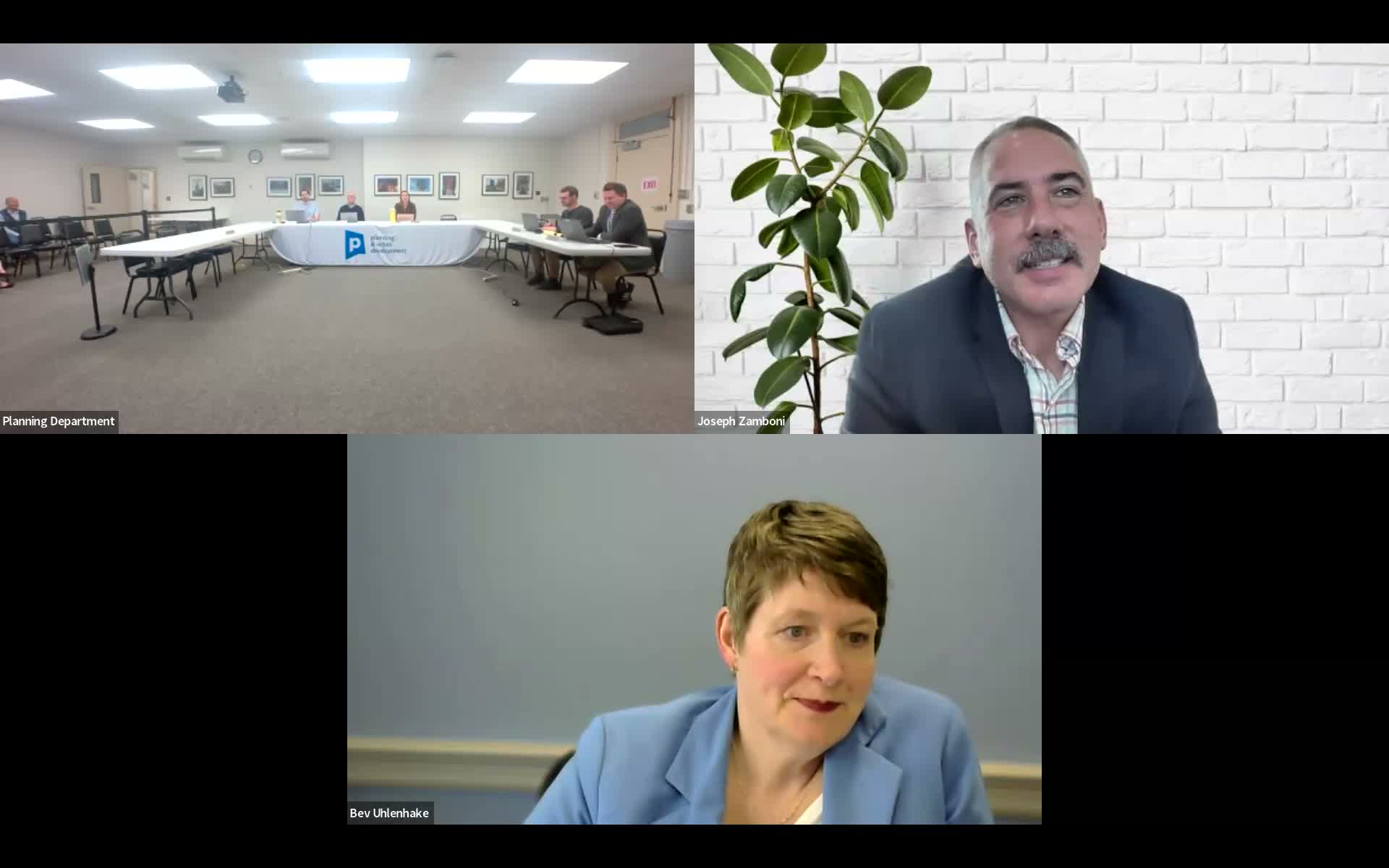
The Portland Planning Board held a hybrid workshop to review a text amendment that would split theater definitions by size and add a 750-foot minimum separation between large theaters in downtown zoning. Public comment focused on a proposed Portland Music Hall and the risk that a large, potentially retroactive buffer would block that project and deter investment.
The Portland Planning Board on Tuesday reviewed a staff-drafted text amendment that would redefine theaters by size and require a minimum 750-foot separation between large theaters and performance halls in the B-3 downtown business zone and the Waterfront Central Zone.
City staff said the proposal would split the existing single definition of theaters into two categories — small venues under 1,000 occupants and large venues at 1,000 occupants or more — and add supplemental use standards in proposed section 6.4.4.2 that create the 750-foot spacing requirement. Staff emphasized that the board’s role at the workshop is advisory: the board will recommend a course of action to City Council, which has final authority.
"We received a major application for a new music venue next door here at City Hall — a 3,300-capacity music venue proposed by Live Nation" and "the ordinance requires those types of venues to dedicate a certain percentage of ticket sales to a fund that would help support digital artists," staff said in the presentation, summarizing the application history, the 2007 100-foot buffer adopted after a mayor’s nightlife task force, and the council moratorium and subsequent sector-benefit ordinance.
The staff presentation included maps showing three existing venues — Merrill Auditorium, State Theater and Aura — with 100-, 250- and 750-foot buffers overlaid. Staff said a 750-foot requirement would carve out large downtown areas, particularly along Congress Street, restricting where new 1,000-plus capacity venues could locate.
Supporters of the proposed Portland Music Hall told the board a large buffer would have an outsized, likely project-killing effect. Mary Poppstein, representing Portland Music Holdings, said the 100-foot rule "had nothing to do with large music venues" and argued that retroactive application of a 750-foot buffer "would kill that project." Tom Bolton, a Portland resident and commercial real-estate broker, said the venue could generate jobs and economic activity and warned that retroactive zoning would send a bad signal to investors.
"This project will support various jobs from musicians, the venue staff, the sound engineers, promoters, and artists," Bolton said during public comment, urging the board to consider economic benefits cited in prior analyses.
Several speakers urged the board to reject a broad spacing mandate and said existing regulatory tools — site plan review, traffic movement permits and event management requirements — can mitigate traffic and circulation concerns on a case-by-case basis. Thomas O'Boyle, director of advocacy for the Portland Regional Chamber, cited staff research and an Oxford Economics analysis estimating more than $44 million in annual economic impact and roughly $3 million a year in local tax revenue from the proposed venue, and recommended rejecting both a 750-foot and a 250-foot buffer.
Project engineers and technical commenters pressed the board for clarity on measurement details. Dan Riley (Sebago Technics), working for the applicant, asked whether the separation would be measured as a straight line or along walking routes, whether measurements should use edges or centers of door arrays, and how ADA-accessible entrances would be handled; he warned that those technical choices could change whether an application meets the standard.
Staff said the draft text clarifies the "main entrance" definition ("one or more public entrances intended to provide primary access for patrons") and indicated that permanent inspections staff typically measure along walking routes from the edge of the primary entrance; staff committed to provide written clarification from permanent inspections before the public hearing.
Board members asked about legal precedent and retroactivity. Multiple speakers, including the venue developer Todd Goldenbark, said the applicant submitted a complete application on Dec. 19, 2024, and warned that retroactive zoning would undercut predictability for developers. Staff agreed to research the city's history of retroactive ordinances and return with that information for the public hearing packet.
Members also discussed peer-city approaches to managing entertainment uses. Staff said their review found a range of practices: many cities rely on site-review and operational controls rather than fixed spacing, while a few cities couple zoning incentives or specific theater-district strategies with other tools.
The workshop concluded without a vote. Staff will include clarifications on measurement methodology, legislative history on retroactivity, and additional peer-city examples in the packet for the board’s next meeting, when a public hearing is expected.
What happens next: The board will hold a public hearing at its next meeting where members may make a formal recommendation to City Council to approve, modify or reject the text amendment; City Council retains final decision authority.