
Committee backs concurrency bill that lets localities delay permits with guardrails
Get AI-powered insights, summaries, and transcripts
Subscribe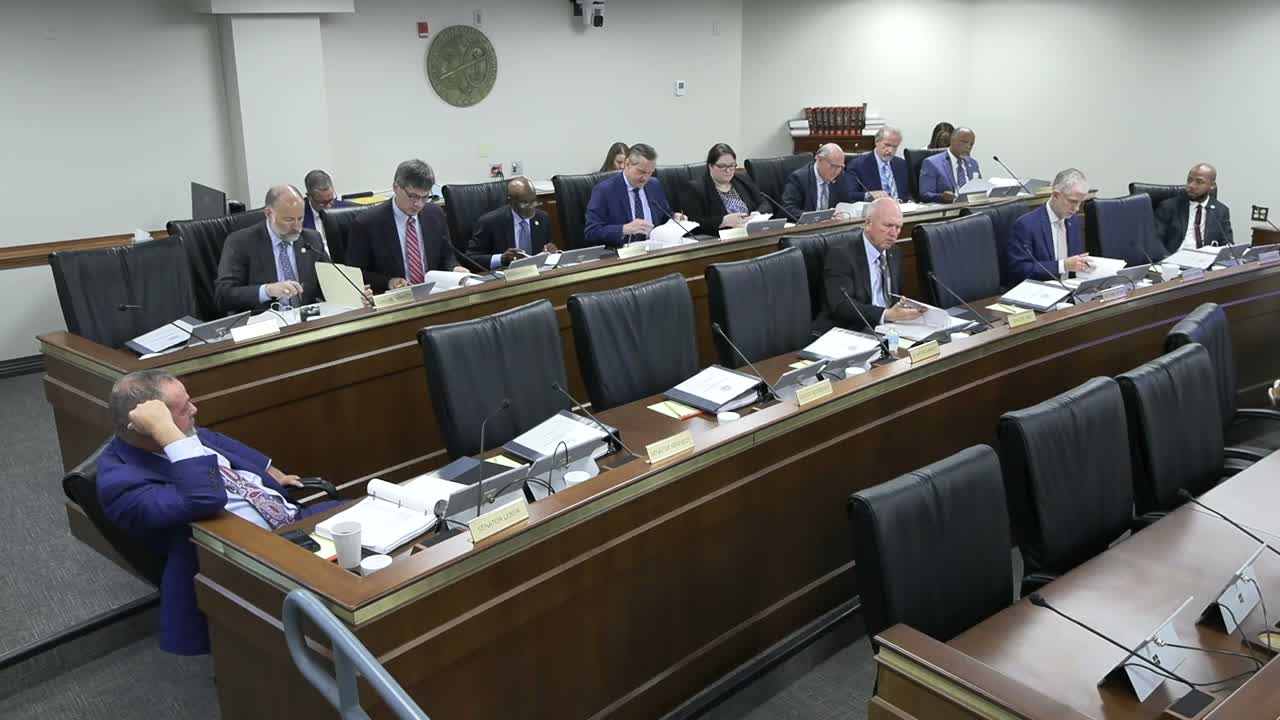
Summary
The LCI Committee reported favorably on S-227 after adopting a subcommittee amendment that limits permissible infrastructure considerations to core services, requires capital plans to address deficiencies, and creates a rebuttable presumption favoring compliant local governments.
The LCI Committee adopted an amendment and reported favorably on S-227, legislation that would authorize local governments to enact "concurrency" programs conditioning development permits on objective findings that core infrastructure can accommodate new growth.
The bill’s sponsor, who identified himself as the sponsor during the hearing, said concurrency is intended to ensure growth occurs alongside roads, water and sewer, fire and police protection. "The concept is that a building permit or an authorization to build will not be granted by local government unless there is a finding that the levels of service... can accommodate that growth," the sponsor said, describing the bill as a tool distinct from zoning and impact fees.
The subcommittee amendment narrows the scope of allowable infrastructure considerations to critical systems (roads, water/sewer, fire and police protection), requires a financially viable capital plan to remedy identified deficiencies, and creates a presumption that a local government acting under those safeguards has acted appropriately; that presumption can be rebutted only by clear and convincing evidence in a civil trial, the sponsor said.
Committee members pressed for clarifications. Senator Pickens raised how the bill would treat absent sewer and multi-jurisdictional road fixes; the sponsor and other members said concurrency requires a capital-improvement plan that could draw on local-option sales taxes, the State Infrastructure Bank, DOT project lists or federal funds, and that the local government—not the state—must show a reasonable plan to address the deficiency.
A committee member cited a York County example where withholding new permits until a major road project (Exit 88 diverging-diamond/interchange) was completed led to immediate new construction once the roadway was opened. "The goal is not to stop a developer... but to put some constraints around your ability to provide services," the member said.
Senator Tedrick asked about an exemption for affordable housing and sought assurance the tool would not be used to block workforce housing; committee members pointed to exemption language in the amendment. During the hearing, security announced a voluntary evacuation option after a tornado warning for the building; committee business continued and the amendment was adopted by voice vote.
Procedural step: The subcommittee amendment was adopted and the committee voted to report S-227 favorably as amended by voice vote. The sponsor said he would continue discussions with stakeholders before floor action.
Next steps: S-227 was reported favorably; further stakeholder engagement and floor consideration were anticipated.