Get Full Government Meeting Transcripts, Videos, & Alerts Forever!
Get email alerts on the Capital Budgeting topic
No spam. Unsubscribe anytime.
Portland finance committee: FY27 capital requests total $72M, likely funding about $30M
Summary
At a finance committee meeting, staff told councilors the FY27 capital improvement plan includes about $72 million in current‑year requests but likely available funding is 'up to $30 million.' The presentation outlined debt capacity, FEMA reimbursements, TIF and impact fee constraints and next steps for review.
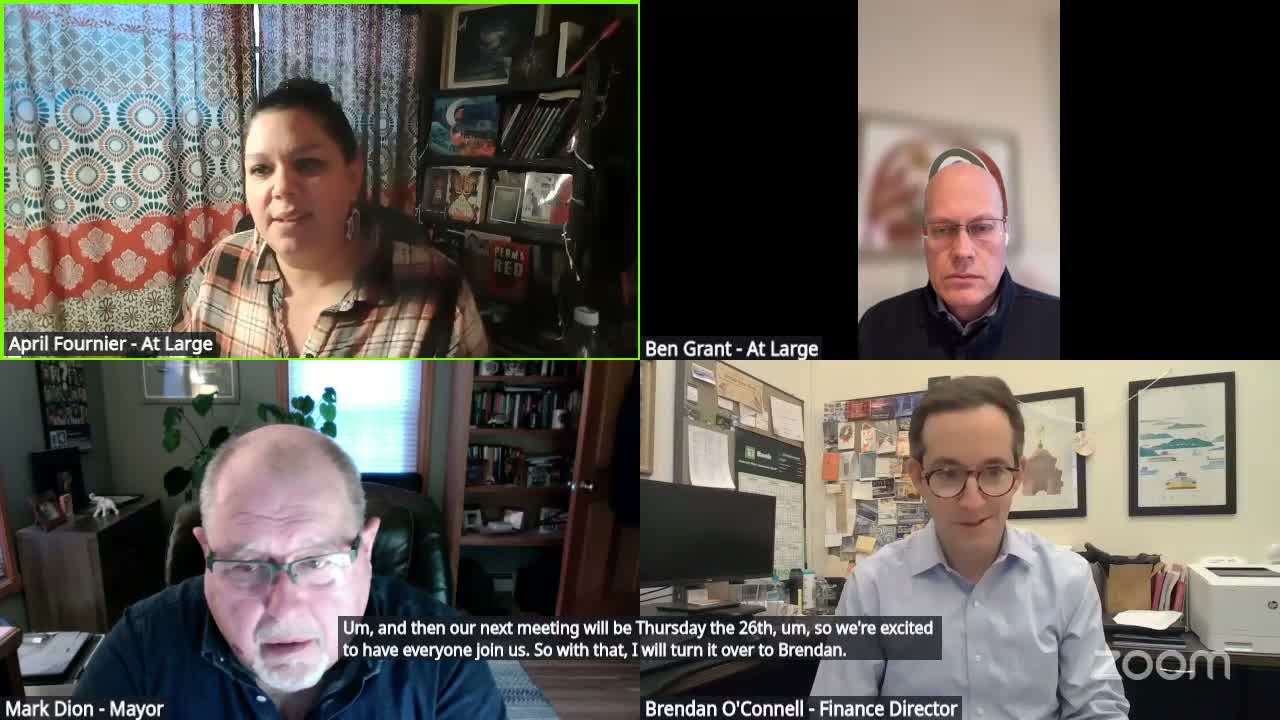
PortlandCity Council Finance Committee Chair April Fournier convened the committee for a review of the fiscal year 2027 capital improvement plan and financing options, where Finance Director Brandon O'Connell said departments submitted roughly $72 million in current‑year CIP requests while the city expects to be able to fund "up to $30,000,000."
O'Connell, introduced at the meeting as the city's finance director, said the CIP process uses a scoring matrix that now includes equity and sustainability and that departments answered evaluation criteria on each project. "We gave a presentation only a few months ago in November about the criteria," he said, and added that the city manager's recommended CIP will be presented to the finance committee on Feb. 26 for further review.
Why it matters: the gap between requests and realistic funding means councilors will have to prioritize projects or find alternate funding. O'Connell listed common CIP funding sources — municipal borrowing (10‑ or 20‑year bonds), use of fund balance, operating revenues, grants, private donations, TIF proceeds, impact fees and public‑private partnerships — and said affordability, not legal borrowing capacity, is the real constraint. "The real constraint is affordability, not anything in our debt capacity," he said.
The presentation included several concrete figures and examples. O'Connell said the city general fund had about $51,000,000 of current‑year requests (including $9,000,000 in fleet requests), the library submitted $3,000,000, Portland Public Schools requested $5,900,000 and enterprise funds (sewer and stormwater) requested about $12,000,000. He estimated total current‑year requests at roughly $72,000,000 and projected likely funding to be "in the up to $30,000,000 range," meaning roughly 40–45% of requests could be funded.
O'Connell also credited staff work that secured FEMA reimbursements for prior erosion and rehabilitation projects, saying "we received full reimbursement for all of these projects," a windfall he said would bolster available CIP funds by about $5,000,000. He identified dedicated revenue sources, including a Merrill ticket fee fund with over $400,000 available for Merrill improvements and a cruise ship infrastructure fee (about $3 per ship) used for related maintenance.
Council members raised questions about distinguishing deferred maintenance from new projects so the public can better understand priorities. A committee member urged clarity: "It's not particularly dramatic to invest money in a new roof, but it's absolutely essential," said the member, who pressed staff to break out asset maintenance versus new or enhanced requests. O'Connell replied that asset condition is a scored criterion and the data can be presented to show maintenance needs separately; he cited a $4,200,000 request for the copper roof at City Hall as an example that may be essential but not showy.
O'Connell provided debt service context: total debt service across city, schools and enterprise funds was shown at about $24,100,000 for FY27, with city‑only debt service near $9,100,000; he estimated roughly $14,500,000 of borrowing capacity for this CIP year when factoring useful lives and existing obligations. He cautioned, however, that borrowing affects future councils' flexibility and that the committee typically aims to set annual CIP targets so property tax increases remain in line with council policy.
Next steps: committee members will receive the city manager's recommended CIP on Feb. 26, continue review over several finance committee meetings in February and potentially March, and then forward recommendations to the full council for consideration in March or April. O'Connell said staff will prepare supplemental materials that address committee questions and break out maintenance versus new projects as requested.
The meeting concluded with scheduling for the CIP review and the committee's plan to scrutinize TIF and impact‑fee eligibility as part of upcoming discussions.