Get AI Briefings, Transcripts & Alerts on Local & National Government Meetings — Forever.
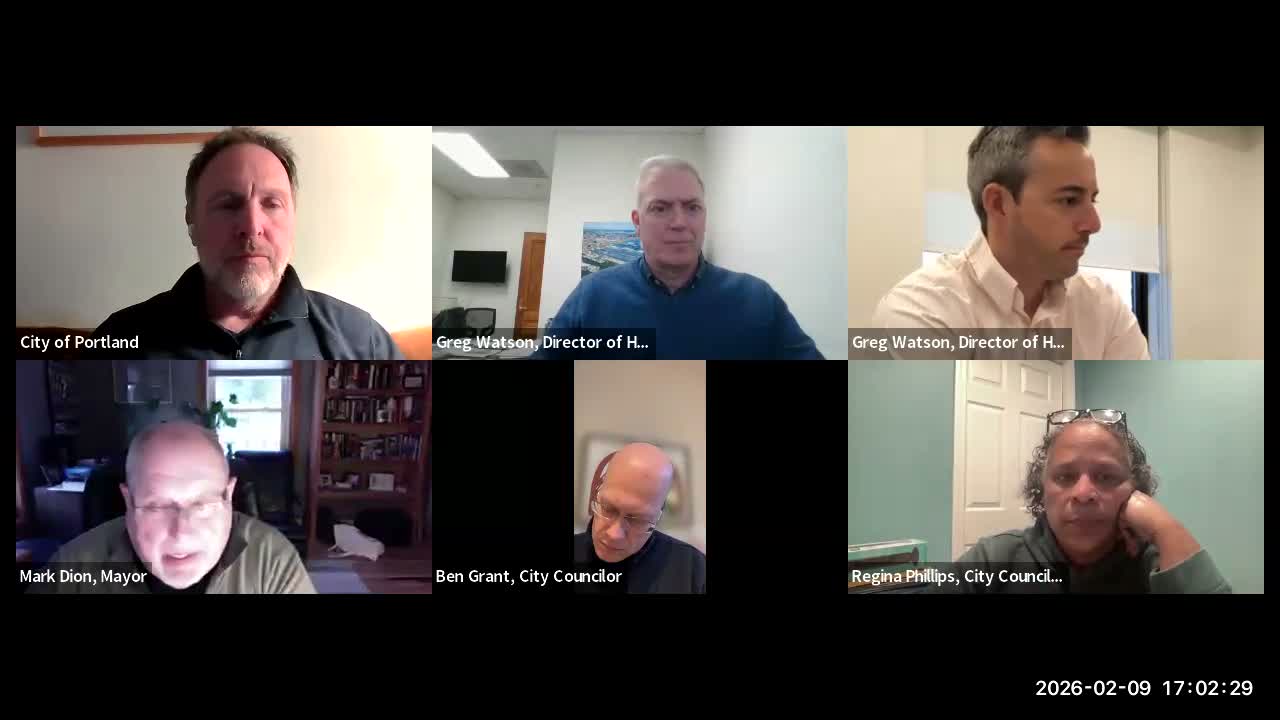
Portland council votes 7–1 to enter executive session on Bayside parcels after public demands for transparency
Loading...
Summary
The Portland City Council voted 7–1 to enter an executive session to discuss marketing strategy for city-owned Bayside parcels after public commenters urged more open engagement; councilors and counsel said any sale would still require later council approval.
The Portland City Council voted 7–1 to enter an executive session to discuss marketing strategy for several city-owned Bayside parcels, after public commenters said decisions were being made out of public view.
Joey Brunell of Pine Street told the council it was "a deliberate strategy to hide decisions from the public," saying staff had acted on what he described as "guidance provided by the council in a closed door session" and that the public had been denied the chance to hear deliberations or know how individual councilors guided decisions.
Council and staff framed the closed discussion narrowly as an information-gathering session with a broker. Corporation counsel said the council could meet in executive session under statute, stating, as read aloud, "1 MRS 4056 c explicitly gives the council the ability to go into executive session to discuss the disposition, the sale of city owned property," and noted the meeting would address marketing and negotiating strategies and property values.
Greg (city staff) said the session follows guidance from a prior executive session on Sept. 29, 2025, to begin a process to select a commercial broker; he named the Boulos company and said Nate Stevens and John Finnegan from Boulos were present to discuss how they would approach marketing the parcels.
Several councilors reassured the public that any actual sale would require subsequent public steps. Councilor Sykes asked for clarification about the council’s role; corporation counsel and staff said no purchase-and-sale agreement could be signed without council approval and that further review (including committee review and public engagement) would follow if proposals emerged. Councilor Grant told viewers the current session’s "sole narrow thing" was entering an agreement with a broker, "no more, no less." Councilor Bullock said language around "marketing and selling" had caused public alarm and urged care with terminology.
Speakers also called for a public rubric and broader engagement. Steven LaDodge urged the council to develop criteria to evaluate developer proposals and to minimize the time between public discussions about the parcels.
The mayor noted zoning constraints and reminded the body that the council previously provided $15,000,000 in bridge financing toward potential development; he suggested the Housing and Economic Development Committee would play a role in gathering public input before any sale.
When members voted on whether to go into executive session, the clerk recorded seven votes in favor and one opposed; Councilor Phillips cast the lone no. Corporation counsel stopped the public recording and directed participants to join a separate executive-session link; no sale or purchase decision was made in open session.
The council’s next publicly visible steps on the Bayside parcels will depend on what proposals, if any, are received and on committee and council review; any purchase-and-sale agreement would require a subsequent public vote by the council.