Get Full Government Meeting Transcripts, Videos, & Alerts Forever!
Get email alerts on the Comprehensive Plan topic
No spam. Unsubscribe anytime.
Angleton workshop urges clearer design rules, broader outreach as growth approaches
Summary
Consultants and residents at an Angleton workshop emphasized updating the comprehensive plan to protect small-town character, translate recommendations into zoning and form-based code, and boost outreach after only 53 survey responses so far. Conversations centered on downtown identity, HEB/big-box design, and infrastructure.
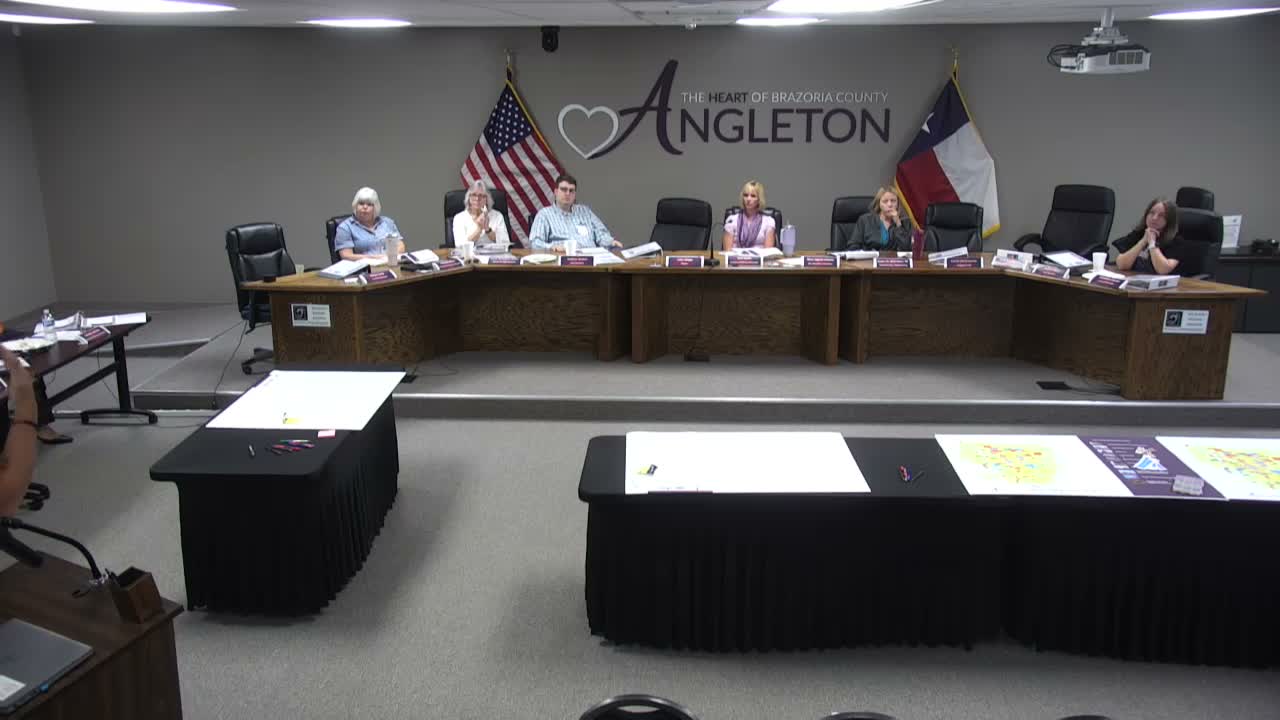
Consultants leading Angleton's comprehensive-plan update told residents at a community workshop that the plan must be driven by public input and then translated into enforceable zoning and development codes to have effect.
The project consultant (speaker 3) said early findings show residents prize a small-town identity, downtown vitality and improved sidewalks and drainage. "If you like trees, we look back and say and we'll probably work with your committee... and translate some of these recommendations into codes," the consultant said during the presentation.
Several residents and the presenter (speaker 1) debated the trade-offs of attracting a large grocer such as HEB. One participant raised concern that a big-box store could change the city's character and harm small local businesses; the presenter replied that large retailers will often negotiate design and site improvements if officials ask. The consultant underscored the point: "HEB will work with you, but if you don't ask, they won't."
Consultants urged a two-part approach: (1) document the community's priorities through outreach and CPAC exercises and (2) convert priorities into specific code changes (landscaping, pedestrian connections and urban design standards) so developers must meet the desired character. The consultant flagged the grant-funded scope of work includes zoning and development-code updates as a next step.
Outreach remains a concern: the team reported 53 completed survey responses to date and said the project will expand sampling with market-day booths, mini-surveys, focus groups and targeted emails. The consultant recommended breaking the survey into short modules and offering paper or in-person options to increase participation.
What happens next: the consultant said work will continue through targeted community events, CPAC meetings and code drafting. The team will circulate slide materials and a poll on a follow-up meeting date; facilitators asked CPAC members to invite underrepresented groups to upcoming focus sessions.