Get AI Briefings, Transcripts & Alerts on Local & National Government Meetings — Forever.
Angleton engineers present 2025 utility master plan; urge I&I study and steps to secure future water supply
Loading...
Summary
Consultants told the Angleton City Council the city faces near‑term water distribution needs of about $16.9 million and wastewater capital of roughly $52 million absent an inflow-and-infiltration (I&I) program; a targeted I&I study could cut wastewater CIP to about $22 million and delay larger treatment expansions.
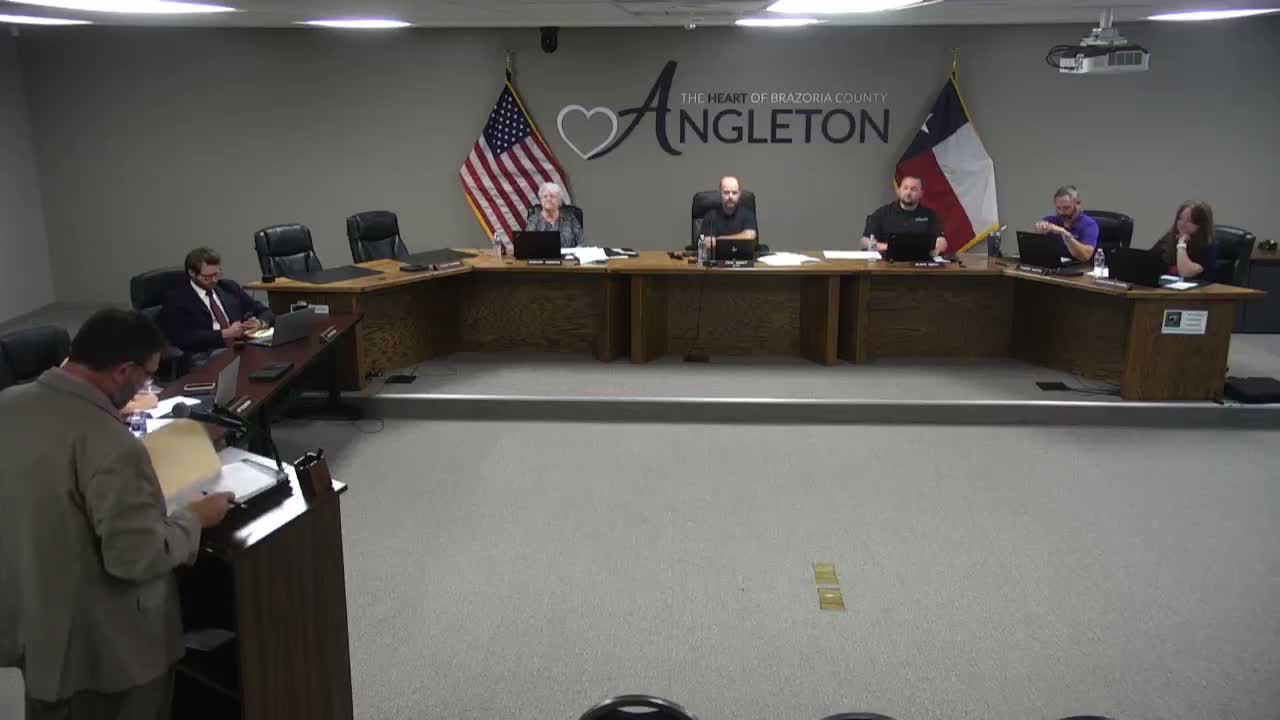
Consultants for the city presented a comprehensive 2025 Utility Master Plan to the Angleton City Council that outlines capital needs for water distribution and wastewater collection and recommends immediate action on inflow and infiltration (I&I) testing to reduce costs and delay major plant expansion.
"We urge you to invest in an I and I study almost immediately," a consultant told the council, saying temporary flow meters and smoke testing would help pinpoint where wet‑weather flows enter the sewer system. The consultants said a conservative systemwide I&I reduction of about 16% could lower the wastewater capital improvement program from roughly $52 million to about $22 million.
Why it matters: the plan pairs distribution improvements with a water‑supply strategy. Consultants estimated near‑term water distribution projects of about $16.9 million over the next eight to ten years to serve anticipated growth and recommended planning for elevated storage now to meet both regulatory (elevated storage) and fire‑flow needs.
On water supply, the consultants told council the city currently contracts with the Brazosport Water Authority (BWA) for a maximum day capacity near 2.3 MGD and that combined with the city’s wells yields about 7 MGD peak capacity and roughly 5,000 acre‑feet annual supply today. The presentation projected that, under likely growth scenarios, Angleton would exceed annual supply between about 2043 and 2050 and peak day capacity sometime in the 2030s. To mitigate risk, consultants recommended negotiating a reservation contract with BWA for approximately 1.9–2.0 MGD (a light reservation fee rather than a full 'take or pay' commitment) while phasing in groundwater wells as needed.
The wastewater portion described routine dry‑weather operations as adequate but warned of significant wet‑weather surcharging and the risk of sanitary sewer overflows at several lift stations. The consultants recommended a targeted SSES/I&I investigation—temporary flow meters, smoke testing and localized rehabilitation—to identify the highest‑return fixes.
Council members asked detailed questions about assumptions, timing and alternatives, including rehabbing existing wells versus contracting for more surface water. One council member asked whether the plan considered neighboring providers; consultants said the distribution network work would be largely common to any supply choice but emphasized the risk management value of diversifying supplies.
No formal adoption vote was recorded in the transcript; the plan was presented for council consideration and discussion with staff and consultants available to follow up on specific costs, timing and potential impact‑fee updates.
The consultants said they would provide follow‑up material requested by council, including refined cost breakdowns and additional vendor estimates for tanks and wells.