Get AI Briefings, Transcripts & Alerts on Local & National Government Meetings — Forever.
Audit finds duplicate vendor payment and $2.5 million collateral shortfall at Arkansas State Police
Loading...
Summary
A legislative audit reported a $3,700 duplicate toxicology payment that was recouped and a $2.5 million collateral deficiency on a bank account holding $11.6 million for the Arkansas State Police; the committee filed the audit by unanimous consent.
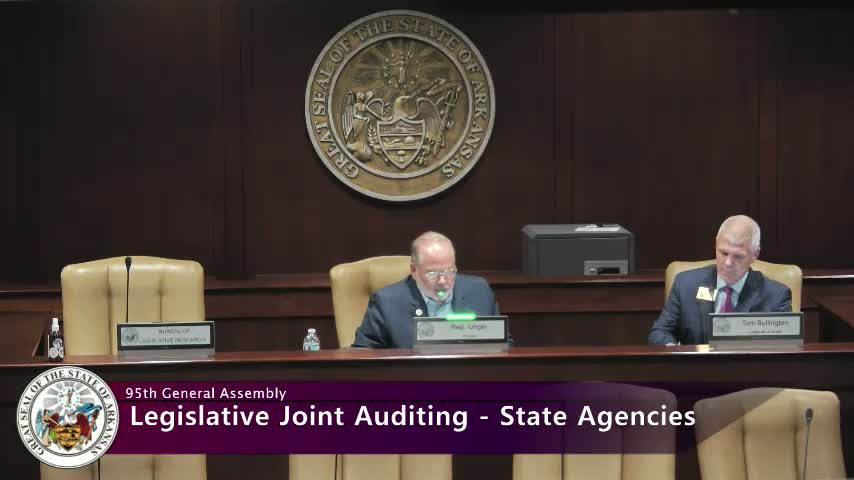
Tom Bullington presented a legislative audit of the Department of Public Safety’s FY2024 finances, reporting two findings: a duplicate vendor payment of almost $3,700 and a $2.5 million collateral shortfall on a bank account holding $11.6 million at June 30, 2024.
The audit summary said investigators "identified a duplicate payment of almost $3,700 issued to a vendor providing toxicology services to the Arkansas State crime lab," and that, after notifying the vendor, the office "received and deposited recoupment of the duplicate payment in June 2025." The report also concluded that "we noted a deficiency of $2,500,000 in collateral covering 1 bank's account balances of $11,600,000 at 06/30/2024," because one security item was not pledged in the name of the Arkansas State Police and therefore did not meet state collateralization requirements; the correction was completed on 08/27/2024.
Why it matters: state board-of-finance rules require cash on deposit that exceeds FDIC insurance to be collateralized by an unaffiliated custodian for at least 105% of the deposit amount. Representative Meeks pressed staff to confirm the FDIC threshold and how collateral is pledged; staff explained the bank must provide securities pledged in the agency’s name under the applicable rule and said the missing pledge was a bank custody/bookkeeping error. Karen Perry, chief fiscal officer for the Department of Public Safety, attended and answered questions from committee members.
Committee action and next steps: with no further questions, the committee filed the audit report without objection. The meeting took up a second audit report afterward; there was no formal vote recorded on corrective orders during this session.
The filing does not itself require agencies to take remedial actions beyond what the audit recommends; any follow-up, corrective plans, or sanctions would be handled through the audit office and the relevant agency processes.