
GOP senators warn SB275 could chill investment in Alaska LNG project
Get AI-powered insights, summaries, and transcripts
Subscribe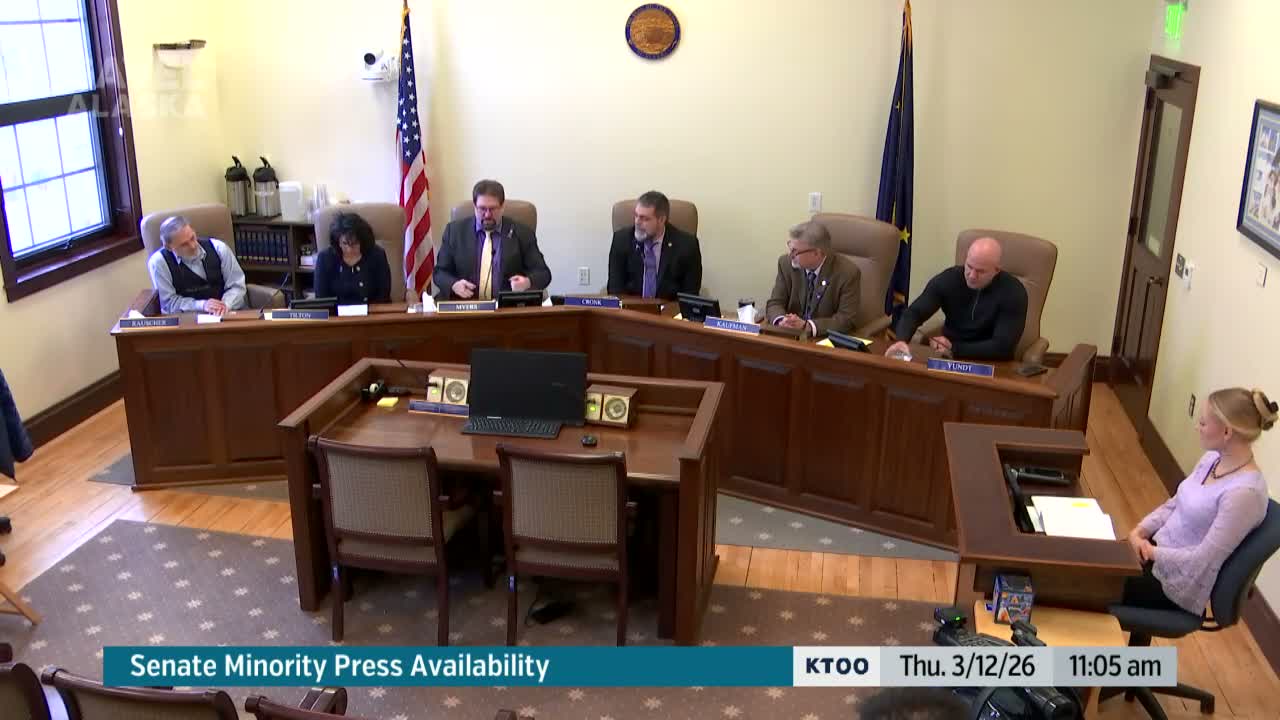
Summary
At a Senate Republican minority press conference, senators said Senate Bill 275’s provisions—changing AGDC investment timing and disclosure and adding a potential gas processing surcharge—could deter private investors and risk stalling the Alaska gas pipeline project.
Senate Republican senators said Monday that proposed changes in Senate Bill 275, the Alaska Gas Line Transparency and Accountability Act, risk discouraging the private-sector investment the state needs to build a large LNG pipeline.
"The first thing that comes to mind with that bill is ... if the legislature gets involved, the project will fail," said Senator Myers, who described multiple provisions he said go well beyond oversight and amount to a de facto state takeover. Myers singled out language that would change when and how the Alaska Gas Development Corporation (AGDC) can invest, removing a fixed cap and moving the state's investment window to after project completion, which he said could allow the state to buy projects from private developers and deter builders.
Myers also criticized provisions that would require broad publication of financial records and a "prudent investor" standard he said may be nonbinding; he warned that legislative approval requirements for contracts and subsidiary dispositions could raise separation-of-powers issues. He added that the bill includes a gas-processing surcharge of roughly 15 cents per MCF that could act like a tariff, with uncertain effects on royalty revenue or competitiveness for Asian buyers.
"Who is going to want to build a project when that is a possibility?" Myers asked, saying the bill’s presence on the table could be as damaging as its passage by chilling investor interest.
Senators Kaufman and others said they support some increased oversight and information-sharing, but urged a narrow, "decision support" approach: compile the critical deliverables lawmakers need to decide whether and how to authorize major steps rather than enact broad new powers that could upend commercial negotiations.
"There is work that we need to do ... but we don't want to look like we're casting a wide net of doubt," Senator Kaufman said, urging leadership to pull together a concise set of items (a decision support package) the Legislature needs as the project advances.
Reporters noted that Congressman Begich, in a joint session earlier in the week, urged the Legislature to match federal momentum for resource projects and advocated LNG-enabling legislation. Senators said they appreciate federal support but remain concerned that SB275 goes further than mere transparency requirements.
No formal vote on SB275 was reported during the press conference. Senators said some oversight provisions could be reasonable, but many changes in the bill—if enacted as written—could alter commercial incentives and slow or halt private investment.
Next steps: senators said the bill will proceed through committee hearings; Senator Myers said he expects to press amendments and predicted it may not make it from the Senate to the governor’s desk.