
House Republican minority urges waiting on spring revenue forecast before approving large CBR draw
Get AI-powered insights, summaries, and transcripts
Subscribe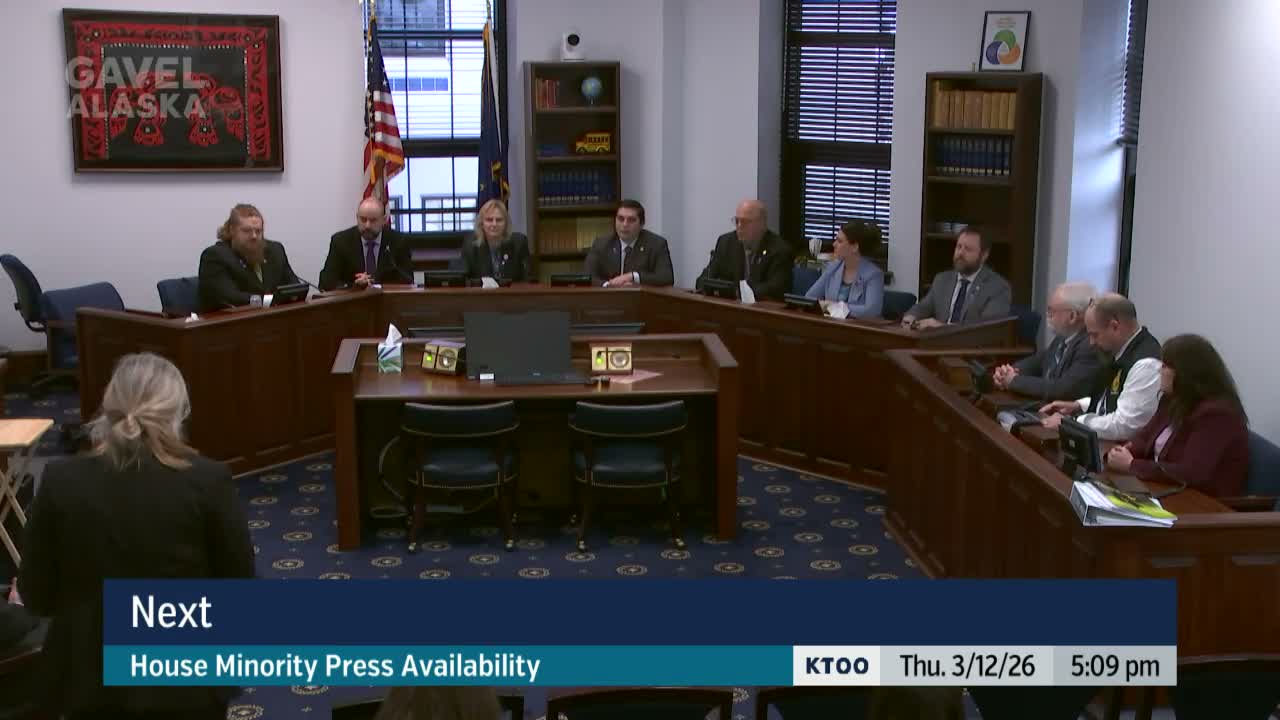
Summary
Alaska House Republican lawmakers said they would not support an immediate constitutional budget reserve (CBR) draw tied to the supplemental budget, urging leaders to wait for the spring revenue forecast and warning that an unrestricted transfer would remove spending controls.
House Republican members held a press briefing after floor action to explain why they withheld support for a proposed constitutional budget reserve (CBR) transfer tied to the supplemental budget and to press for waiting on the spring revenue forecast before authorizing large transfers from savings.
Representative Refferts opened the briefing and said the group had backed specific appropriations on the floor for contractors, disaster relief and higher-education needs but declined to endorse a broad, immediate move from the CBR. "We have the spring revenue forecast supposedly coming out at noon tomorrow," Delana said, and the caucus wants to "let the revenue forecast come out" before approving a large draw.
Speakers described two related concerns: timing and control. Several Republican lawmakers argued that the version of the bill circulating on the floor would appropriate hundreds of millions of dollars into the general fund as unencumbered money and then backfill the general fund from the CBR, a sequence they said would remove ordinary safeguards. Representative McCabe warned the measure would "dump $373,000,000 into the fund and say, 'Here it is. Spend it if you need it,'" and said that did not reflect how a normal CBR draw is used.
Other lawmakers disputed the majority's framing that a CBR vote was required to authorize spending. Representative Stapp called the majority's timing argument "nonsense," saying a bill can authorize expenditures now and a separate funding vehicle (a CBR request or subsequent appropriation) can supply the money later if needed. Steve, who walked reporters through the bill text, said the draft explicitly appropriated money from the general fund and then included language that would appropriate an equal amount from the budget reserve fund back into the general fund, calling that sequencing "an afterthought."
Reporters pressed the group on revenue scenarios and oil prices. Mari Keneggi of ADN cited a majority presser scenario that held oil at $90 per barrel through June and estimated about $300 million in added revenue; the minority said there was likely ample additional revenue to cover core items such as disaster relief, DOT match and fire suppression but that the timing and the decision to recapitalize the higher-education fund required more information from the forecast.
On the House floor earlier the day of the briefing, lawmakers said some measures passed with significant support; Representative Refferts noted a "40 to nothing vote" for measures they said fund contractors, disaster relief and higher education. A subsequent rescission vote pulled the bill back into rules, and members said the path forward was uncertain.
The Republicans repeatedly framed their stance as a fiscal restraint decision: they argued that the CBR draw requires a higher vote threshold to access savings and that moving large sums into the general fund would allow ordinary-majority spending with fewer controls. "We want to make certain that we absolutely have to have that money before it's accessed," Delana said, urging leaders to "slow down" and review the spring revenue forecast before authorizing a carte blanche draw.
The briefing closed with lawmakers saying they support funding core emergency needs but want clearer figures and guardrails before approving large transfers from savings. The group said they will review the spring forecast when it is released and revisit the question of CBR transfers and supplemental funding then.
The press briefing adjourned with no formal action taken at the event; members said the fiscal issues and next steps would be determined after the revenue forecast is published and as lawmakers continue negotiations.