
Budget panel presses DFPI on fee-funded programs, debt‑collector assessments and performance metrics
Get AI-powered insights, summaries, and transcripts
Subscribe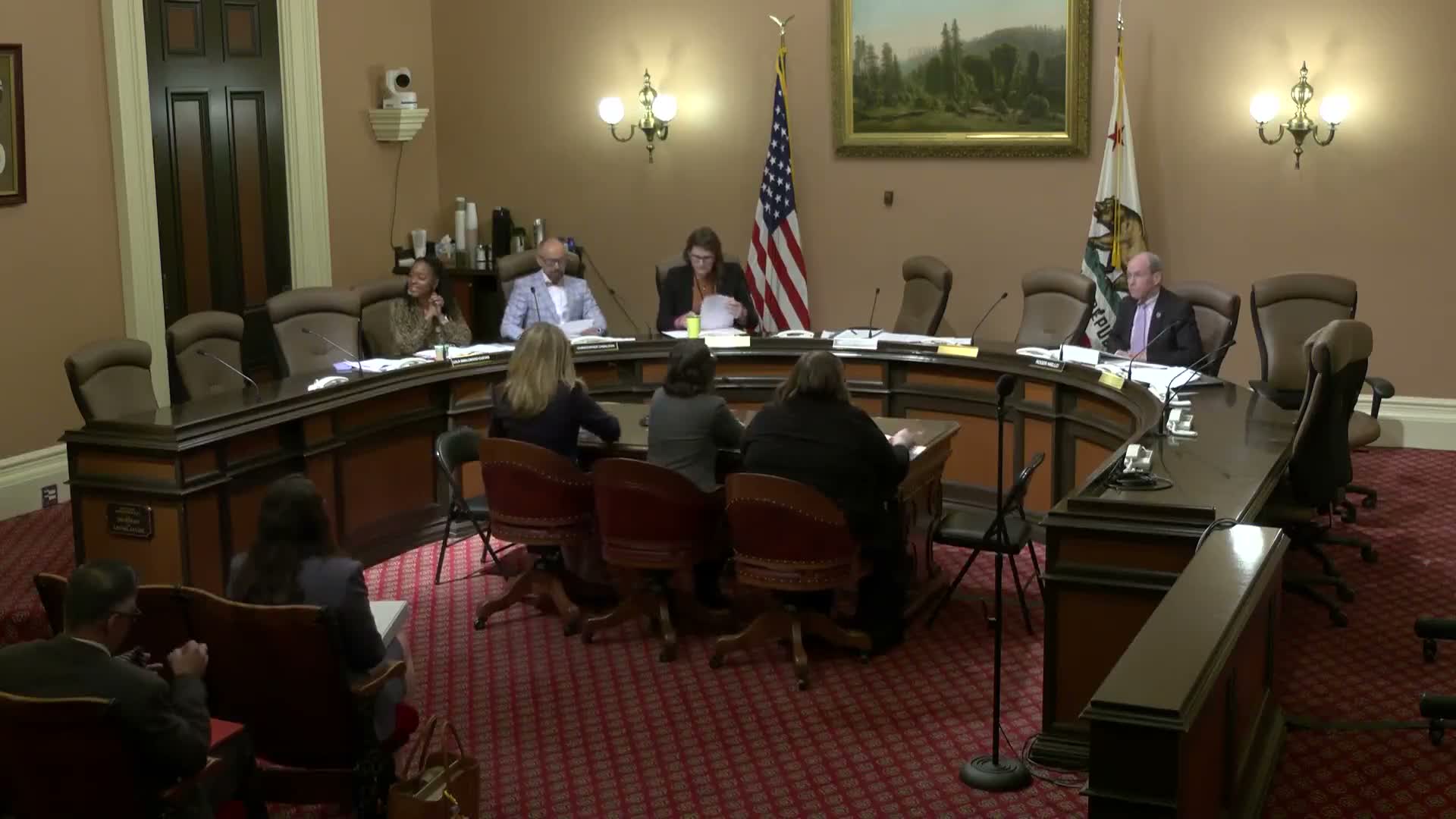
Summary
Lawmakers and stakeholders questioned the Department of Financial Protection and Innovation about workload estimates, the debt-collector licensing program’s assessment model and metrics to measure consumer protection outcomes; industry speakers warned assessment levels are harming small firms.
The subcommittee heard an in-depth presentation from the Department of Financial Protection and Innovation and the Legislative Analyst’s Office on fee‑funded consumer‑protection programs.
Suzanne Martindale of DFPI summarized the department’s expanded authority under the California Consumer Financial Protection Law and asked the subcommittee to extend existing expenditure authority to retain staffing for new programs. DFPI said the agency is funded from special funds, not the general fund, and described recent enforcement activity and workload growth.
LAO analyst Heather Gonzales and DF Finance staff advised the committee that while continued limited‑term funding for early‑stage programs is reasonable, the legislature should consider cumulative reporting or a sunset‑style review before approving permanent funding. DFPI reported enforcement results and revenue examples, saying the department recorded about $13.7 million in enforcement revenue last year and has increased public actions compared with prior periods.
A prolonged exchange focused on the Debt Collection Licensing Act (SB 908), which DFPI administers. DFPI explained the program’s pro‑rata assessment model (fees calculated from licensee net proceeds) and described early implementation hurdles, including delays in federal background checks that required conditional licensing and later statutory fixes. DFPI said the first full annual reporting cycle and initial assessments occurred in 2025 after those steps were resolved.
Senator Cabaldon pressed a gap between the department’s earlier estimate of roughly 7,000 licensees and the roughly 1,200 licensees now registered. Industry commenters echoed that point: David Reid of the Receivables Management Association International and Melissa Cortez of the California Association of Collectors said the lower licensee pool has produced much higher assessments per licensee and stressed harm to small agencies. Reid told the subcommittee the difference in expected licensees ‘‘is causing havoc within the industry.’’
Members repeatedly requested clearer outcome metrics to judge program effectiveness rather than workload measures alone; senators asked DFPI to provide more granular outcome reporting before permanent funding decisions.
The committee held DFPI items open for further follow‑up.