
Senate subcommittee hears midpoint report on California's Master Plan for Aging; HICAP and meal programs seek more stable funding
Get AI-powered insights, summaries, and transcripts
Subscribe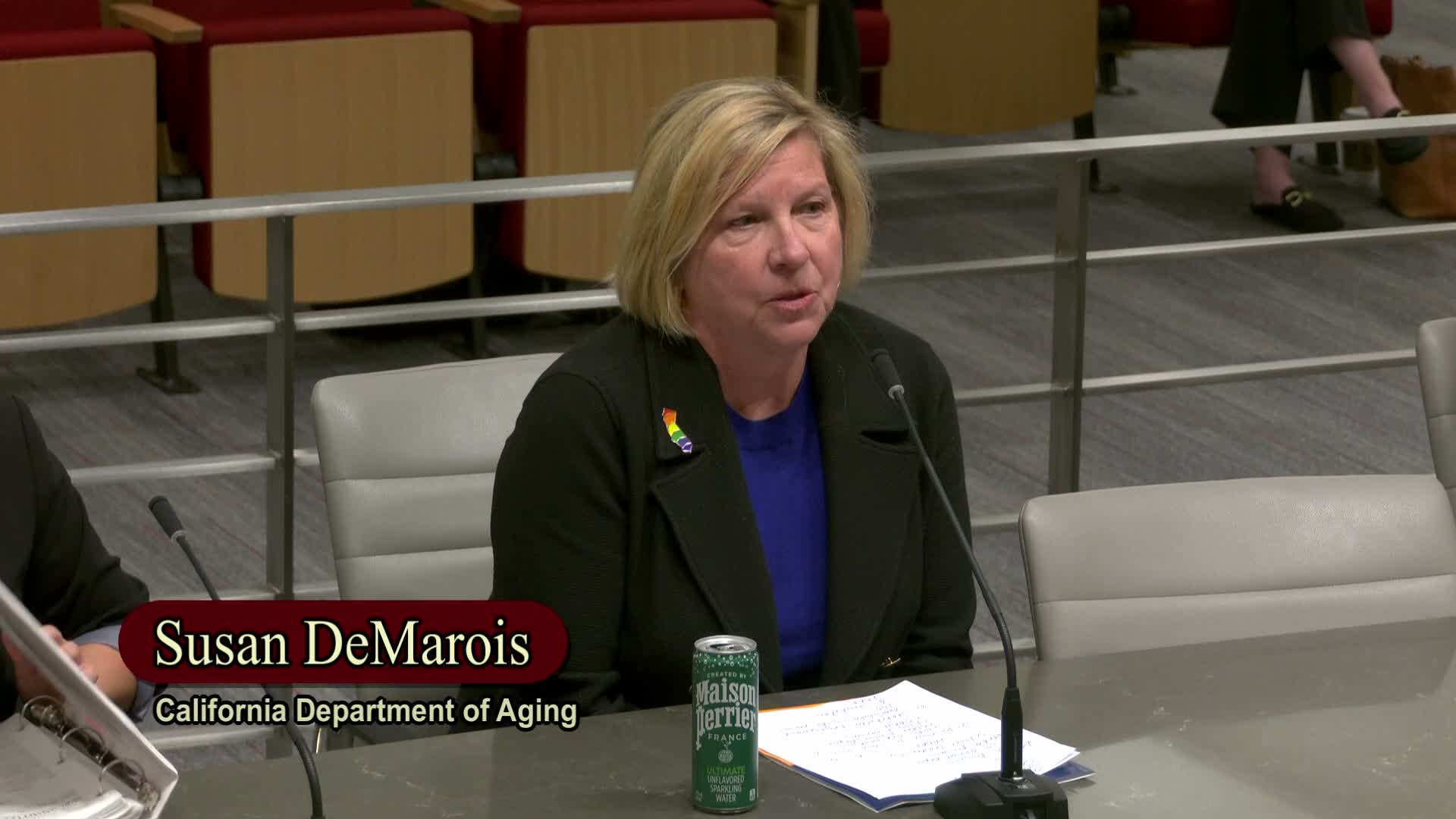
Summary
The California Department of Aging told a Senate budget subcommittee the Master Plan for Aging is at its five‑year midpoint with roughly 300 initiatives launched; department leaders asked to make HICAP investments permanent and to sustain nutrition programs as one‑time modernization funds wind down.
The Senate Budget Subcommittee No. 3 on Health and Human Services heard an update on the state's Master Plan for Aging and funding requests for programs that help older Californians access health insurance counseling and meals.
Susan DeMaurice, director of the California Department of Aging, told the committee the state is at the five‑year midpoint of the Master Plan for Aging and has issued the department's fifth annual report. "We have initiated 300 initiatives since the start of the master plan for aging. About three‑fourths of those have been completed," DeMaurice said, and she highlighted local Aging and Disability Action Plans, statewide research such as a home‑and‑community‑based‑services gap analysis done with the Department of Health Care Services, and robust stakeholder engagement.
The department asked the subcommittee to approve a request to strengthen the Health Insurance Counseling and Advocacy Program (HICAP). An assistant director for the department said HICAP currently reaches less than 1 percent of eligible beneficiaries even though there are "over 7,000,000 individuals who qualify," and requested $5 million ongoing from the HICAP special fund to add paid Medicare counselors, make prior year investments permanent and standardize training across sites. The department said those investments would reduce wait times, expand bilingual staffing, and increase statewide penetration toward national standards.
Committee members pressed department staff on how these requests relate to broader fiscal pressures from recent federal policy changes. The Legislative Analyst's Office and representatives from the Department of Finance reiterated that some HR 1 changes will shift administrative costs and place downstream pressure on state and county programs, but that the HICAP BCP does not request General Fund dollars.
The hearing also covered senior nutrition. The deputy director said the department administers Older Americans Act nutrition programs through a network of 33 Area Agencies on Aging and cited past one‑time modernization investments ($50 million targeted to nutrition infrastructure and a larger $186 million package) that increased capacity after COVID. She warned AAAs are drawing down time‑limited funds and that the expiration of those investments could create gaps in meal delivery and supportive services in 2027–2029 unless replaced or sustained.
The subcommittee did not take votes and held the items open for further budget consideration. The chair invited written comments from stakeholders and members of the public to supplement the record before the May revision.