
BSCC seeks 11 permanent positions as new in-custody death review unit ramps up
Get AI-powered insights, summaries, and transcripts
Subscribe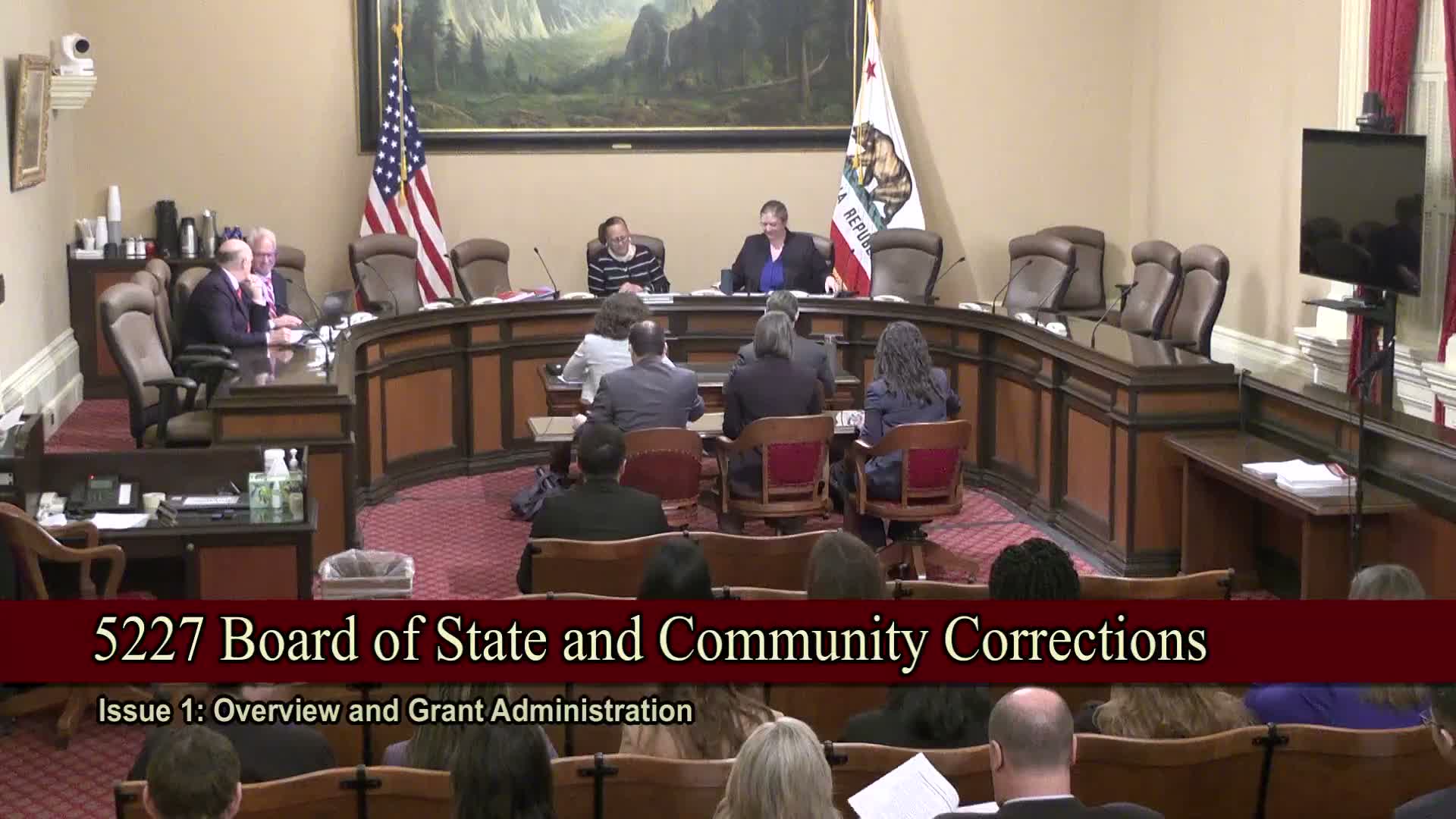
Summary
The Board of State and Community Corrections told the Senate subcommittee it needs 11 permanent staff to manage a surge in grant work and oversight duties and that its new In-Custody Death Review Division has begun receiving investigations for 136 deaths since July 2024.
The Board of State and Community Corrections asked the Senate Budget Subcommittee No. 5 for 11 permanent positions to keep pace with a near-tripling of the number and complexity of grants it administers.
"Over the past 5 to 7 years, the number of grants administered by the BSCC has almost tripled," Aaron McGuire, executive director of the BSCC, told the committee. He said the board currently manages more than 600 grant agreements and approximately $1,500,000,000 "out in the field" and that the requested positions would be paid from the agency's administrative funds rather than newly appropriated general fund dollars.
The request responds to what the board described as higher technical-assistance needs for smaller community-based grantees, increased monitoring and a desire to create a full audit team to perform random and targeted audits. Colleen Curtin, deputy director for grants, said the BSCC now has a staff of 38 and two audit staff, and that the new hires would support accounting, auditing and expanded oversight.
The BSCC also briefed the subcommittee on its newly formed In-Custody Death Review Division. "We have been collecting data on in custody deaths since 07/01/2024," Lisonbee Ganter, director of the division, said. "There have been 136 deaths in jails since then." Ganter said the division has hired roughly one-third of its staff, expects to complete hiring this year, received funding for medical and mental health team members in the 25-26 budget and has been designated a health-care oversight agency with HIPAA access to medical records for review.
Ganter told members the division is still receiving complete investigation records and has not yet issued formal recommendations because it needs the full coroner/medical examiner, toxicology and investigative materials to form operational and clinical findings. Early patterns the division has observed — consistent with Department of Justice historical data — list accidental overdose, natural causes and suicide by hanging as leading manners of death in local detention facilities.
Committee members pressed whether using the full administrative allowance for hires would reduce local assistance grants. Curtin said unused administrative funds roll back into local assistance and she did not anticipate a substantial reduction in local grant dollars, adding that the board has already identified administrative dollars not in use that have been returned to the field.
Why it matters: The BSCC oversees county jails and local juvenile detention facilities and distributes grants for reentry, violence reduction and rehabilitation. The subcommittee asked BSCC to provide more detail in writing about where modest reductions could be made if budget constraints require cuts and requested follow-ups on two specific grant programs where prior compliance problems were noted.
Next steps: Committee members requested written follow-up on methodology concerns raised by the Legislative Analyst's Office concerning how savings tied to Proposition 47 are being estimated, and asked BSCC to report back on grant-program fixes and specific oversight plans.