
Iowa House approves bill protecting parents’ authority amid heated debate over ‘conversion therapy’ risks
Get AI-powered insights, summaries, and transcripts
Subscribe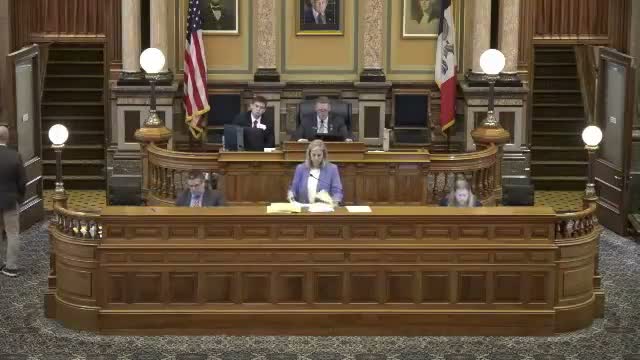
Summary
The Iowa House passed House File 2557 after extended, emotional floor debate about parental rights and protections against a state-created category of child abuse; supporters say it defends parents, opponents warn it could permit harmful, unregulated practices for gender‑diverse youth.
The Iowa House on the floor passed House File 2557, a bill that its sponsors describe as protecting parents’ rights to raise, guide and instruct children "consistent with the child's sex assigned at birth," after several hours of contentious debate.
Supporters framed the bill as narrow protection for parents. Representative Jasper (speaker 13), the bill’s sponsor, said the measure “does not change the definition of real child abuse,” and that it was intended to prevent the state from inventing a new category of abuse that could be used to remove children from families. Jasper moved the bill and pressed it to final passage.
Opponents said the bill would create openings for harmful, unregulated practices sometimes described as conversion therapy. Representative Ramirez (speaker 31) recounted a constituent’s experience and said, “Had this bill been in effect, Jax would still be in that house exposed to that violence,” urging members to vote no. Representative Levin (speaker 12) argued the bill “wipes out” protections by removing the state’s ability to designate abusive practices, and Representative Weickendahl (speaker 28) warned it “gamble[s] with the future of Iowa’s children,” describing conversion-therapy tactics and citing medical literature and studies on harms.
Debate included back-and-forth on what the bill would and would not change in existing statute. Sponsors repeatedly said criminal definitions for physical abuse, sexual abuse, neglect and other statutory categories remain intact. Opponents emphasized that the bill’s language could leave a gap permitting unlicensed, unaccredited individuals to counsel or instruct minors in ways that major medical organizations do not endorse.
When the House voted, the roll call recorded 65 yeas and 31 nays, with the bill declared passed by constitutional majority. The chair agreed to the bill title as required by procedure.
What’s next: The bill now moves to the next steps required by the legislative process to become law (transmittal to the other chamber and any further conference or reconciliations).