Appellate panel hears challenge to eviction notices in HUD-funded housing
Loading...
Summary
A three-judge appellate panel heard arguments in Blue Mountain Action Council v. Paul Ruley over whether a landlord’s termination notices for HUD-funded housing complied with program and lease requirements; appellant counsel said notices lacked required meeting language, while respondent counsel said HUD does not impose a 10‑day rule and the notices substantially complied.
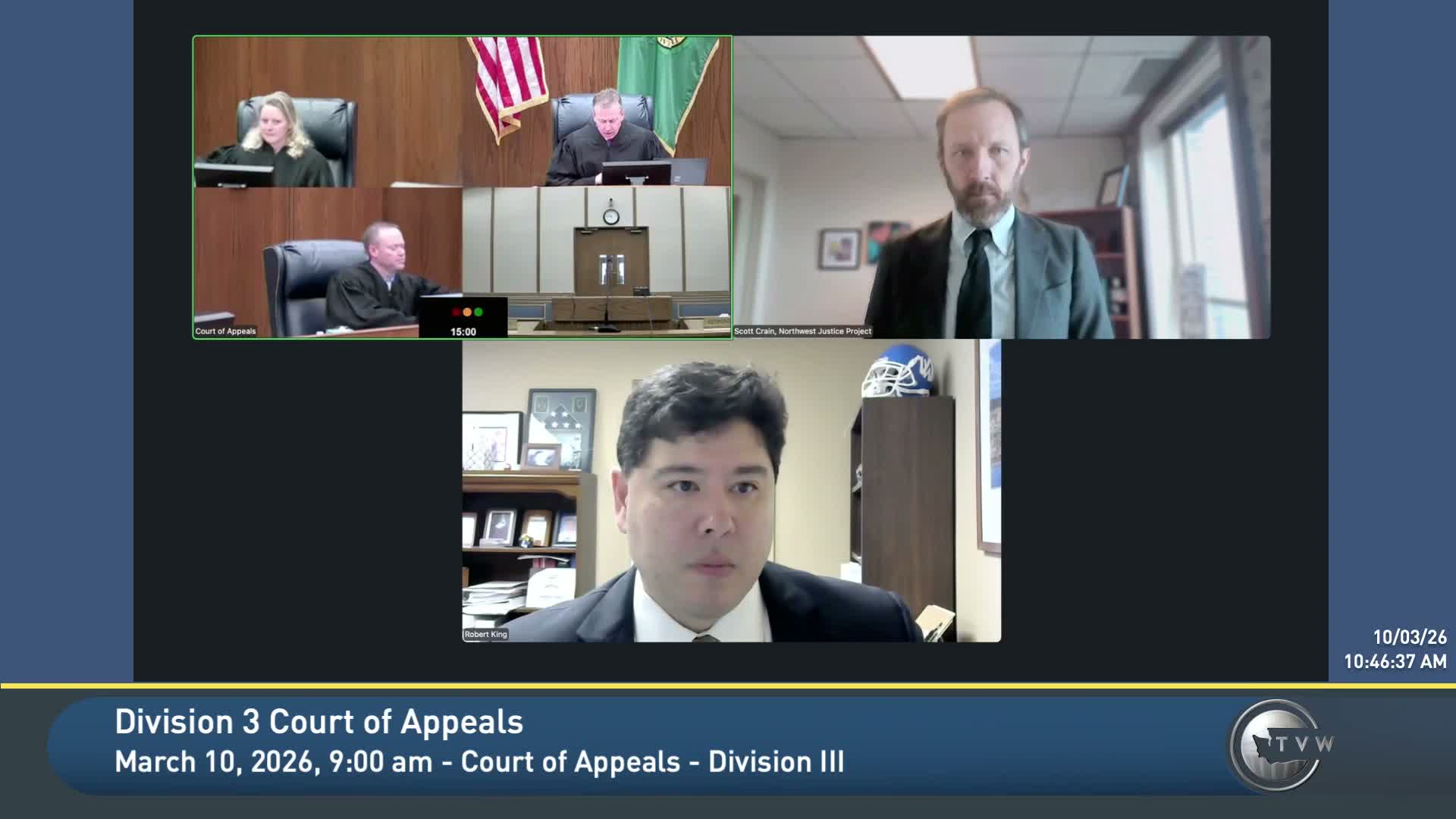
A three-judge appellate panel heard oral argument in Blue Mountain Action Council v. Paul Ruley over whether a landlord’s eviction notices for HUD-funded housing complied with federal program and lease requirements.
Scott Crane, counsel for appellant Carol Ruhle, told the court that when a landlord accepts substantial HUD funding for low-income housing, ‘‘they also must follow the federal rules that come with that funding.’’ Crane said those program restrictions become limitations on the state’s unlawful detainer statute and argued the landlord’s termination notices were inadequate because they failed to provide the explicit, mandatory meeting notice required by the rental agreement and HUD guidance. ‘‘There’s three reasons that the court should reverse,’’ Crane said, focusing on the notice content and on what he described as an inadequate show-cause hearing below.
The argument centers on whether the notices provided tenants with the right to meet with management within a specified timeframe and whether that language was required by HUD regulation, HUD subregulatory guidance (the HUD handbook and model lease), or by the lease itself. A judge asked whether the tenant’s right to meet with management ‘‘stems from HUD or the lease agreement itself’’ and whether the court’s analysis would differ depending on that source; Crane replied the legal source should not change the outcome because case law treats federal program restrictions as limits on unlawful detainer proceedings and, in his view, strict compliance with a prescribed content requirement was not met.
Robert King, counsel for respondent Blue Mountain Action Council, told the panel the notice-content objection was raised first in a motion for reconsideration and that the trial record is therefore lacking. King cited 24 CFR 880.607(c)(1), saying the HUD regulation ‘‘does not require 10 days’’ but rather requires that the landlord advise the family they have an opportunity to meet with the owner. King said the operative May 6 notice did inform tenants they could make a written request for a meeting and that program manager Mister Kohler testified the tenants did meet with the landlord; King described any claim of prejudice as without basis.
The parties disputed how strictly the court should read ‘‘form and content’’ requirements versus ‘‘time and manner’’ rules, and they invoked precedents. Crane pointed the panel to division decisions he said require strict compliance when the content is prescribed (he cited Truly v. Tuft and Safeway v. Community Investments as authorities relied on in briefing). King countered that the statute governing show-cause hearings (transcribed in argument as RCW 59.18.380) gives the trial court discretion to question parties and limit testimony and that, on the record, the tenants presented no evidence at the show-cause hearing that would have compelled setting a trial.
Counsel also disagreed about the timing and evidentiary record: Crane said the record does not establish when tenant meetings occurred and argued the landlord may not rely on after-the-fact or oral explanations to cure missing notice language; King said the record contains testimony that the tenants met with management but that the meeting ‘‘was to no effect.’’
The panel thanked counsel for briefing and argument and concluded the session without issuing a decision from the bench. The court did not announce a timetable for issuing an opinion during the argument session.