
Developers, Snoqualmie Lawyers Argue in Appeal Over Whether Condo Declaration Can Create Zoning Violation
Get AI-powered insights, summaries, and transcripts
Subscribe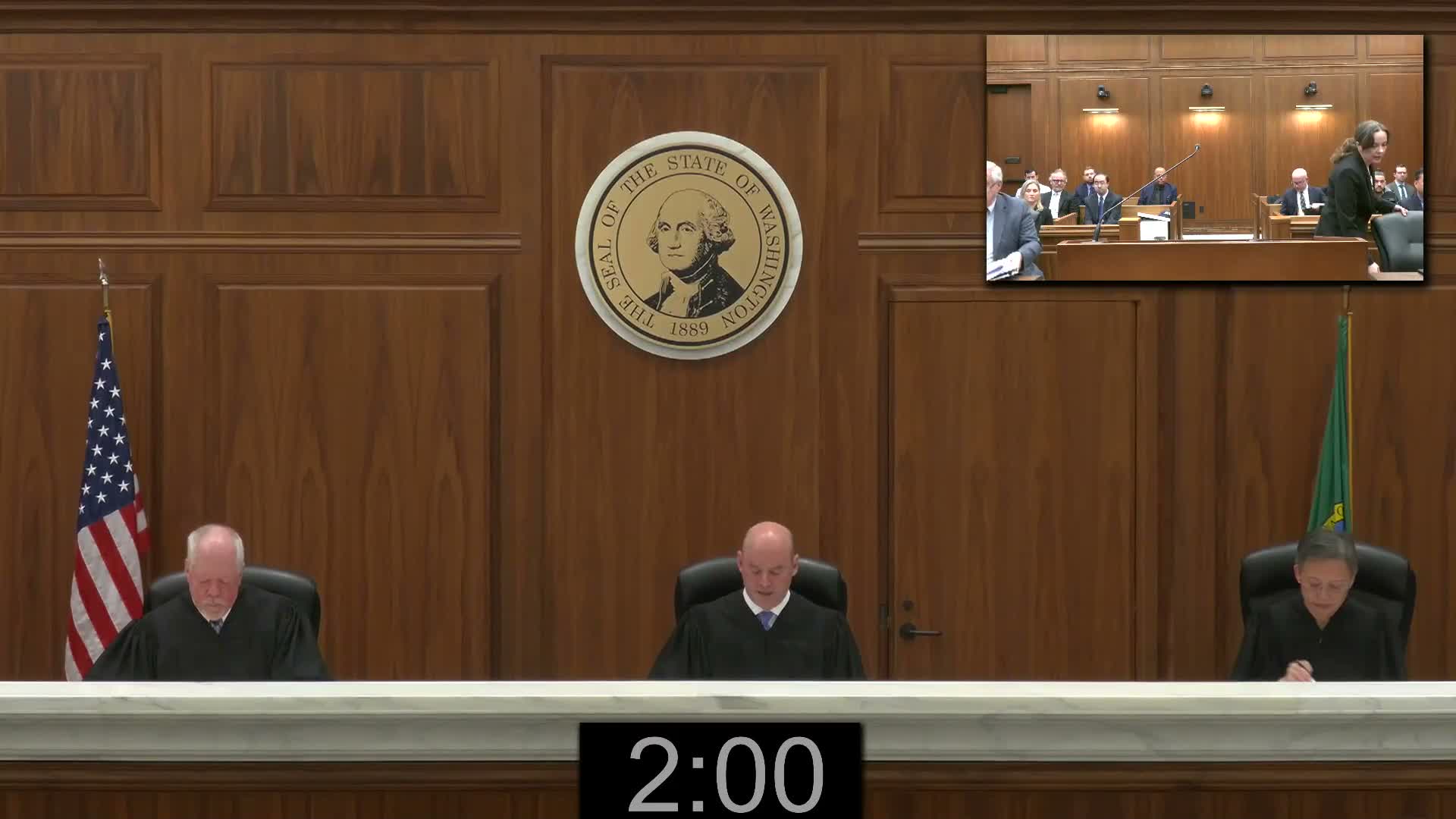
Summary
At oral argument, Ladder Properties asked the court to reverse a hearing examiner’s finding that condominiumization of a single lot with a primary residence and ADU violated Snoqualmie code, saying state law forbids treating ownership form as a land‑use change; the city said it regulates use and cited utility‑responsibility concerns.
A court heard oral argument in Ladder Properties’ challenge to a Snoqualmie code enforcement action after the company recorded a condominium declaration for a lot containing a primary residence and an accessory dwelling unit (ADU).
Seth Goodstein, attorney for Ladder Properties, told the panel the dispositive question is whether a city may treat a lawful residential configuration as unlawful solely because the ownership form changed to condominiums. Goodstein said three facts are uncontested: the property lawfully contained a primary residence and an ADU under Snoqualmie code; no structures were altered when the condominium declaration was recorded; and the number of occupants and dwelling units remained the same. “Nothing about the property changed except the deed,” Goodstein said.
Jessica Skelton, counsel for the City of Snoqualmie, said the appeal centers on the city’s authority to enforce its zoning and municipal code against what the city views as a noncompliant development. Skelton argued the city is regulating use, not ownership, and pointed to practical differences that surfaced after condominiumization — most notably the city’s difficulty identifying a single responsible party for utility problems because there was no functioning condominium association. “They are regulating the use,” Skelton said.
The lawyers disputed how to read the state provisions each cited. Goodstein argued state law prevents a local code from imposing requirements on condominiums that would not apply to physically identical non‑condominium developments; he urged reversal of the hearing examiner’s finding that the condominium declaration violated the municipal code. Skelton countered that the city’s single‑family zoning and density restrictions — particularly in the restricted flood‑plain zone at issue — allow the city to limit the number or type of single‑family units and that Snoqualmie’s code does not on its face prohibit condominium ownership.
Bench questioning focused on the meaning of the statute’s phrase “physically identical,” whether the city’s enforcement amounted to regulating ownership form, and whether the city met its burden of proof on alleged water and sewer violations. Skelton emphasized utility‑responsibility and public‑safety interests that arose, in the city’s view, after the condominium conversion; Goodstein said the city presented no evidence of structural or conveyance changes that would support the utility violations.
In rebuttal, Goodstein warned that accepting the city’s theory would unravel completed condominium sales, impose substantial sanctions on the developer and undermine affordable homeownership opportunities created by the conversions. He asked the court to dismiss the water and sewer enforcement claims and reverse the hearing examiner’s conclusion that the condominiumization violated Snoqualmie’s municipal code.
The court did not announce a decision at the end of argument. The panel signaled the statutory question the parties emphasized could be dispositive, potentially obviating the need to reach Growth Management Act issues; the court’s next procedural step and timing for a decision were not stated during the hearing.