
Court of Appeals hears dispute over Nevada QDRO enforcement in Morris v. Morris
Get AI-powered insights, summaries, and transcripts
Subscribe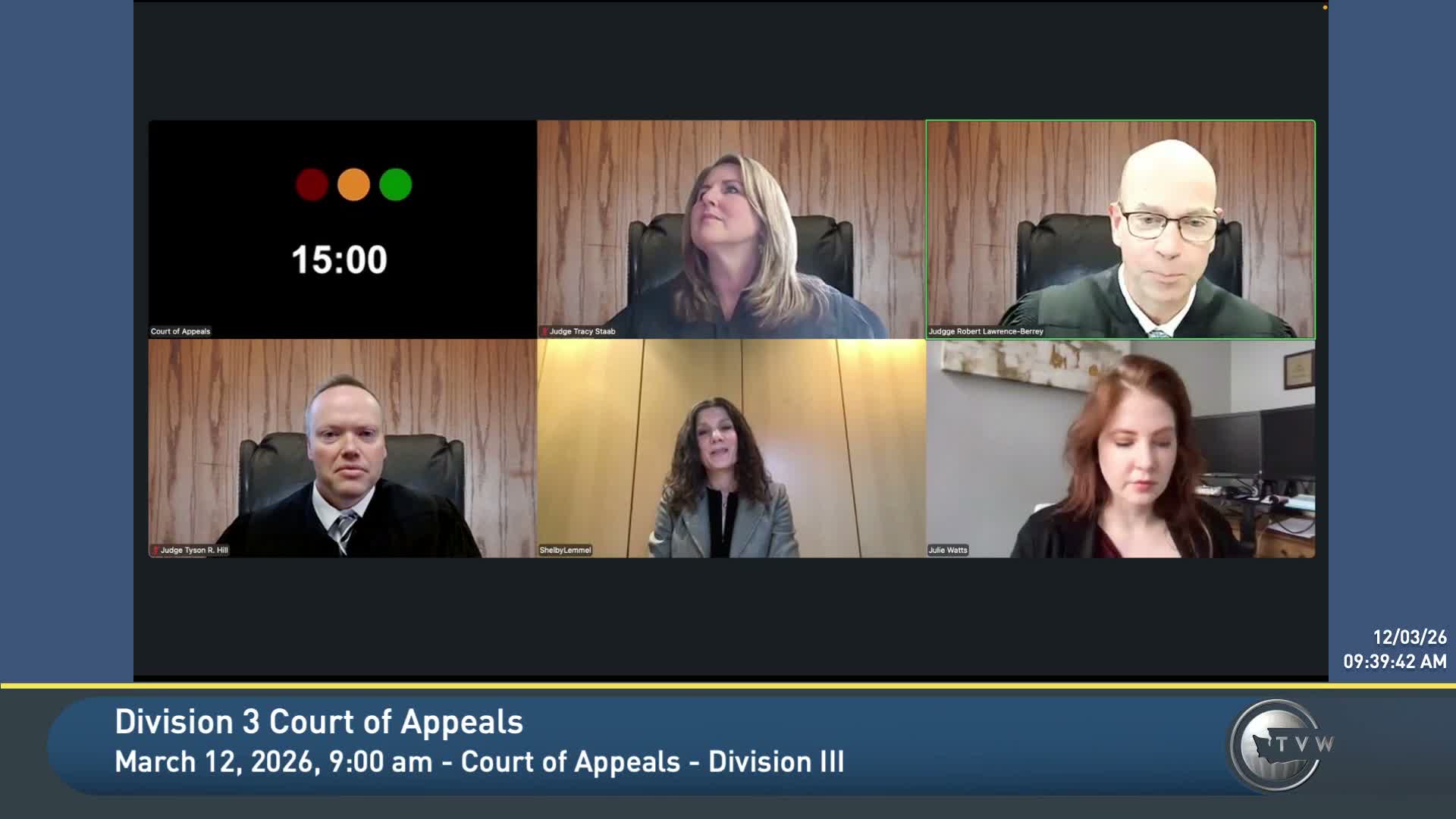
Summary
The Division Three panel considered whether a Nevada QDRO that changed the timing of pension payments enforced or improperly modified a Washington divorce decree, weighing cross‑jurisdiction principles, res judicata, and hardship claims; the panel submitted the case for decision after extensive questioning of counsel.
A three-judge panel of the Washington Court of Appeals heard oral argument in Morris v. Morris on whether a Nevada Qualified Domestic Relations Order (QDRO) that sets the timing for pension payments enforced an existing Washington dissolution decree or effected an unlawful modification.
At oral argument, Shelby Lommel, representing appellant Keta Morris, told the court that Nevada law allows a party to elect when to receive a community‑property interest in a Nevada pension plan and that the Nevada court’s QDRO was an enforcement mechanism rather than a modification of the Washington decree. "For the record, I'm Shelby Lommel with Masters Law Group here on behalf of the appellant, Keta Morris," Lommel said, and she pointed the panel to the QDRO language reserving authority to "enter any orders necessary to enforce the award of benefits," which she argued authorized Nevada enforcement.
A judge on the panel pressed whether the Nevada order created a new, interim obligation on Mr. Morris to make monthly equalization payments — an obligation that, the judge noted, was not spelled out in the original Washington decree. Lommel responded that equalization payments are distinct from the community‑property division and that Nevada’s Henson‑line remedies permit a later election on timing without reopening the dissolution decree.
The panel examined competing legal frames. Lommel relied on Nevada case law she said treats Henson motions and similar enforcement proceedings as non‑modifying enforcement actions (she cited Kilgore, Henson and Gemma and referred to Clerk’s Papers entries). Counsel also argued the trial court erred by applying res judicata because enforcement proceedings cannot be precluded by the decree itself.
Panel members considered alternative remedies. One judge suggested the trial court might have rebalanced the decree rather than enjoining the Nevada order; panel members discussed the practical consequences of reopening a decree, including the potential for further litigation and accounting disputes if Washington courts tried to manage timing or discounts rather than allowing Nevada’s administrative process (Nevada PERS) to handle payments.
The record shows the Nevada court declined to consider a late‑filed declaration about hardship but nevertheless found no financial hardship in requiring payments now; Lommel noted the husband participated in Nevada and did not appeal that ruling. The panel also asked whether Washington reasonably could be read to have ceded timing decisions to Nevada by directing the parties to draft QDROs for Nevada PERS processing.
No decision was announced at argument. Judge Lawrence Berry thanked counsel for their briefs and oral presentations and the panel submitted the matter for decision.
The court’s forthcoming opinion will decide whether the Nevada QDRO here was a permissible enforcement step under Nevada law or an impermissible modification of the Washington decree — and whether the trial court’s injunction should be reversed, vacated or otherwise adjusted.