State urges court to uphold 46‑year minimum for Alex Peroni; defense seeks new resentencing
Loading...
Summary
At oral argument in State v. Alex Peroni, defense counsel asked an appellate panel to reverse and remand, saying the trial court short‑circuited the Miller v. Alabama analysis; the state urged the court to affirm a 46‑year minimum term for four 1997 murders, arguing the crimes were premeditated and not the product of youthful immaturity.
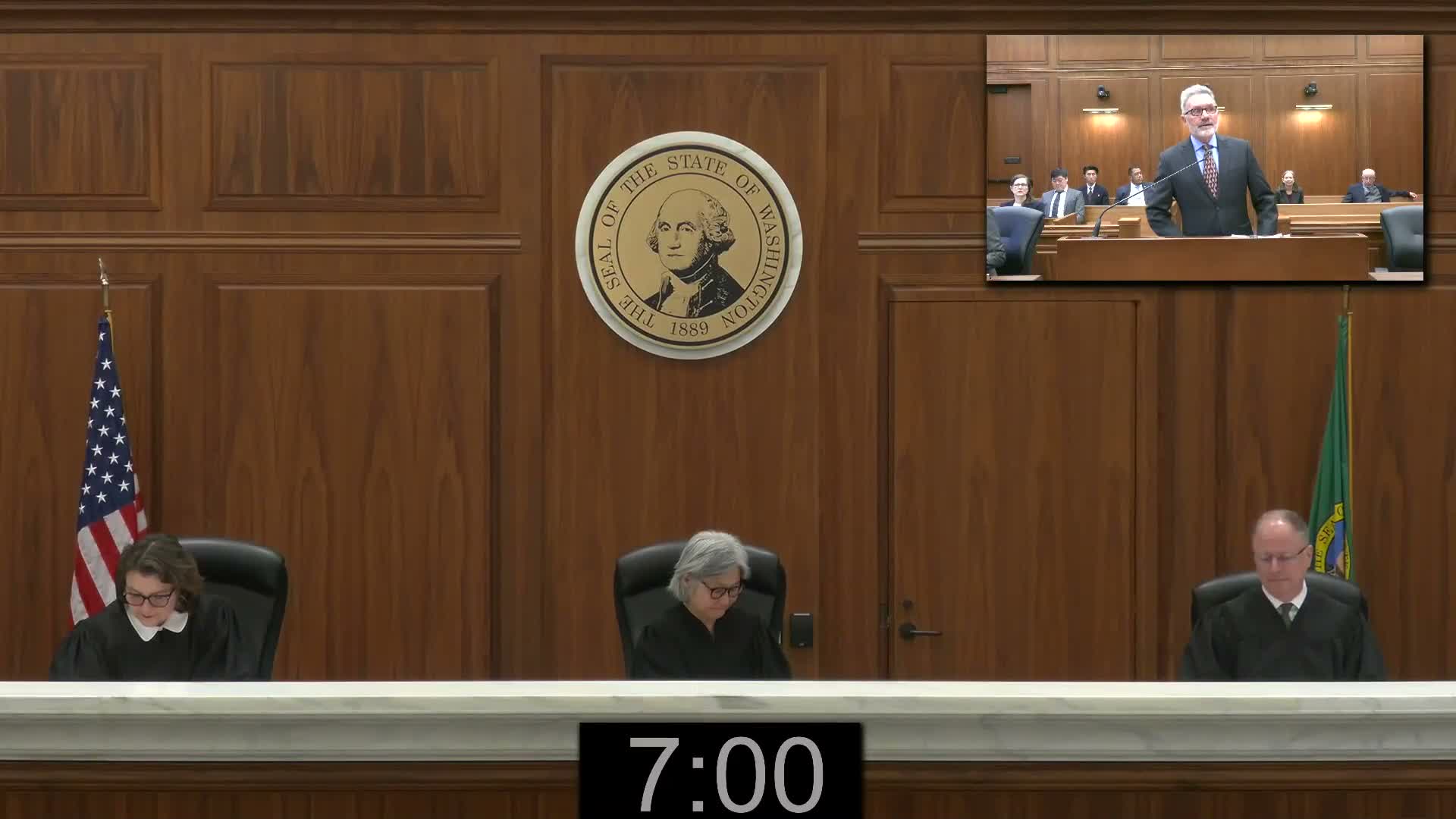
The Other Court heard oral argument in State v. Alex Peroni over the 46‑year minimum sentence imposed for four murders committed in 1997 when Peroni was 17.
Defense attorney Chris Gibson told the panel that the trial court improperly truncated the Miller v. Alabama analysis by focusing primarily on Peroni’s age and participation and concluding the crimes did not reflect youthful indiscretion before fully weighing all statutory factors. "When it went through all of the required factors it ultimately found that he is capable of rehabilitation," Gibson said, arguing the court nonetheless imposed a sentence that effectively forecloses meaningful review. Gibson noted Peroni’s abusive childhood, his confession and four life sentences originally imposed, then described what he called a sustained, “stellar record in the Department of Corrections” over the last 25 years as evidence of rehabilitation.
The judge pressed counsel on how to reconcile conflicting precedent, including references in argument to Hague, Tonelli/Anderson and Jones v. Mississippi, and whether courts should focus on whether a crime reflects the hallmark qualities of youth or instead place greater weight on forward‑looking rehabilitation. "Isn't that the proper analysis?" the judge asked, noting the tension between assessing the crime’s reflection of youth and considering capacity for reform when setting a lengthy term.
State prosecutor Amy Meckling urged the court to affirm Judge Poitras’ 46‑year minimum term, describing the 1997 killings of the Wilson family as premeditated and undertaken so Peroni could "experience what it was like to murder someone." Meckling said the trial court carefully balanced the distinguishing qualities of youth and the defendant’s capacity for reform and that good behavior in prison does not, by itself, convert an aggravated murder into a crime of immaturity. "At bottom, the court's analysis in a Miller resentencing hearing is to consider the distinguishing qualities of youth," she said.
Gibson countered that a 46‑year minimum may delay any meaningful opportunity for release until an age at which rehabilitation opportunities and life prospects are greatly diminished and that the Indeterminate Sentencing Review Board (ISRB) should have an earlier opportunity to review Peroni’s case. He asked the panel to reverse and remand for a second resentencing, arguing the trial court both recognized a de facto life sentence was inappropriate and yet imposed an equivalent term.
Meckling responded that Anderson and related authorities do not support the view that good prison behavior alone renders a crime one of immaturity and that Judge Poitras reasonably exercised discretion given the seriousness and premeditation of the offenses.
Oral argument concluded with counsel's final remarks and thanks to the court. The transcript does not record a decision or indicate when the appellate court will rule.
The case centers on how appellate courts should apply Miller v. Alabama and related state precedents when a juvenile offender shows evidence of rehabilitation, and on whether a 46‑year minimum term for a 17‑year‑old constitutes a de facto life sentence by preventing a meaningful opportunity for release.