
DCYF describes Medicaid 'reentry targeted case management' to cover 90 days before and after release
Get AI-powered insights, summaries, and transcripts
Subscribe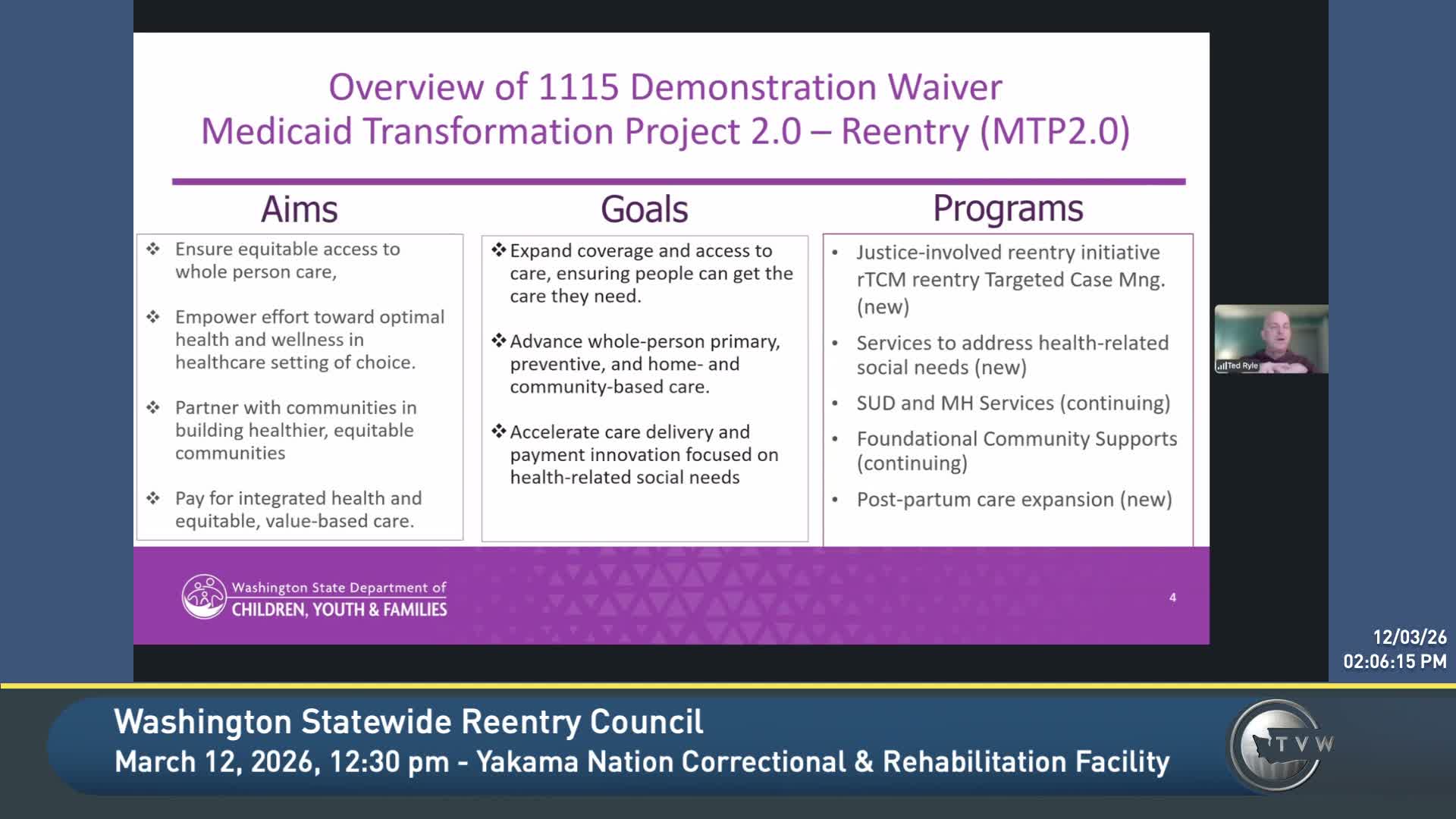
Summary
Ted Ryle, director of medical and behavioral health for Juvenile Rehabilitation (DCYF), said a new Medicaid service — reentry targeted case management — began activating coverage March 1 for young people preparing for June releases. The service covers 90 days pre-release and 90 days post-release and will use psychiatric social workers, managed care organizations and peer supports to coordinate care.
The Department of Children, Youth & Families provided a detailed update on a new Medicaid-backed reentry initiative that aims to strengthen continuity of medical and behavioral health care for youth leaving secure juvenile facilities.
"We started activating coverage on March 1 for young people preparing for release on June 1," said Ted Ryle, director of medical and behavioral health for Juvenile Rehabilitation, describing the roll-out. The new Medicaid service item, reentry targeted case management (RTCM), covers the 90 days before release and 90 days after release for eligible youth leaving secure facilities.
Ryle said the initiative includes several operational components: psychiatric social workers embedded at secure facilities will perform health assessments and develop discharge health plans; managed care organizations will conduct the case management after release; and the department is contracting with Northwest Credible Messenger to provide credible-messenger peer support prior to release. The program also includes planning and IT funds from the Health Care Authority to improve electronic health records and telehealth connections between facilities and community providers.
The aims are to improve warm handoffs between facility and community providers, facilitate access to medications (including for opioid use disorder), and support health-related social needs such as transportation so that appointments can be kept.
Ryle said the initiative is among early adopters nationally; Washington is one of seven states implementing the federal model and the department will monitor implementation and data to assess outcomes.
Next steps include continuing coordination with managed care organizations and community providers, finalizing IT and telemedicine arrangements, and compiling clinical and discharge information during the 90-day prerelease window.