
Statewide Reentry Council adopts new logo, hears youth panel and public comment on licensing
Get AI-powered insights, summaries, and transcripts
Subscribe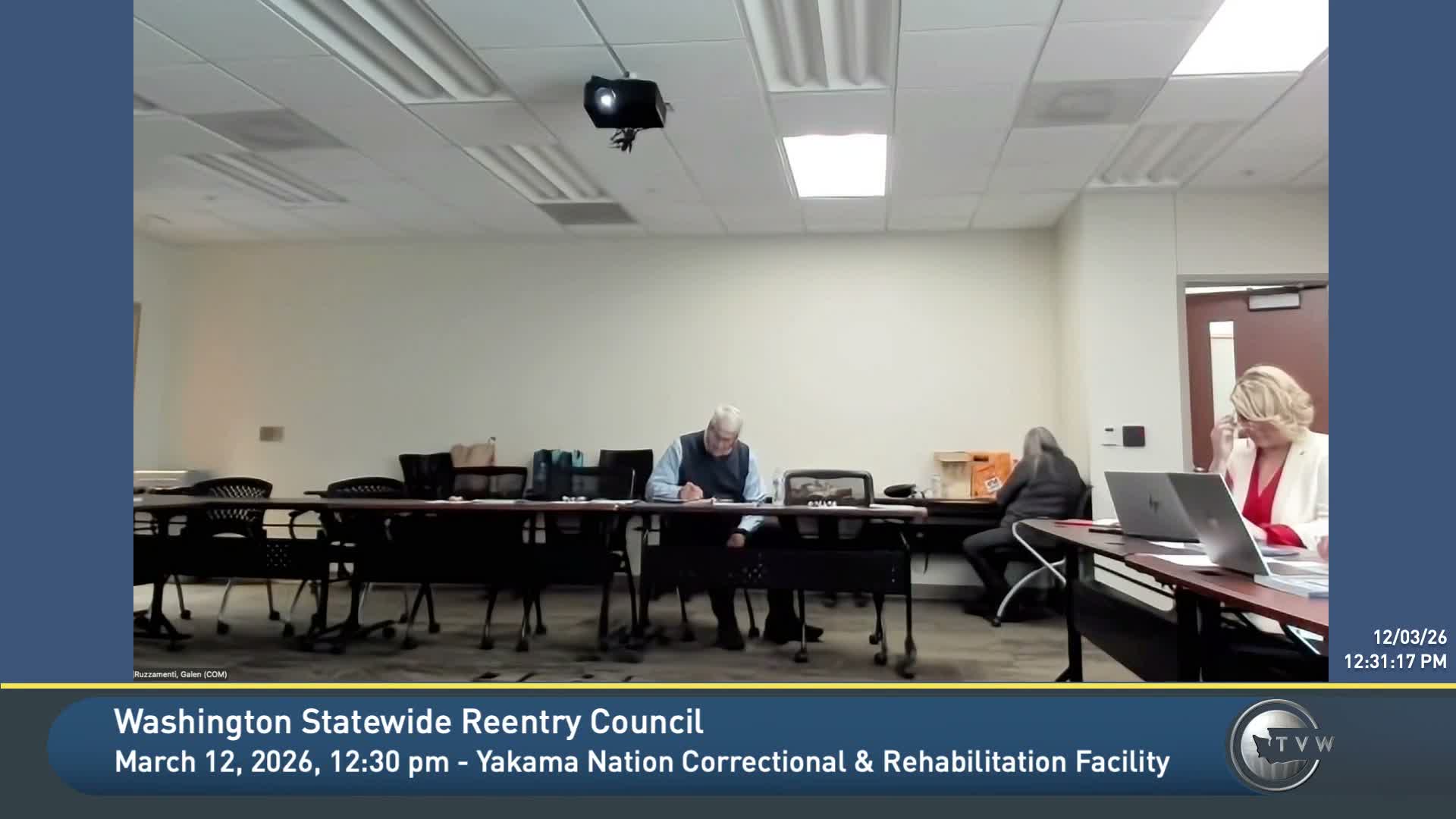
Summary
The Washington Statewide Reentry Council met virtually in March, approved prior minutes, adopted a new logo by council vote and heard presentations and public comments on tribal relations, FASD, TBI and a Medicaid reentry initiative; youth from juvenile facilities urged more pre- and post-release mentoring and practical supports.
The Washington Statewide Reentry Council approved prior minutes and voted to adopt a new council logo during its March virtual meeting, which also included presentations on tribal relations, fetal alcohol spectrum disorder (FASD) and traumatic brain injury (TBI), a Department of Children, Youth & Families update on Medicaid reentry services, and a youth panel from secure juvenile facilities.
The meeting opened with Ty Reid, one of the council co-chairs and reentry manager at the Employment Security Department, calling the roll and confirming a quorum. A motion to approve the prior meeting minutes carried without opposition.
Executive Director Janelle McPhee reviewed the council’s mission and membership growth and noted an important legislative development: "Senate Bill 5139 ... First time ever, a Reentry Council will have 2 currently incarcerated on the Council," she said, highlighting the council's push to include lived-experience representation.
Youth participants from Green Hill and Echo Glen described concrete reentry needs to the council. One youth said pre-release supports should include practicable training in everyday skills — opening a bank account, budgeting and re-learning social routines — and recommended mentors who have lived incarceration experience. Another described cultural reconnection as vital: "when we had our powwow ... I felt free," a participant said.
Council members heard presentations from Department of Commerce staff and others on tribal engagement and branding. Scott Varga, visual communications manager at Commerce, walked members through a proposed logo and brand attributes (dignity, transformation, restorative relationships); after discussion the council voted by show of hands to adopt the design.
Public comment included a request from Mawouli Menka, an MSW student, that the council take additional steps to reduce occupational-licensing barriers that limit employment opportunities for people with justice involvement. Janelle McPhee and other council members said occupational licensing is a focus of the employment subcommittee and that the Department of Licensing is engaged in ongoing conversations.
The meeting closed after brief procedural motions to adjourn.
Votes at a glance: the prior meeting minutes were approved (motion moved and seconded; chair recorded approval), the new council logo was adopted by a show-of-hands vote with eight members in favor (above the two-thirds threshold), and the council adjourned by motion later in the session.