Get AI Briefings, Transcripts & Alerts on Local & National Government Meetings — Forever.
Board recommends commutation for Jeffrey Brinkley after testimony on rehabilitation and victim impacts
Summary
After hearing testimony from petitioner Jeffrey Brinkley, his brother and the prosecution, the Washington Clemency and Pardons Board voted 4–1 to recommend commutation to the governor, citing rehabilitation, reentry plans and family support despite the prosecutor’s opposition.
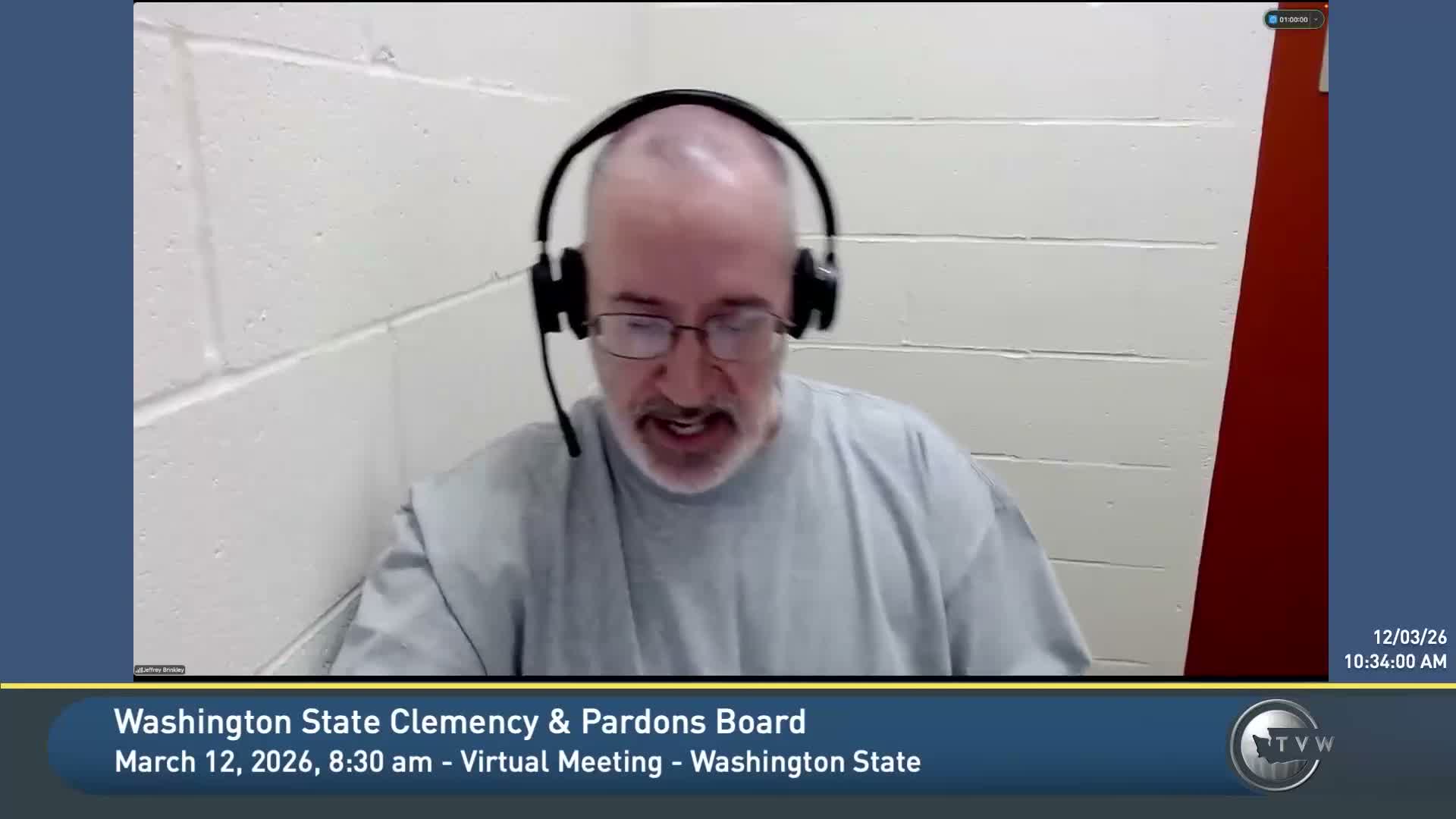
The Washington State Clemency and Pardons Board voted 4–1 to recommend commutation to the governor for Jeffrey Brinkley after hearing detailed testimony from Brinkley, his brother Daniel and a prosecuting attorney who opposed clemency at this time.
Brinkley read a prepared statement taking responsibility for past crimes, including robbery and kidnapping, and described more than a decade of sobriety and rehabilitation in custody: "I have tried to atone by making changes that I am able to make, focusing on the things that I can control," he said. He outlined a release plan that would place him in sober housing (an Oxford House), linked him to employment prospects and to his brother Daniel Brinkley, who testified he had secured housing, work contacts and would provide daily accountability.
Thurston County Deputy Prosecuting Attorney Jason Cummings opposed the petition at this time, arguing the 2011 offenses triggered a "three strikes" enhancement and that the petitioner has not yet served the minimum range the prosecutor described; Cummings noted continuing concerns about victim trauma and questioned whether time and additional review would better demonstrate sustained public-safety risk mitigation.
Board members debated the weight of remorse and rehabilitative programming versus the seriousness of the offenses. Board Member Kazi Joshua moved to recommend commutation, and Vice Chair Doug Baldwin seconded; the motion carried 4–1. Chair Raymond Delas Reyes reminded the petitioner the board’s vote is advisory and the governor will make the final decision.
The public record includes the petitioner’s statements, witness testimony, the prosecution’s written submission and the board’s deliberations and vote.