
Washington Clemency Board votes to recommend commutation in earlier petition after member changes stance
Get AI-powered insights, summaries, and transcripts
Subscribe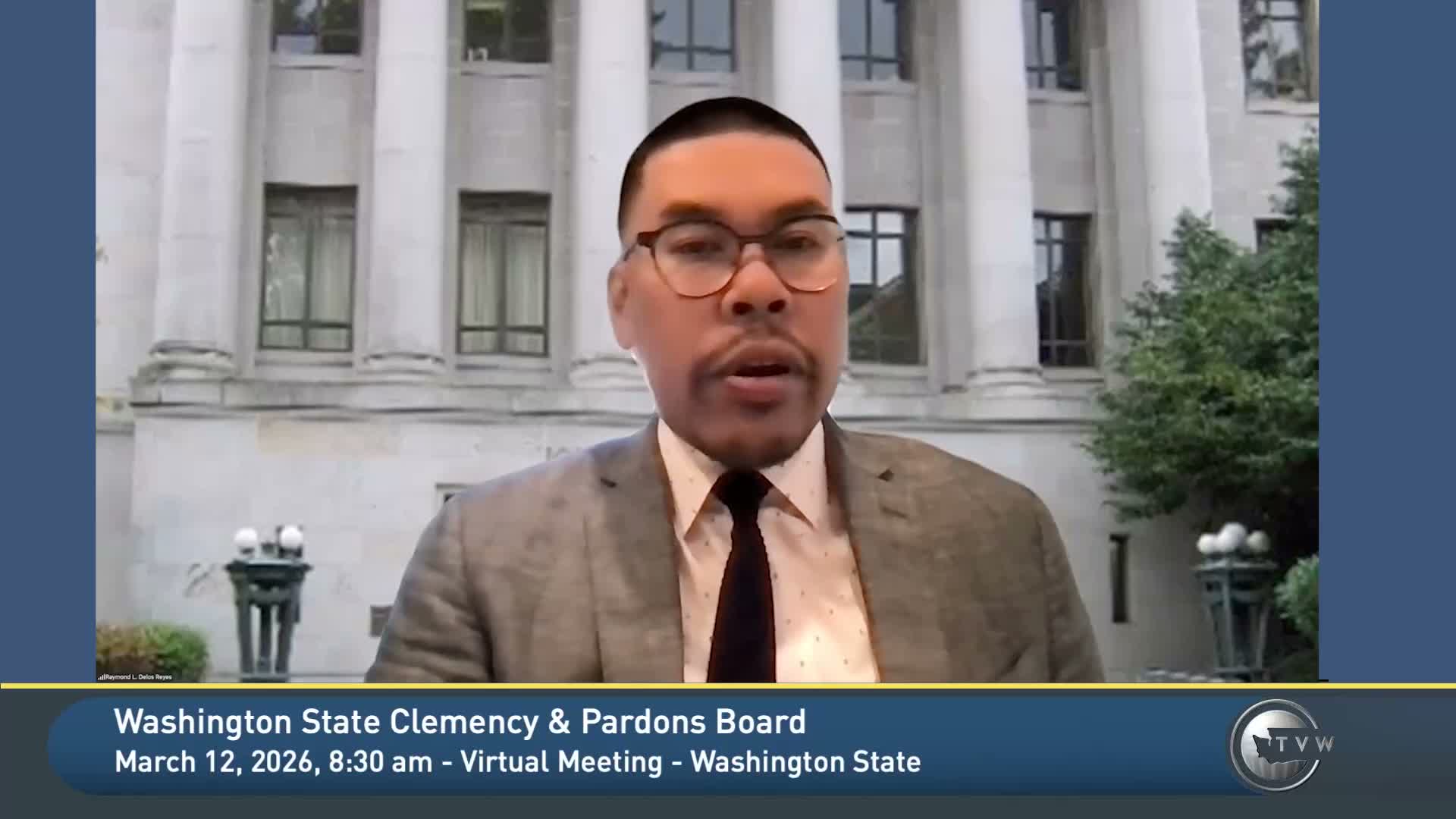
Summary
The Washington State Clemency and Pardons Board voted 3–1 to recommend commutation for the petitioner identified in the record as "Mister Kumslath" after a board member said she would change her vote, citing remorse and rehabilitation.
The Washington State Clemency and Pardons Board voted 3–1 to recommend commutation to the governor in a matter carried over from December 2025, after Board Member Rhonda Salveson said she would change her earlier position and support relief.
Chair Raymond Delas Reyes said the motion on the floor was to deny the petitioner’s request for commutation; Salveson announced during deliberations that, "He has taken responsibility without excuses, shown remorse and has atoned by sharing his experience and uplifting and healing his community" and that she would change her vote to oppose the denial. Vice Chair Doug Baldwin and Board Member Aline Flower also spoke in favor of recommending clemency, with Flower framing the request as an appeal to mercy rather than forgiveness.
The chair clarified the record that the motion originally on the floor was to deny the petition. The motion to deny failed, and a new motion to recommend commutation was moved and seconded. The board recorded the outcome as "the board recommends commutation" by a 3–1 vote and the recommendation will be forwarded to the governor, who has final authority.
The record contains multiple spellings of the petitioner’s surname (the motion on the record references "mister Kumslath" and other variants appear in the transcript). The board’s vote and members’ remarks are part of the official hearing transcript; the recommendation does not itself change the petitioner’s sentence — it is a nonbinding recommendation to the governor.
The hearing was conducted under the board’s standard rules; staff and TVW televised the session for the public record.