
Department of Health outlines immunization roadmap, data governance goals and reports measles uptick
Get AI-powered insights, summaries, and transcripts
Subscribe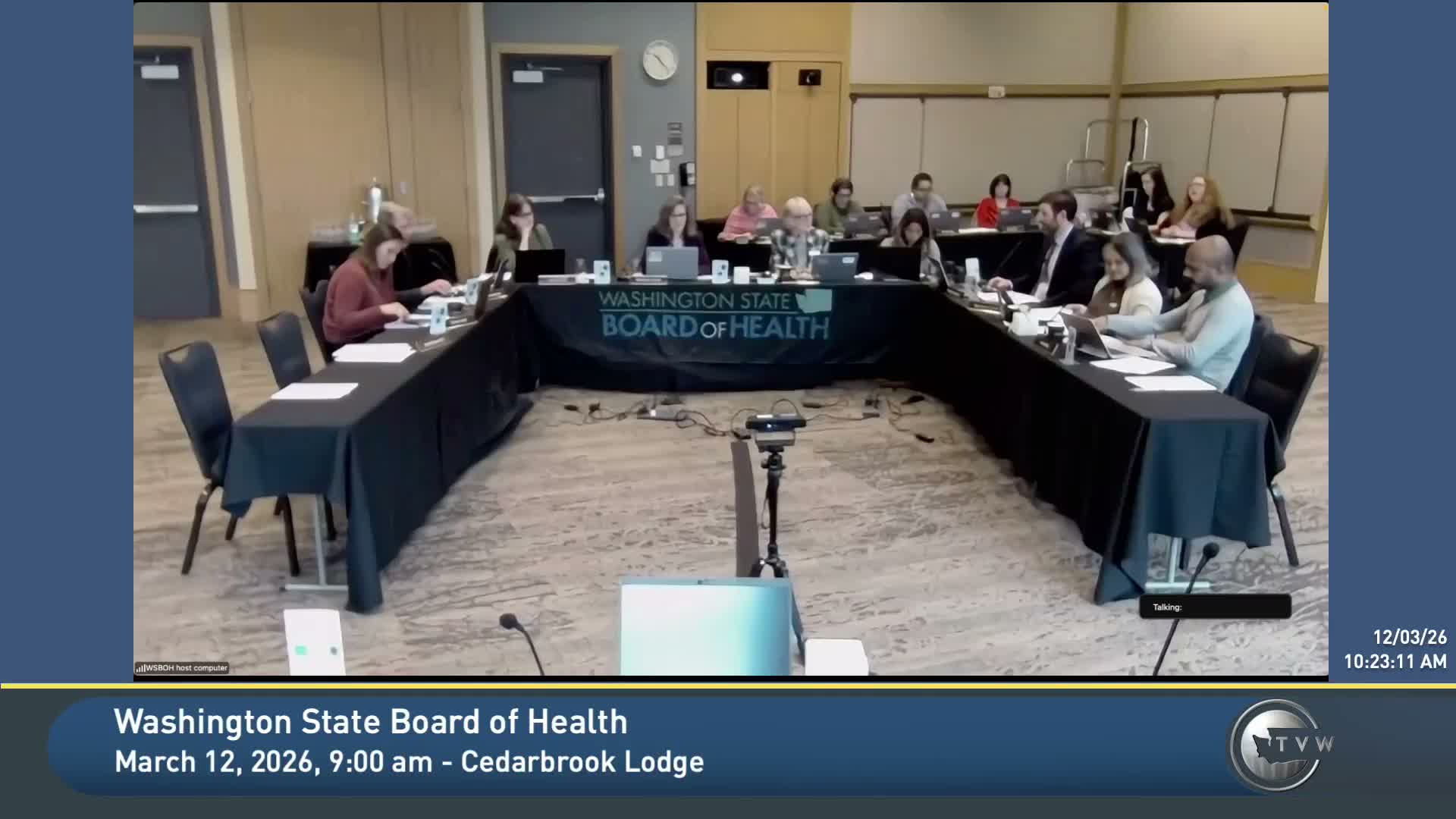
Summary
Department of Health Secretary-designee Mike Ellsworth briefed the Board on an immunization roadmap, data-sharing and AI governance priorities, West Coast Health Alliance activity, and reported 26 measles cases so far in 2026 (92% unvaccinated), urging support for rural immunization capacity.
Mike Ellsworth, serving as the Secretary of Health designee, told the Board the agency is developing a four-year immunization roadmap to sustain vaccine access and confidence and is prioritizing data sharing and an AI governance framework to reduce siloed data and speed collaboration.
Ellsworth said the West Coast Health Alliance (California, Oregon, Washington and Hawaii) has secured philanthropic funding and is building a communications and governance framework. He gave a legislative recap and highlighted restored funding for reproductive health services and targeted support for 988 crisis call centers.
On measles: Ellsworth reported that, as of March 2026, Washington had 26 measles cases across four counties and that "92 percent of those people were unvaccinated," emphasizing uneven county-level coverage and urging federal support for rural immunization initiatives.
Why it matters: The DOH roadmap and data-governance initiative aim to address vaccine confidence, equitable access, provider support, measurement and interoperability — priorities raised during the legislative session and in local outbreak responses. The reported measles cases prompted calls for expanded rural immunization resources.
What comes next: The Department will continue to engage partners to finalize the immunization roadmap by June and pursue federal appropriations and congressional support for rural immunization capacity building.