Regional water studies show storage and conservation are both needed; projected demand rises sharply by 2070
Loading...
Summary
Nooksack and Yakima basin planners told the board that climate projections and population growth increase summertime water vulnerability: the Nooksack study projects a 45% increase in consumptive water use by 2070 and ranked storage and floodplain restoration options; Yakima managers stressed a portfolio of conservation, leasing and habitat matching to current hydrographs.
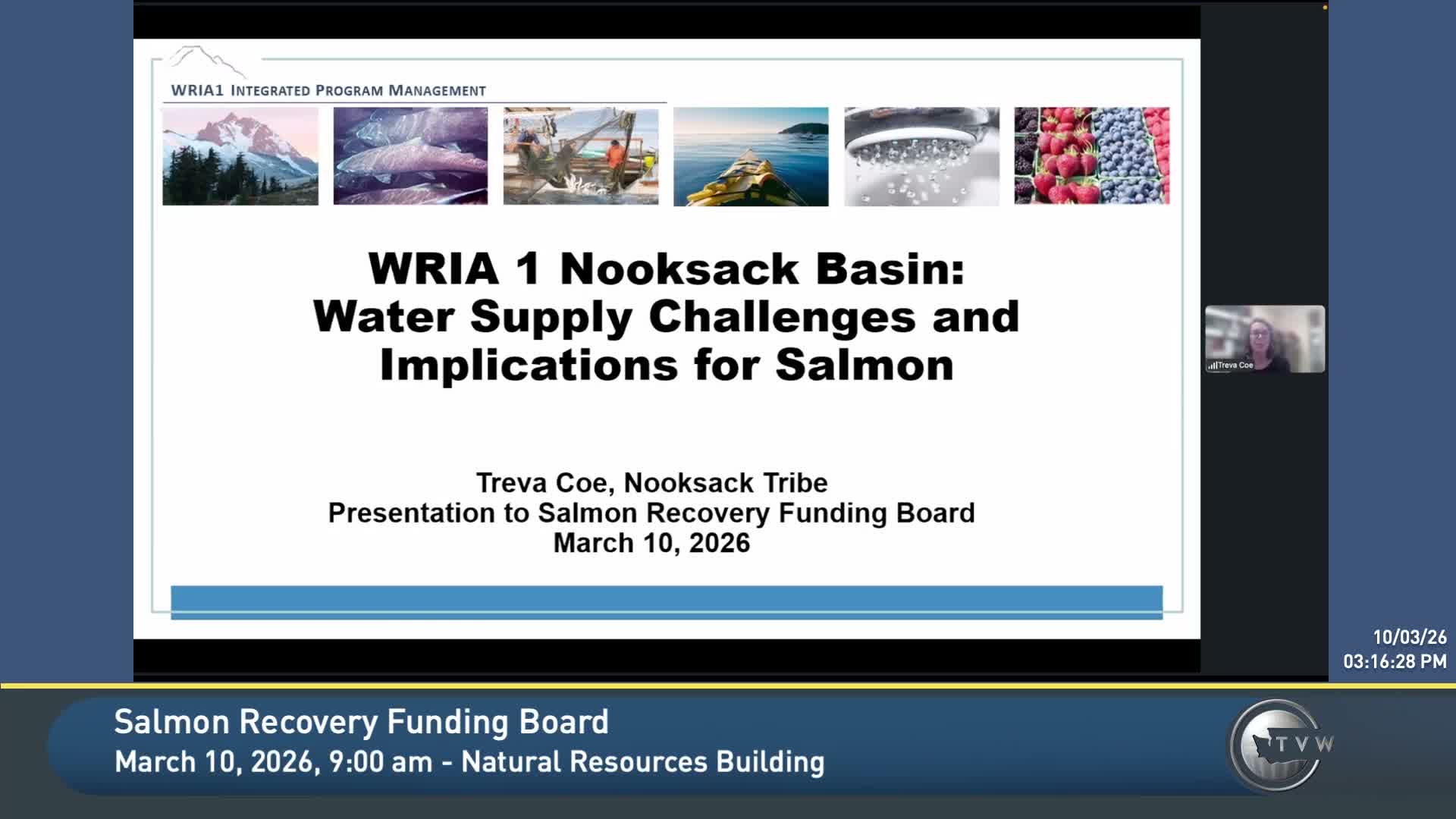
Presentations from regional lead entities and tribes summarized basin‑scale planning and technical studies. Treba Ko (Nooksack Tribe) presented a 2023 regional water‑supply planning study showing irrigation currently accounts for about 66% of consumptive use and that projected consumptive demand could rise roughly 45% by 2070 because of population growth and climate change; the study found that climate‑driven runoff changes (more winter, much less late summer) dominate the projected August–September declines in streamflow.
The advisory committee evaluated 11 storage concepts across the Nooksack watershed — ranging from large dams to natural floodplain restoration — and recommended advancing four consensus projects that favor natural‑storage and floodplain approaches where feasible; Treba said natural storage concepts generally ranked higher in the committee’s multi‑criteria screening.
Alex Conley (Yakima Basin Fish & Wildlife Recovery Board) summarized the Yakima experience: a complex mix of headwater variability, diverted reaches with heavy irrigation withdrawals, and regulated mainstems controlled by storage releases. Conley said Yakima has combined conservation (roughly 85,000 acre‑feet of savings cited in recent work), leasing and targeted diversion relocation projects to sustain summer flows; he cautioned that not all floodplain storage projects reliably produce downstream baseflows and urged careful hydrogeologic screening.
Board members emphasized the need for coordinated monitoring and adaptive management — especially groundwater‑surface water interaction studies — to prioritize projects that will reliably increase summer baseflow and preserve cold‑water refugia.