Get Full Government Meeting Transcripts, Videos, & Alerts Forever!
Get email alerts on the Records Retention topic
No spam. Unsubscribe anytime.
State Board of Health adopts policy to retain health impact review materials beyond six years
Summary
The Washington State Board of Health voted to adopt a policy that converts health impact reviews (HIRs) and underlying source materials to internal reference materials after six years and retains summaries and final reports online for 10 years, citing the unique long-term value of HIR evidence.
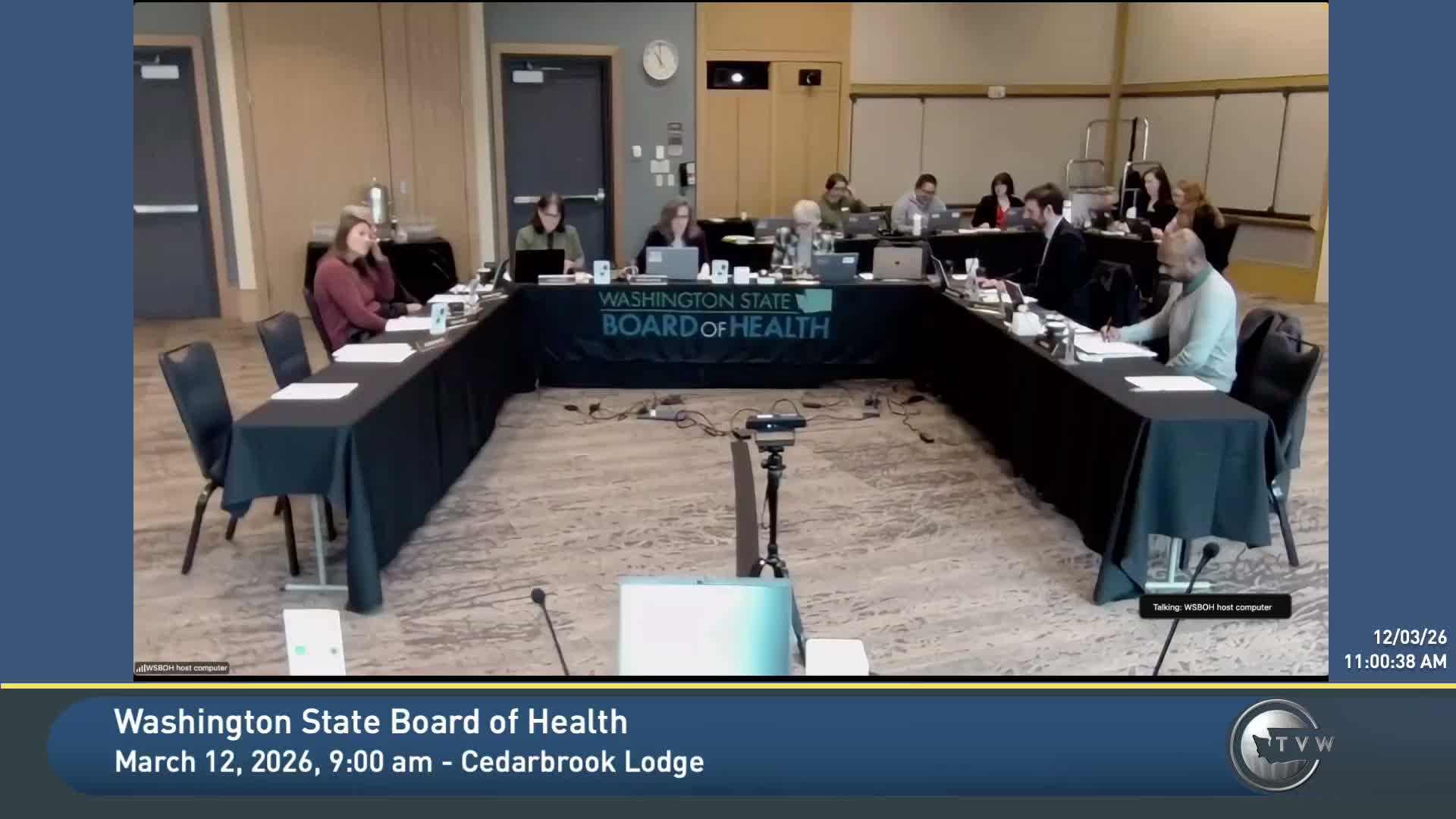
The Washington State Board of Health voted to adopt a new records-retention policy for its health impact reviews, directing staff to preserve HIR source materials beyond the six-year schedule used for most state records.
Lindsay Herondine, a HIR policy analyst for board staff, told members the draft policy would "convert HIRs and underlying source material to reference material to retain internally in perpetuity and will retain HIR request forms, executive summaries, and final reports for 10 years on the board's website." The board debated whether "in perpetuity" was practicable given storage costs and evolving data systems.
After questions from board members about archive costs and precedent, Member Nandi moved adoption of the updated policy, and Member Kurtz seconded. The board approved the motion by voice vote. Board materials and staff commentary say the change reflects HIRs' role as a unique, non-routine evidence base used to inform later policy and legislative requests.
Why it matters: HIRs collect endnotes, evidence reviews, interview notes and calculations that staff say are frequently reused when policymakers seek historical context or repeat analyses. Supporters argued that losing those packages after six years would force staff to reassemble work already done; critics and several members urged clear limits and a plan for storage costs.
What comes next: Staff will finalize policy wording and guidance to implement the retention schedule and report back if storage or budgetary constraints require revisiting the "in perpetuity" language. The board's action formalizes a longer retention practice while directing staff to reconcile it with state archives processes.