
Commission rejects proposal to alter Robbery 1 age cutoff for Option B eligibility
Get AI-powered insights, summaries, and transcripts
Subscribe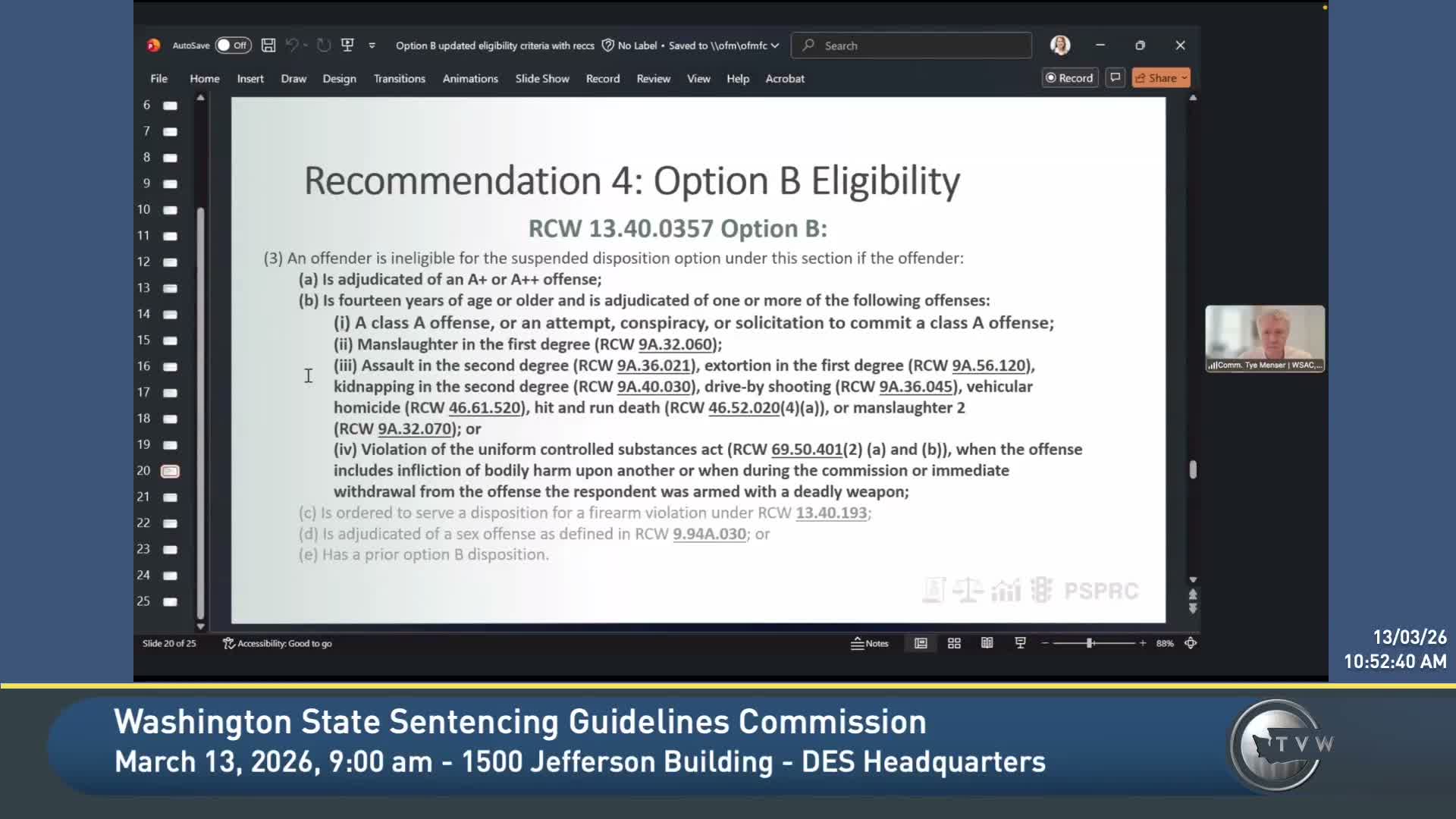
Summary
A proposal to ‘‘square the ages’’ so 15‑year‑olds convicted of Robbery 1 would be eligible for Option B was moved and defeated March 13 after members expressed concern about Robbery 1’s varied seriousness; the motion failed amid 5 recorded yes votes and multiple abstentions.
Commissioners debated whether to align age thresholds so that some 15‑year‑olds adjudicated of Robbery 1 could be eligible for Option B. The discussion centered on statutory inconsistencies: Option B sets an age threshold at 14 for class A offenses, while the juvenile offense classification for Robbery 1 treats some younger defendants differently (e.g., classifications that make some 13‑ and under cases technically eligible).
Miss Brandes offered a compromise motion to amend Option B language so 15‑year‑olds convicted of Robbery 1 could be eligible—an effort described by proponents as a data‑collection compromise and a way to square statutory age cutoffs. Supporters argued it would allow targeted study and a measured expansion. Opponents and several judges urged caution, noting Robbery 1 covers a wide range of conduct, from relatively minor injuries to situations that are only a "millisecond away from a homicide," as one judge put it.
Judge Swan noted that language such as "inflicts bodily injury" can capture a broad spectrum of actions: "There's some case law ... when there's a disfigurement, that can include a black eye," she said, underscoring the statute’s range. Prosecutors and law enforcement representatives stressed that many Robbery 1 adjudications involve repeated, organized robberies or firearm use and that expanding eligibility could pose public safety risks without strong evidence and community services in place.
When the motion to adjust age cutoffs was put to a vote, the chair reported five in favor and six abstentions; the motion did not carry. Commissioners left the statutory alignment question open for future consideration, with multiple members urging more precise statutory language and better data before any expansion.
No formal changes to Robbery 1 eligibility were adopted at the meeting; staff and committee members signaled they will consider clearer drafting approaches and the possibility of separate study work if further movement is requested by the commission or legislature.