
Commission briefed on trawl'to'pot conversion for Puget Sound non'spot shrimp; public comment period open
Get AI-powered insights, summaries, and transcripts
Subscribe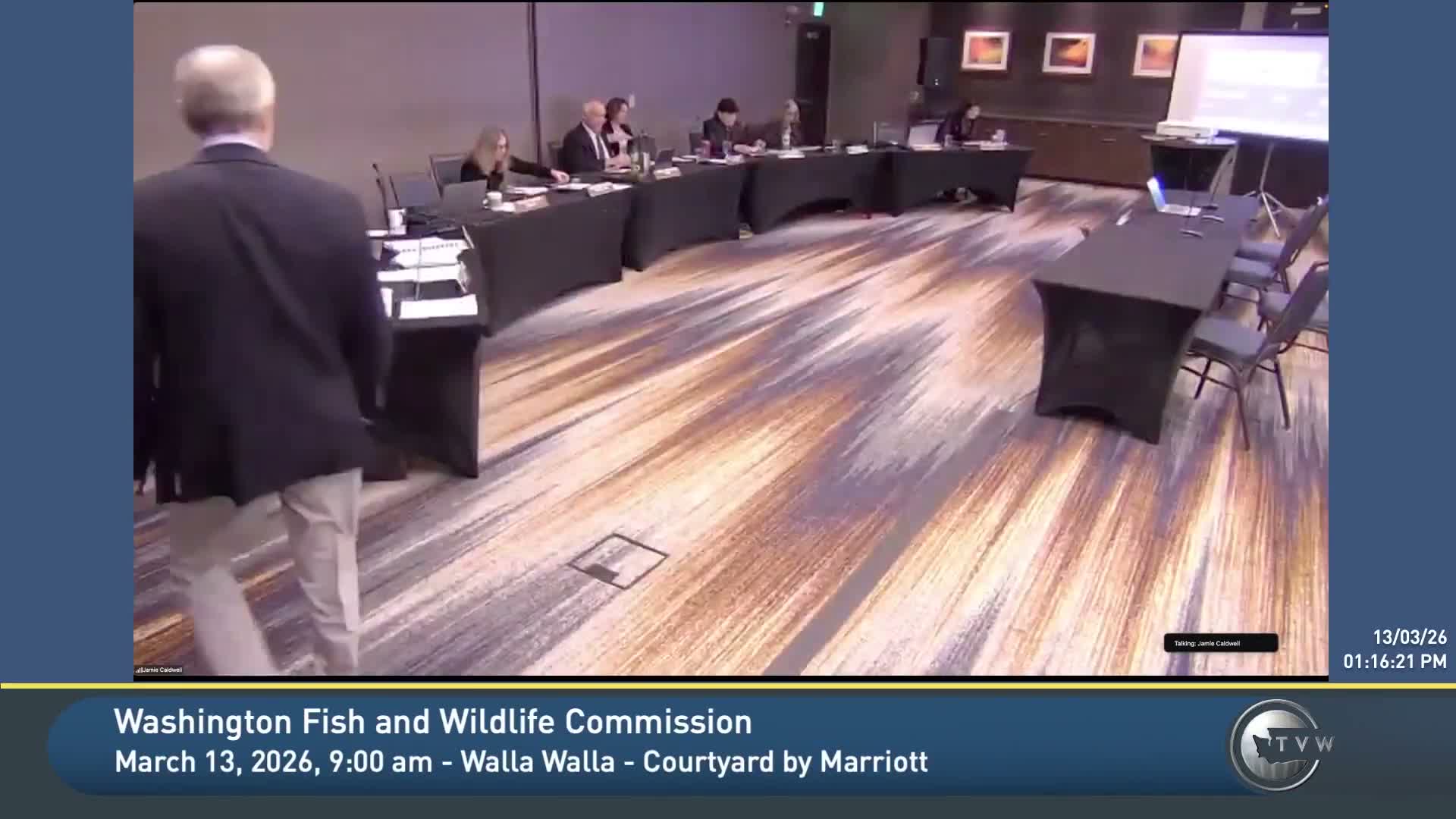
Summary
WDFW staff briefed the Commission on CR 102 implementing legislation that defines non'spot shrimp and creates a voluntary pathway for trawl license holders to convert to pot licenses; the rule package addresses gear, buoy labeling, quota reporting and an alternative gear testing pathway. Public comment for the CR 102 package is open through March 15.
Agency shellfish staff Aaron Dafoe and crustacean biologist Daniel Sun briefed the Washington Fish and Wildlife Commission on March 13 on rulemaking (CR 102) to implement legislation that creates a new, pot'only non'spot shrimp license and a voluntary conversion mechanism for existing trawl license holders.
"This legislation implements a conversion mechanism for trawl gear to pot gear," Daniel Sun said, explaining the statutory requirement to define the non'spot shrimp species complex and to put conversion details into the Washington Administrative Code. Sun listed species included in the new complex (for example, dock shrimp, humpy shrimp, ocean and northern pinks) and said that the field'level changes include new WAC sections to distinguish spot shrimp from non'spot shrimp fisheries and to memorialize pot dimensions and buoy labeling.
Aaron Dafoe walked commissioners through the practical elements of the package: creating a distinct WAC for spot shrimp, a new WAC for non'spot shrimp pot fisheries, mandatory electronic harvest reporting for the new license, license'stacking prohibitions to prevent multiple pot licenses from being used on the same vessel, and a director'permit pathway for testing alternative gears to harvest underutilized species in the non'spot complex.
The legislation establishes that when a trawl license transfers after the implementation date it will become a pot license and the trawl license will be retired; staff said the conversion is voluntary for current holders but automatic upon transfer to preserve the legislative sunset mechanics. Dafoe and Sun also described a prohibition on sorting non'spot shrimp landings on trawls, buoy color and labeling changes to aid enforcement, and shared quota arrangements with treaty co'managers.
Staff said they engaged with license holders early in drafting the CR 102 and held industry meetings before filing; formal public comment on the official CR 102 filing is open through March 15 with a decision briefing scheduled in April. "We worked with multiple sectors of the industry prior to filing CR 102," Dafoe said, and noted staff will present a decision briefing next month.
Commissioners asked clarifying questions about conservation outcomes, whether pot gear reduces bycatch and habitat impacts, and how the conversion affects market value for fishers. Staff said the conservation and market outcomes are not fully resolved in data and that the conversion was industry'led with agency input; an alternative gear testing pathway will allow staff and industry to evaluate performance of non'standard gears under permit.
What's next: public comment closes March 15, staff will review comments and deliver a decision briefing to the Commission in April.