
Senate committee backs bill to bar warrantless immigration enforcement at Minnesota daycares
Get AI-powered insights, summaries, and transcripts
Subscribe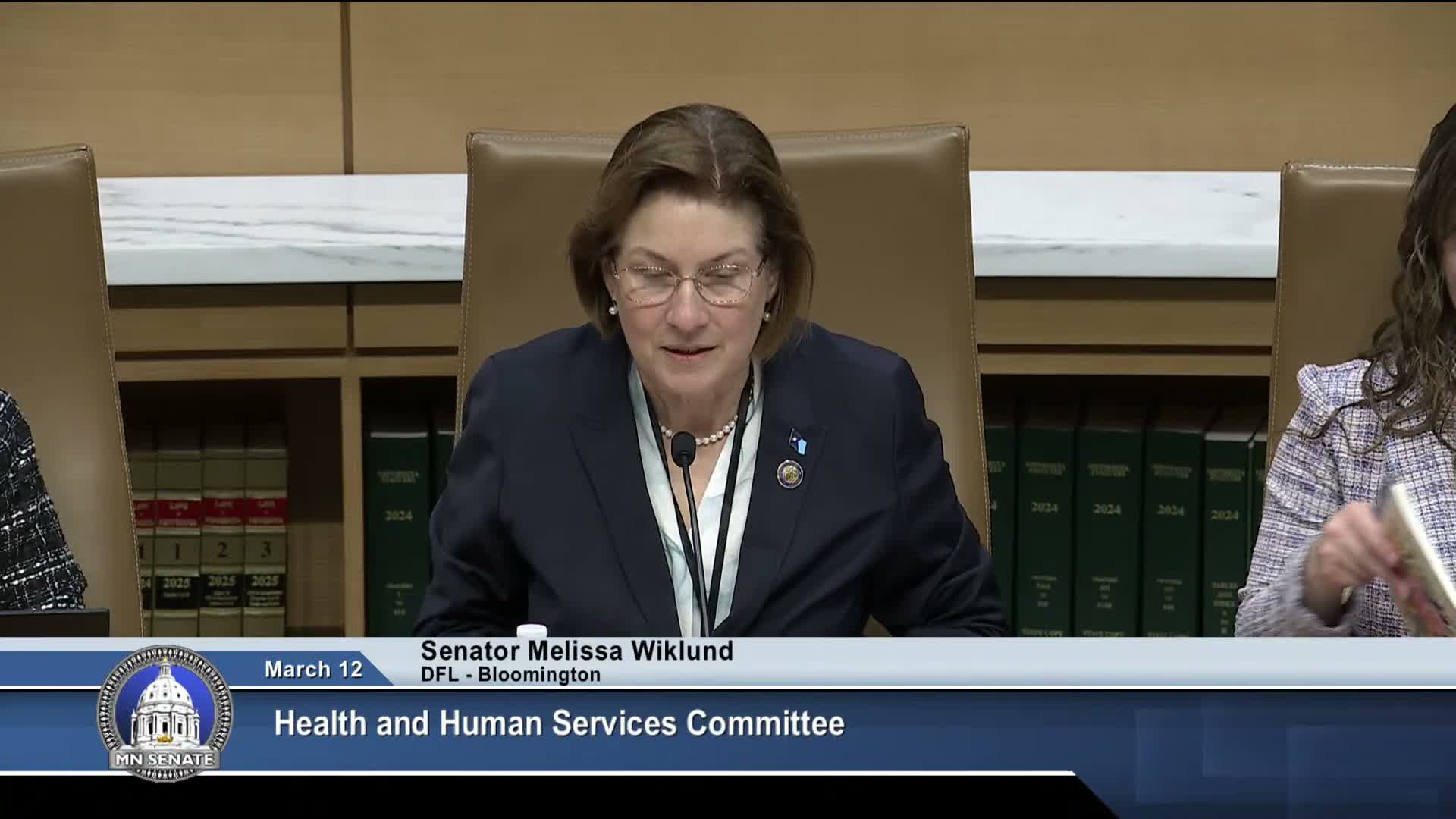
Summary
After emotional testimony from parents, teachers and pediatricians, the Senate Health and Human Services Finance and Policy Committee recommended passage of SF 3616, which would require a judicial warrant before civil immigration enforcement may enter child care premises; the bill was amended and referred to the Judiciary Committee.
Senators on the Health and Human Services Finance and Policy Committee recommended Senate File 3616 for passage and referral to the Judiciary Committee on March 12, 2026, after more than a dozen parents, child‑care directors and medical professionals described a surge in immigration enforcement that they say frightened children and disrupted early‑education programs.
Senator McQuaid introduced the bill, saying it would "make sure that daycares in Minnesota are protected spaces" and protect teachers and young children from enforcement actions in front of families. The committee adopted an author's A‑2 amendment before testimony began.
The hearing featured personal accounts from parents and providers. "Our teachers are the adults our children trust," testified Kelly Anderson, a mother in a Spanish immersion school community, who described organizing carpools and parent patrols after a staff member was detained. Jocelyn Rousey said she witnessed masked federal agents pull a daycare staffer from her car "mere feet from the center's front door," and described weeks of community rapid‑response efforts to protect staff and students.
Child‑care operators described operational disruptions. Jessica Whiting, family services coordinator at Wilder Child Development Center, said Wilder's policy is not to admit agents without identification and a judicial warrant and that SF 3616 would provide legal clarity for centers seeking to follow that practice. Amanda Schollinger, a Burnsville center director, said an ICE vehicle visit on Jan. 7 triggered lockdowns and prompted some families and staff to stop attending.
Medical and child‑development experts framed those incidents as public‑health concerns. Dr. Eileen Crespo, immediate past president of the Minnesota chapter of the American Academy of Pediatrics, warned of behavioral and developmental harms when children witness enforcement actions. Dr. Nicole Smirillo of Think Small cited a survey she described to the committee showing temporary program closures, increased absences and declining enrollments across metro child‑care programs between December 2025 and February 2026.
Legal counsel and advocacy witnesses addressed constitutional questions and precedent. John Beeler of the ACLU of Minnesota said the bill restores a policy that had limited enforcement at sensitive locations and pointed to litigation and federal memos that have shifted enforcement practice; committee counsel and witnesses noted that the bill regulates the conduct of daycare owners and employees by requiring a judicial warrant for nonconsensual entry absent exigent circumstances.
After questions from members about federal preemption and employee obligations, Senator Mann moved to recommend passage as amended and refer SF 3616 to Judiciary. A roll call recorded seven yes votes and three no votes; the motion prevailed.
The committee's action sends SF 3616 to Judiciary, where legal challenges and detailed drafting about exemptions, emergency circumstances and operational guidance are likely to be considered next.