
House committee rejects proposal to direct $40 million in Tyler‑settlement funds to emergency rent aid
Get AI-powered insights, summaries, and transcripts
Subscribe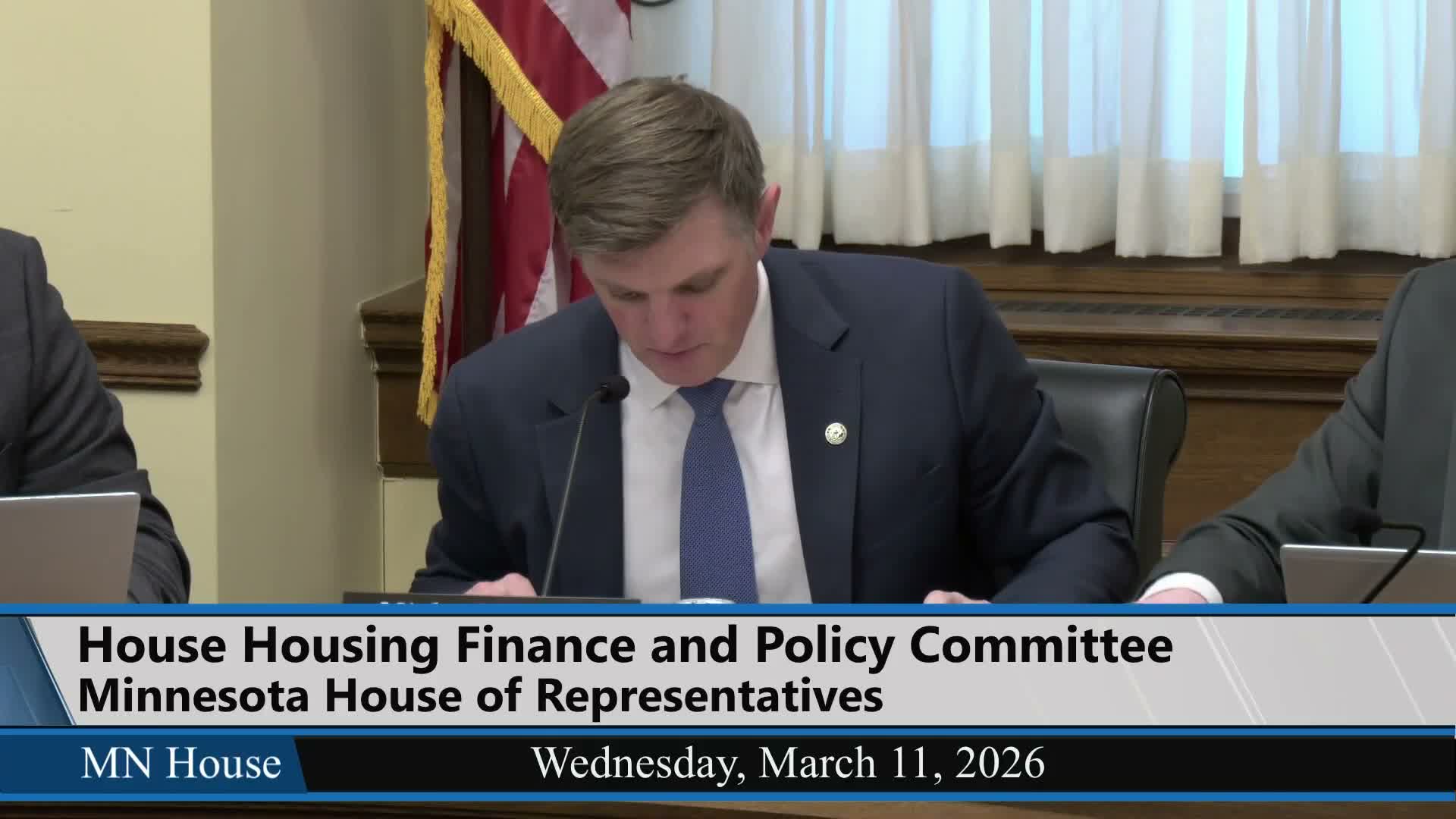
Summary
The House Finance and Policy Committee declined to advance a budget‑neutral bill (HF3403) that would have directed $40 million in remaining Tyler‑settlement dollars to emergency rental assistance; the motion failed 7–6 on a roll call after debate over eligibility and one‑time funding.
Vice Chair Kozlowski asked the House Finance and Policy Committee to re‑refer House File 3403 — a plan to direct $40,000,000 in emergency rental assistance to counties and tribal nations — but the proposal failed to advance on a party‑line‑splitting roll call.
Kozlowski told the committee the bill would be a “lifeline” for Minnesotans facing eviction, saying, “This bill, before you, provides 40,000,000 in emergency rental assistance. That, again, will be delivered through our counties and tribal nations.” She said the money would come from remaining funds in the Tyler settlement account and asserted the measure would be budget neutral.
The bill’s backers argued counties and local providers have exhausted short‑term funds and need state support. Commissioner Annie Harala of St. Louis County testified remotely that local emergency housing assistance funds were nearly depleted and that the county lacks the budget flexibility to respond. “We can’t absorb this gap locally,” Harala said, adding that an average of about $2,000 is required to stabilize a household and prevent homelessness.
Opponents and skeptics questioned whether the measure truly left the general fund untouched and whether it set a recurring expectation for future allocations. Representative Nash said he did not accept the assertion of budget neutrality and asked for clearer targets and fiscal detail. Representative Dotseth asked whether undocumented residents would be eligible; Kozlowski replied the bill requires Minnesota residency, not a particular immigration status.
After debate, the committee took a roll call. The clerk recorded seven votes in favor and six opposed; Chair Howard announced the motion did not carry and the bill failed to reach the eight‑vote threshold required to move to the next committee.
The committee’s action leaves the Howard‑and‑Kozlowski proposal without committee passage; sponsors said they will continue to seek ways to shore up eviction prevention funding through legislative and intergovernmental channels.