Get Full Government Meeting Transcripts, Videos, & Alerts Forever!
Get email alerts on the Arr On Demand topic
No spam. Unsubscribe anytime.
Austin Resource Recovery: brush set-outs down; council seeks targeted outreach for wildfire mitigation
Summary
Austin Resource Recovery reported year-to-year reductions in brush set-outs after the transition to an on‑demand collection model; council members raised wildfire mitigation concerns and asked ARR to coordinate targeted outreach with Austin Fire and neighborhood groups in wildfire-prone areas.
Austin Resource Recovery staff told the committee that brush and bulky-item set-outs declined after a switch to an on‑demand collection model and that the department is studying outreach and operational changes to address gaps, particularly in wildfire‑prone neighborhoods.
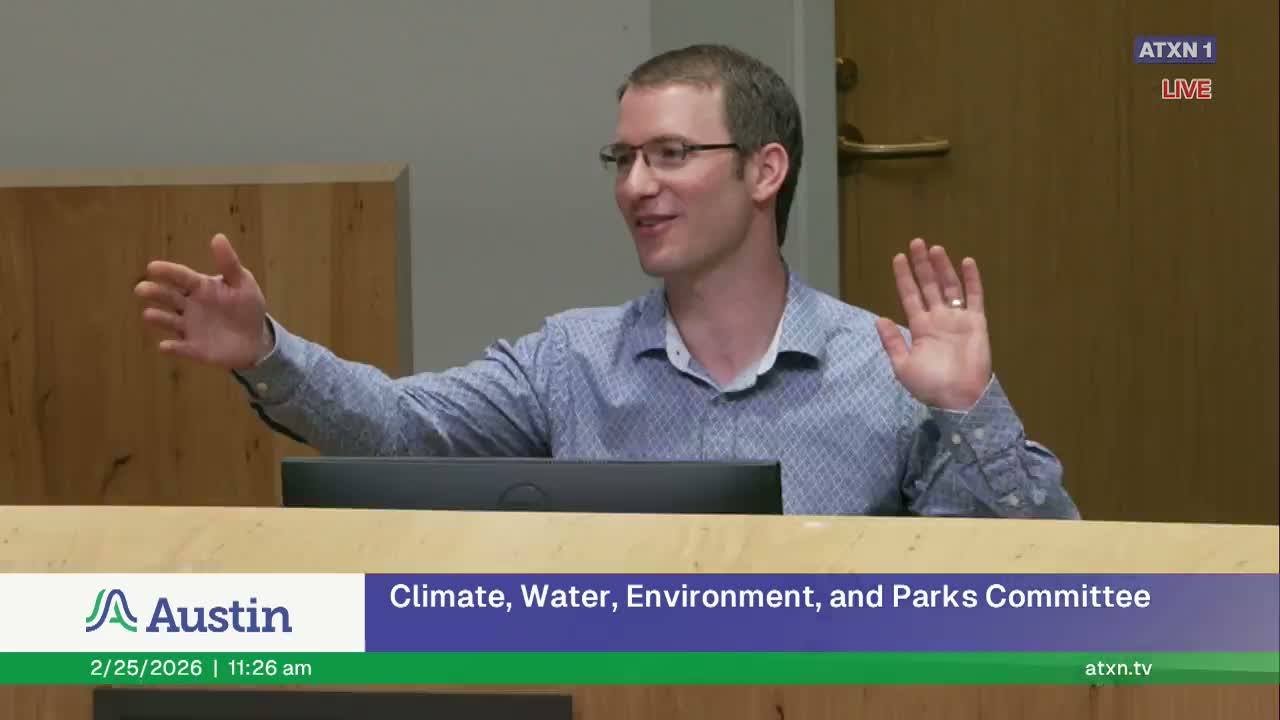
Council Member Mark Duchin said he was concerned by a roughly 62% drop in brush tonnage between 2024 and 2025 for curbside collections, noting the decline could undermine wildfire-mitigation goals in vulnerable areas. "If I'm balancing out fire mitigation against dollars, I'll probably pick fire mitigation every time," Duchin said, asking ARR how the city can restore collection levels where fuels reduction is especially important.
Amy Slagle, assistant director for Austin Resource Recovery, and Director Richard McHale said the reduction in set-outs appears to be tied in part to behavior and outreach changes—the department moved away from mass mailed reminders that previously drove visual cues and a "fear of missing out" effect—and to weather and drought conditions that changed household behavior. ARR staff proposed more targeted notification and outreach—using the ARR app and partnering with Austin Fire and neighborhood civic associations—to encourage residents in wildfire‑prone areas to request on‑demand pickups or to use volunteer collection options.
ARR said it will work with council offices and the wildfire coalition to create neighborhood‑specific strategies, explore ways to reduce barriers for volunteer collection organizers, and provide additional data on trends and set-out locations. The committee also noted an existing neighborhood volunteer program that allows community organizers to collect materials and receive special tags for collection without repeated trips to drop-off centers; ARR said it is open to refining that program.
Council members and staff agreed to follow up offline to coordinate targeted outreach in areas adjacent to open-space preserves and other high‑risk locations. The committee adjourned at 11:37 a.m.