
Neighbors press council to protect Blackland and Montopolis as several rezoning requests fail or are removed from consent
Get AI-powered insights, summaries, and transcripts
Subscribe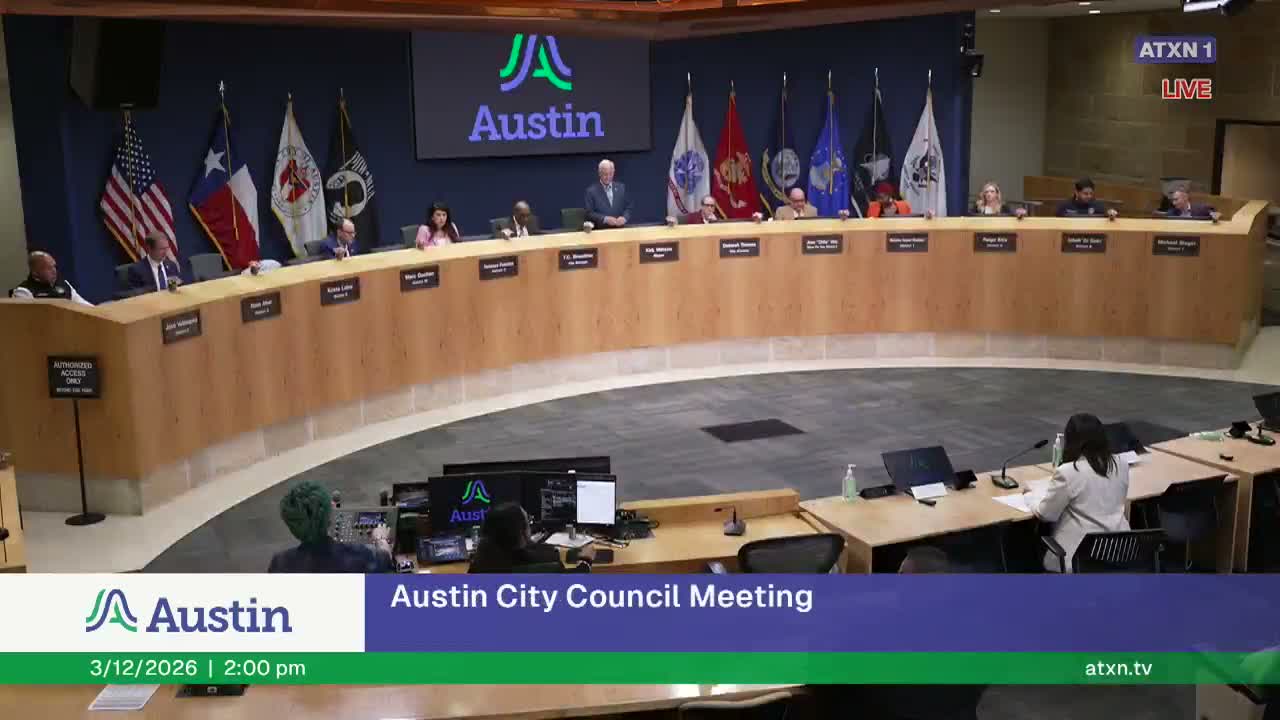
Summary
Dozens of residents spoke against proposed rezonings across East Austin — including Blackland (items 35/36) and Montopolis (items 40/41) — citing commercial encroachment, parking, impervious cover, and displacement; council removed four items from consent and votes resulted in failure/denial for multiple rezoning requests.
Austin — Hundreds of pages of public testimony on March 12 focused on neighborhood character, environmental protections and displacement risk as Austin City Council considered multiple zoning and neighborhood plan amendments.
Joy Harden of Austin Planning read the zoning docket for items 32–41 at the 2:00 p.m. time certain. Residents from several neighborhoods then delivered extended testimony.
Blackland (Items 35 and 36): Neighbors and the Blackland Neighborhood Association opposed a proposal that would allow a restaurant and other commercial uses on lots they say are surrounded by single-family homes. Marva Overton, speaking for the Blackland Neighborhood Association, cited traffic, parking and potential erosion of the residential fabric. Gina Houston and other longtime residents urged denial or a full neighborhood-plan amendment, citing historical patterns of displacement. Supporters, including volunteers who manage a local garden and some nearby residents, said the proposed project would preserve garden space and bring neighborhood-serving businesses. On the vote to consider items 35 and 36 on first reading, the motion failed: the council recorded five votes in favor, five opposed and one abstention, so items 35 and 36 did not pass on first reading.
Gaines Creek / South Town (Items 37 and 38): Representatives from Oak Hill and environmental groups asked the council to retain a string of prohibited uses in a conditional overlay—particularly auto sales—because of groundwater recharge and proximity to Gaines Creek and Barton Creek. Speakers requested eight additional prohibited uses and argued removing protections would increase impervious cover, traffic and pollution into sensitive waterways.
Montopolis (Items 40 and 41): Dozens of Montopolis residents, neighborhood leaders and environmental researchers spoke in opposition to two large rezoning and future development proposals (items 40 and 41). Speakers emphasized that Montopolis has a lower median family income (cited around 40% MFI) and that proposals with units targeted at 60–80% MFI would not be affordable to many current residents. Environmental testimony from a UT researcher highlighted erosion and impervious-cover impacts on the Colorado River. The applicant, Joshua Brunsman, said he reduced project intensity in response to community concerns, proposed a mix of zoning alternatives including GRV and VMU and said the site is transit-accessible. After debate and multiple recorded votes, the council took motions to remove items 35, 36, 40 and 41 from the consent agenda and later denied items 40 and 41; item 41 failed and item 40 also failed on council votes recorded during the hearing.
Why it matters: These decisions shape land use, housing density and environmental protections across neighborhoods with histories of displacement. Residents framed the cases as tests of the city's anti-displacement goals, while developers and proponents argued rezonings are needed to add housing near transit.
What’s next: Items removed from consent were taken up individually. Items 35 and 36 failed first reading. Items 40 and 41 were denied by council votes taken during the March 12 meeting. Councilmembers discussed the need for better transparency and community negotiation processes for community benefits agreements and neighborhood engagement in future rezoning cases.